Why favours are a photography job
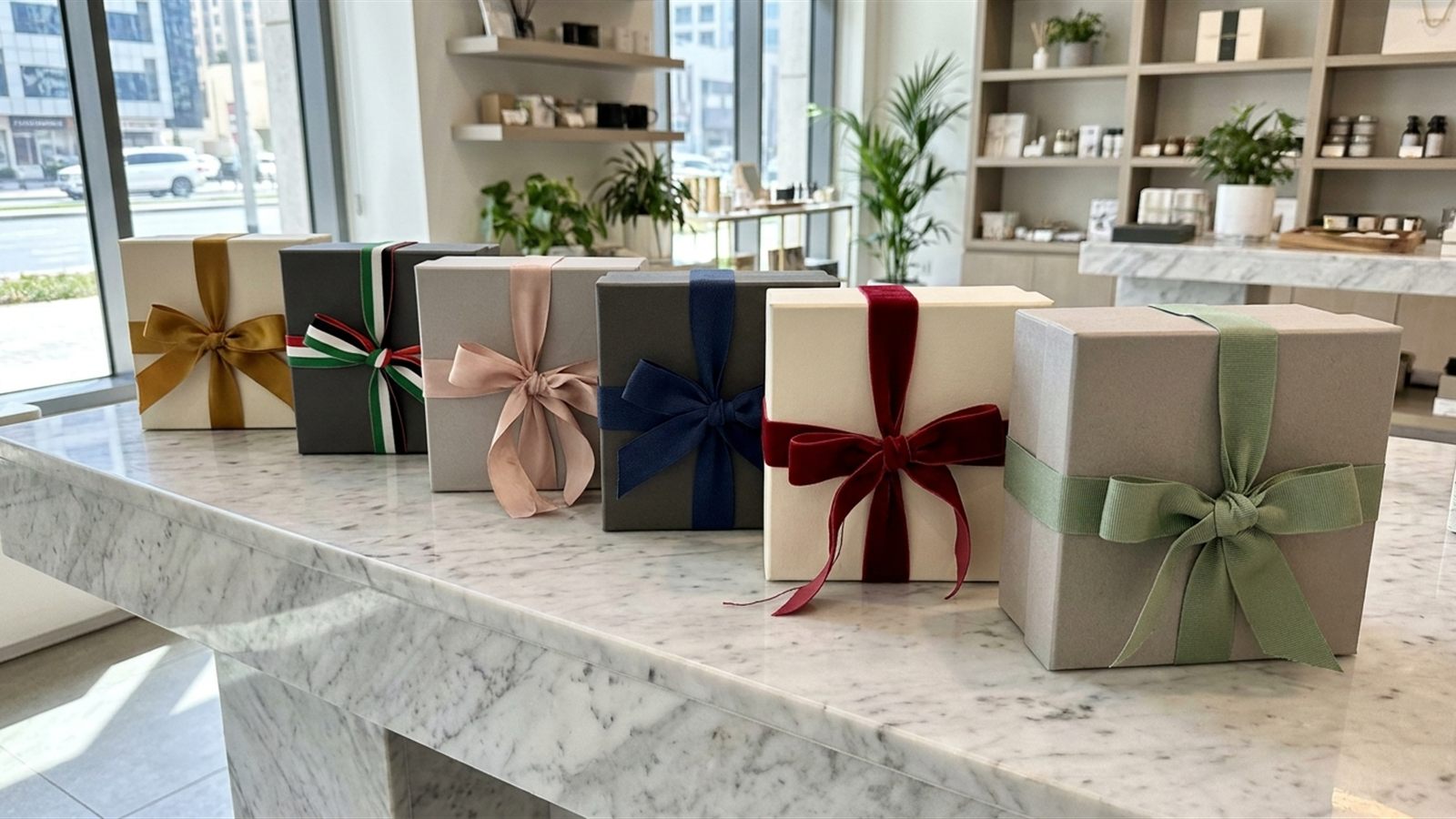
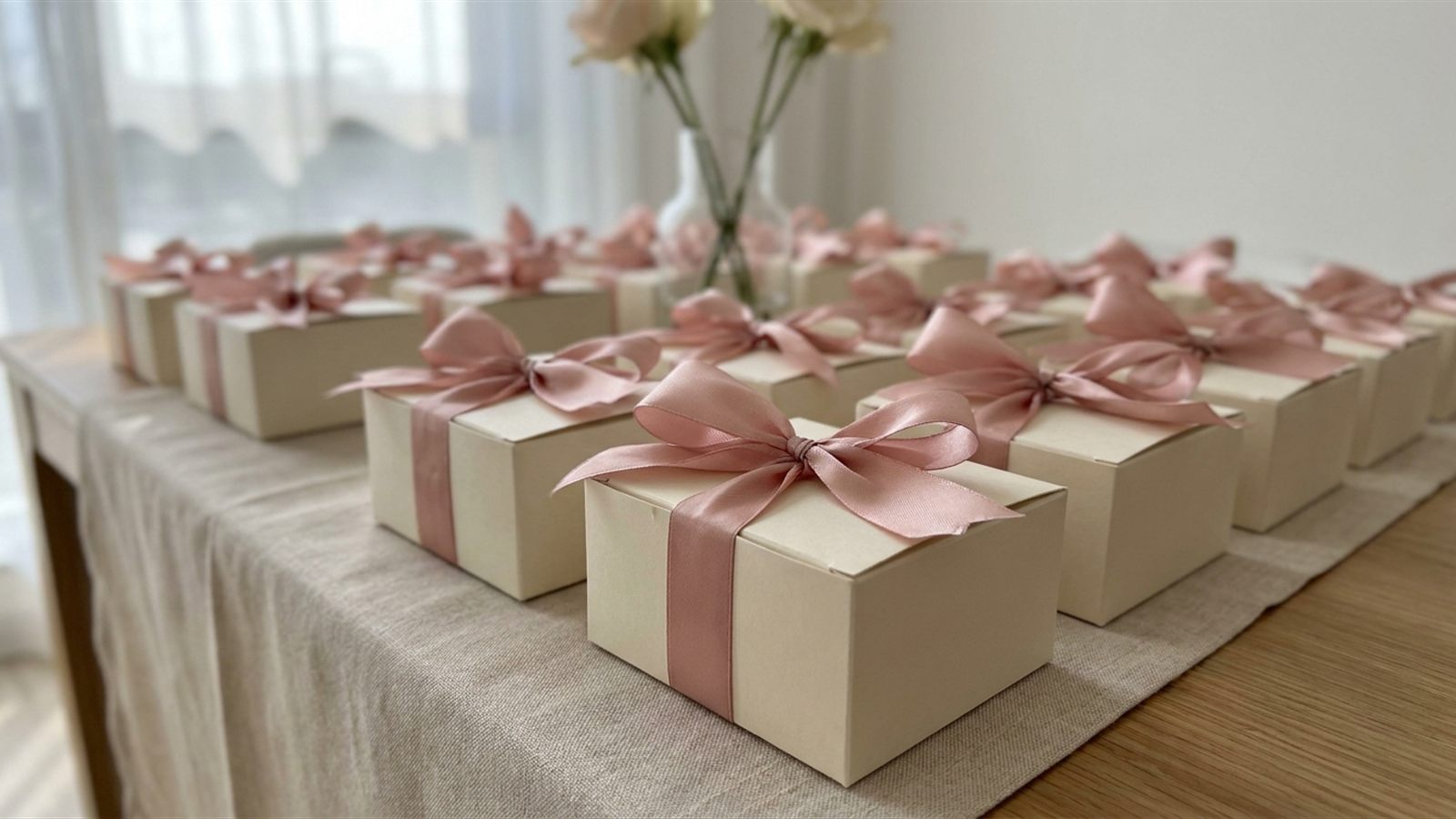
Wedding and engagement favours are small boxes, bags and jars made in large numbers and set out together on one table. That table is photographed by the couple, the guests and the photographer, often in close-up. A crooked bow or a slightly different shade repeats down the whole row, so the ribbon is judged twice: once in the hand, and once on camera.
Finishes that read well on camera
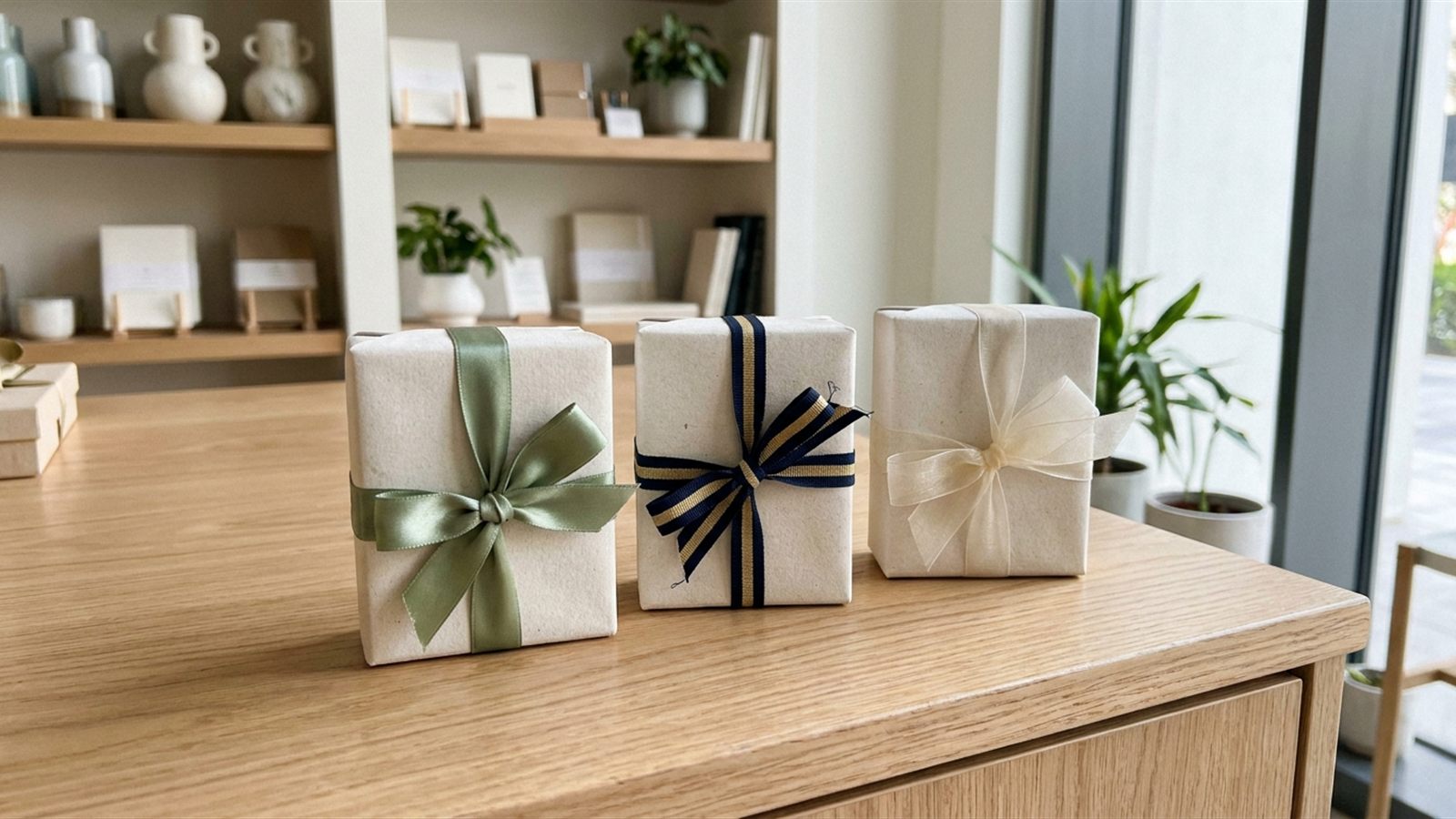
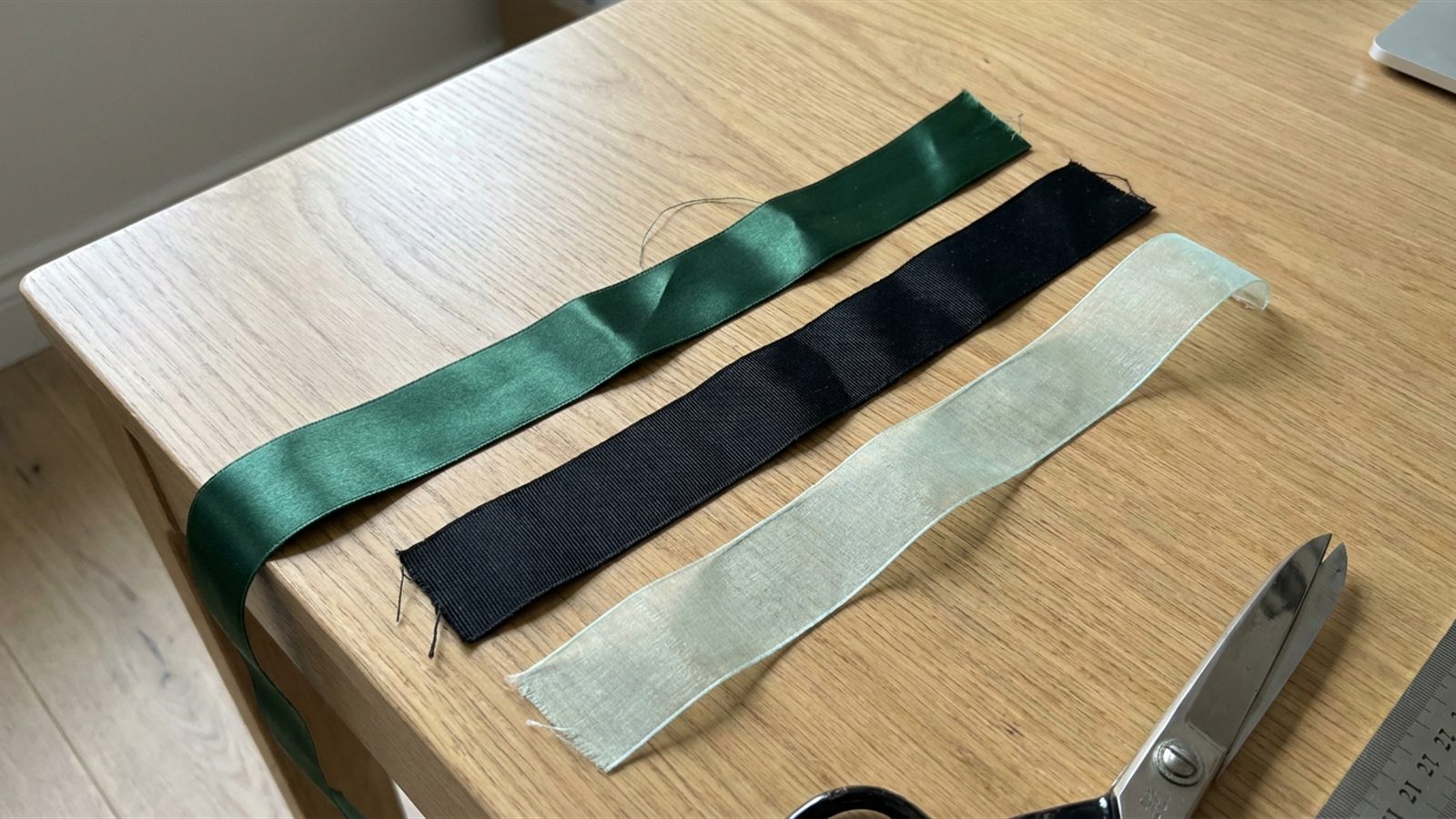
Double-face satin is the usual first choice. It has a soft shine, it ties a full rounded bow, and both sides of every loop shine, which matters when the bow is photographed from above. Single-face satin shows its dull side in every loop, so avoid it for bows. The guide to ribbon finishes explains the difference.
Sheer organza is the other common choice. It adds colour without hiding the box and suits favour bags and sweet boxes. Wide organza bows can flop, so keep favours narrow, or layer a narrow organza over a narrow satin.
Choosing the colour
Start from the wedding palette, not from the ribbon. These are common choices, not a forecast of what is fashionable:
- Ivory and white: quiet, and easy to match to almost any palette.
- Blush: soft and warm, often paired with ivory and gold.
- Gold: rich on ivory, white or deep green boxes, and satin shows it at its best.
- Sage: a gentle green that sits well with white, cream and natural card.
- Dusty blue: a calm, muted shade for ivory and white boxes.
Keep to one or two colours per favour. More than that, repeated across a hundred boxes, starts to look busy.
Why a photo lies about colour
Screens, camera white balance and the sheen of satin all shift what you see, and pale shades are the easiest to get wrong, because ivory, cream and blush sit so close together. Do not approve a colour from a photo. The ribbon colour matching guide covers this in full. Ask for a physical swatch in the finish you plan to use, and look at it in daylight beside the box and the flowers. Look again later in the day, because wedding venues often mix daylight and warm evening lighting.
Widths for small favours
The rule of thumb from the ribbon width guide works from the shorter side of the lid. For a favour box, jar lid or bag up to about 15 cm, use 6 to 16 mm ribbon.
| Favour type | Ribbon | Width |
|---|---|---|
| Small favour box, up to about 15 cm | Double-face satin | 6 to 16 mm |
| Favour bag | Sheer organza, or satin | 6 to 16 mm |
| Jar or bottle favour | Double-face satin, tied at the neck | 6 to 16 mm |
| Larger gift-style box, about 15 to 30 cm | Double-face satin | 16 to 25 mm |
Photograph your own sample. Tie one favour, put it on the table you will use, step back and take a photo. The width and bow that look right on camera are the ones your guests will remember.
Bows for favours
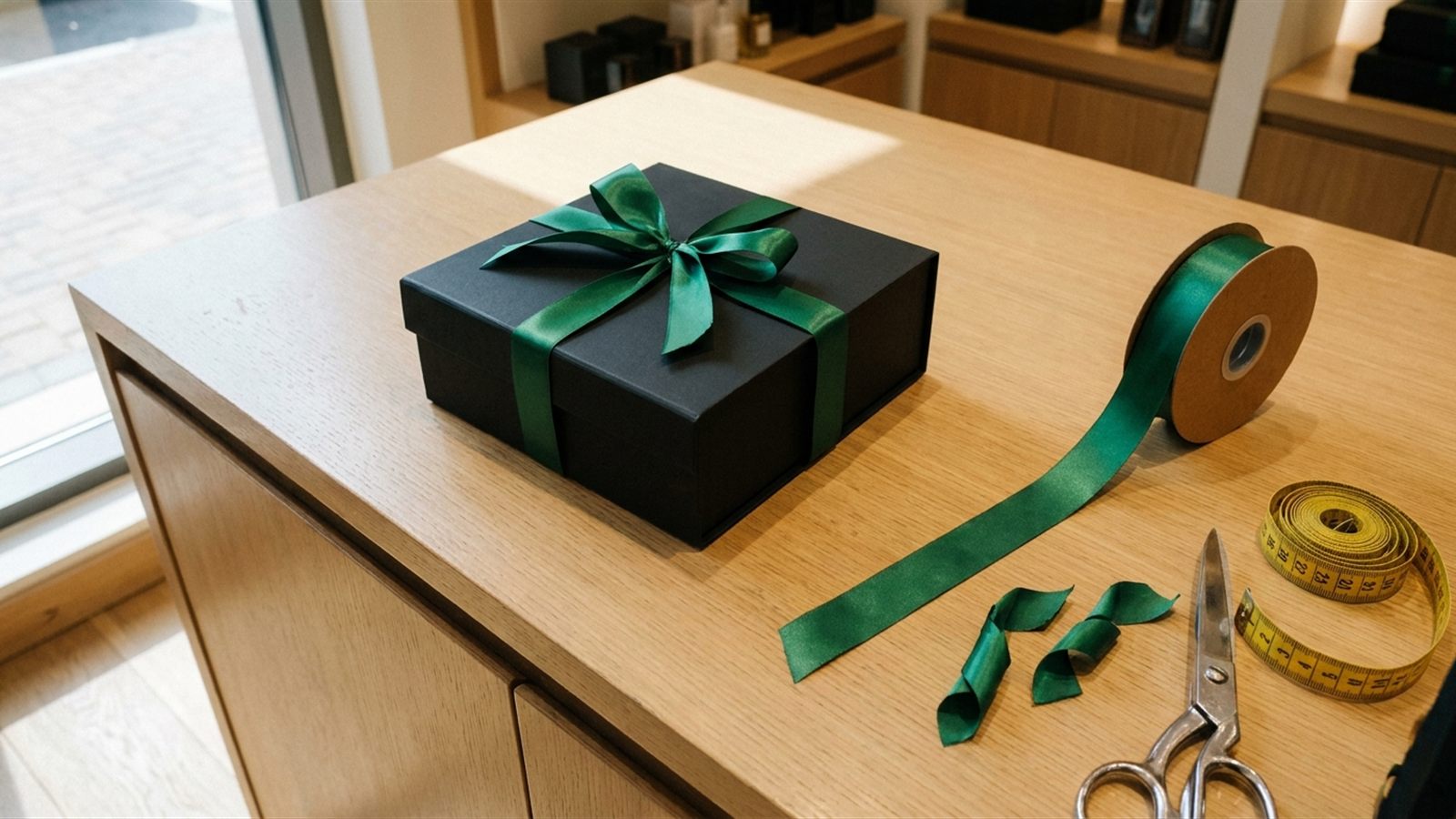
On a favour, a small, even bow usually looks better than a large one. A bow of about a third to half of the lid's shorter side looks balanced, as the bow sizes guide explains, and the guide to tying a neat gift bow walks a new team through the steps. Agree on one style, trim every tail to the same length, and set finished favours out flat so the loops keep their shape.
Printed names and dates
Ribbon printed with the couple's names and the date turns a plain favour into a keepsake. Keep the text short, because narrow ribbon has little room, and check every spelling and date on the proof with a second person. The logo-printed ribbon guide covers artwork and proofs. For names in English and Arabic, the Arabic text printed ribbon guide covers the extra checks.
Planning the order
Tie one complete favour first, with the real box, ribbon and bow. The guide to sampling ribbon before a bulk order explains why this catches most problems.
Then measure that bow and enter it in the ribbon calculator with your favour size and guest count. Add at least 5% spare, and more if a team will be tying by hand on the day.
Order all the ribbon together and ask for it to come from one dye lot, which not every supplier can promise, as the dye lots and reorders guide explains. Order early enough to test a sample and print a proof, with room to change a colour that looks wrong in person.
The short checklist
- Palette confirmed, with one or two ribbon colours
- Colour approved on a physical swatch in daylight
- Double-face satin or sheer ribbon, 6 to 16 mm for favours up to about 15 cm
- One sample favour tied and photographed on the real table
- Names and dates checked on the proof by a second person
- Metres worked out with spare, and all ribbon ordered from one dye lot
Questions buyers ask
What ribbon looks best on wedding favours in photos?
Double-face satin and sheer organza are the usual choices. Satin gives a soft shine and a full bow that looks good from every angle, and organza adds colour without hiding the box. Match the colour to the wedding palette on a physical swatch, because a photo can shift a shade.
What width ribbon for small wedding favour boxes?
For a favour box, jar lid or bag up to about 15 cm, use 6 to 16 mm ribbon. This is the rule of thumb from the ribbon width guide, based on the shorter side of the lid. For larger gift-style boxes of about 15 to 30 cm, step up to 16 to 25 mm, and tie a sample before you decide.
Can I print the couple's names and date on favour ribbon?
Yes. Keep the text short, because narrow ribbon has little room, and check the proof carefully for spelling and dates. For names in English and Arabic, follow the checks in the Arabic text printed ribbon guide.
How much ribbon do I need for wedding favours?
Tie one bow the way your team will tie them all, measure it, and enter it with your favour size and guest count in the ribbon calculator. Add at least 5% spare, and more if a team will be tying by hand on the day.
Why should all the favour ribbon come from one dye lot?
Ribbon dyed in a later batch can differ very slightly in shade, even against the same colour reference. On a wedding table the favours sit side by side, so the difference shows. Order everything together and keep a reference cutting. The dye lots and reorders guide has the detail.