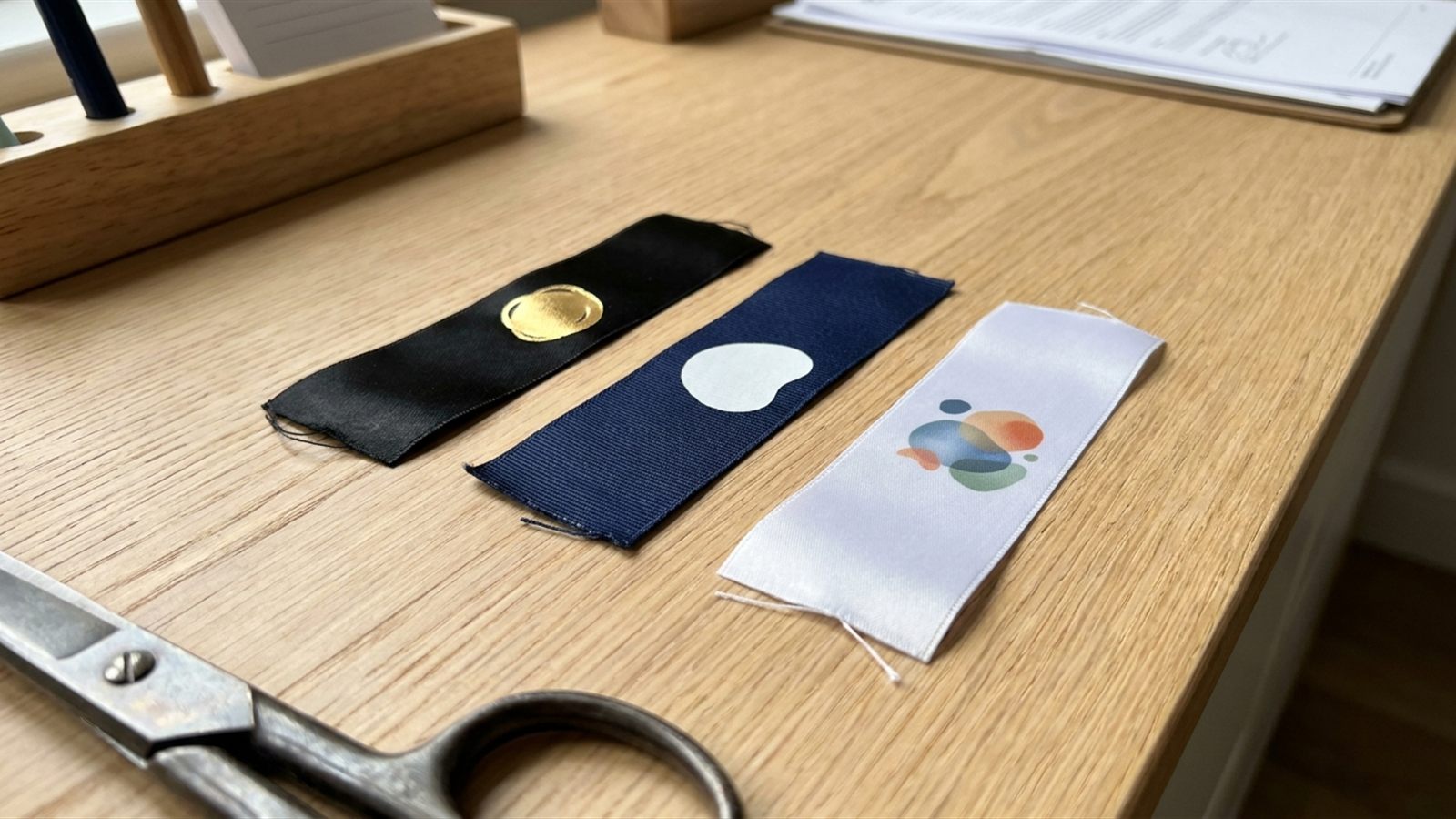
How the three methods work
All three put a mark on finished ribbon rather than weaving it in, and each does it a different way.
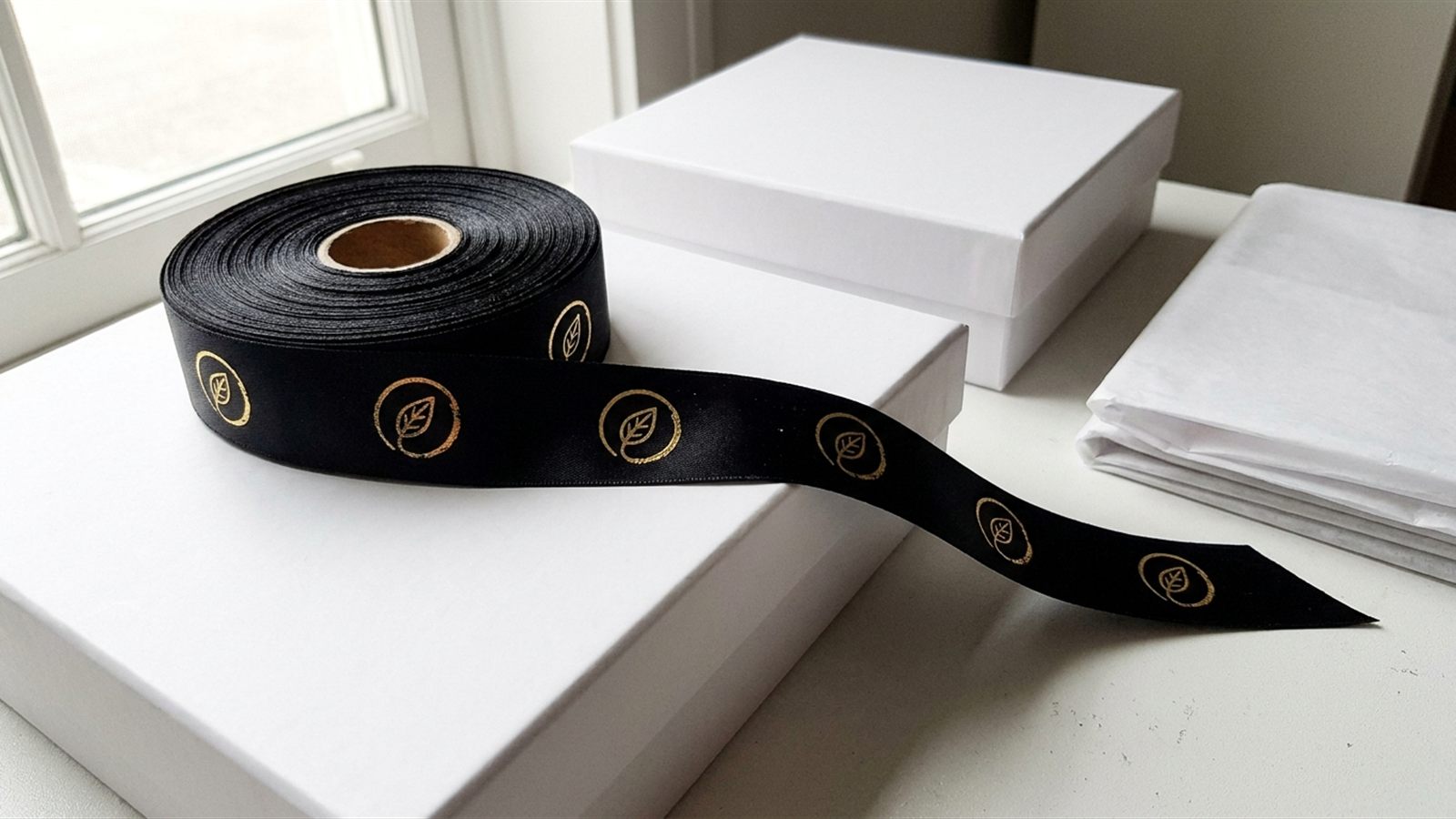
- Hot foil stamping uses a heated metal die, cut to the shape of your logo, which presses a thin layer of metallic or coloured foil onto the ribbon. The die leaves a slightly raised, pressed feel where it meets the surface.
- Screen printing pushes ink through a fine mesh screen with your design cut into it, one screen per colour. The ink sits on top of the ribbon as a flat, solid layer.
- Digital printing (including thermal transfer and inkjet methods) builds the image from tiny dots, the way an inkjet printer does, with no die or screen to cut first.
The die or screen is part of what you are paying to set up with hot foil and screen print; digital printing changes the design from one print to the next without a new die or screen, which is why it suits a short run or a design that varies along the length.
What each looks and feels like
Hot foil is metallic gold, silver, or occasionally another foil colour, and you can feel a slight ridge where the die has pressed the ribbon. It is the classic premium look on a satin bow. Screen print lays down flat, opaque ink in solid blocks of colour, with a slightly raised, slightly textured feel if you run a finger across it, but no shine. Digital printing sits flatter again, closer to the ribbon's own surface, and can print full colour, soft gradients, and photographic detail that the other two cannot reproduce in a single pass.
Fine detail, small text and gradients
Hot foil holds a clean edge on simple shapes and letters, but a very thin line or small serif can lose definition as the die presses in, and foil cannot do a gradient. Screen print holds a bold edge well, but ink can bleed slightly at very fine lines, and like foil it prints one solid colour per screen, so it cannot blend one colour into another either. Digital printing is the only one of the three that reproduces a smooth gradient, a soft shadow, or a photograph, and it generally holds the finest detail and the smallest text, because nothing has to pass through a die or a mesh first.
How many colours each manages
Hot foil applies a single foil colour in one pass; a two-colour foil mark means pressing twice, which adds cost and the two passes must line up exactly. Screen print works the same way, one screen per colour, so a one or two colour logo is its natural home and anything past three or four colours gets expensive and harder to register. Digital printing prints as many colours as the artwork uses in a single pass, because it is building the image from dots rather than laying down separate solid colours, which is why it is the method for a multi-colour pattern or a logo built from a gradient.
Durability: rubbing, folding and a UAE car boot
Hot foil can crack or flake if the ribbon is folded sharply and repeatedly along the mark, because the foil layer is thin and sits on the surface rather than soaking into it. Screen print ink is generally the most hard-wearing of the three against rubbing and folding, since the ink forms a solid, flexible layer. Digital printing's durability depends heavily on the specific process and on how the image is fixed to the ribbon, so ask your printer how their particular method holds up to handling. Heat is worth planning for in the UAE: ribbon left in a car boot or a warehouse without climate control gets hot enough to soften foil or ink, so store finished rolls somewhere cool and avoid leaving printed ribbon in direct sun for long periods, whichever method you have chosen.
Which ribbon finish suits each method
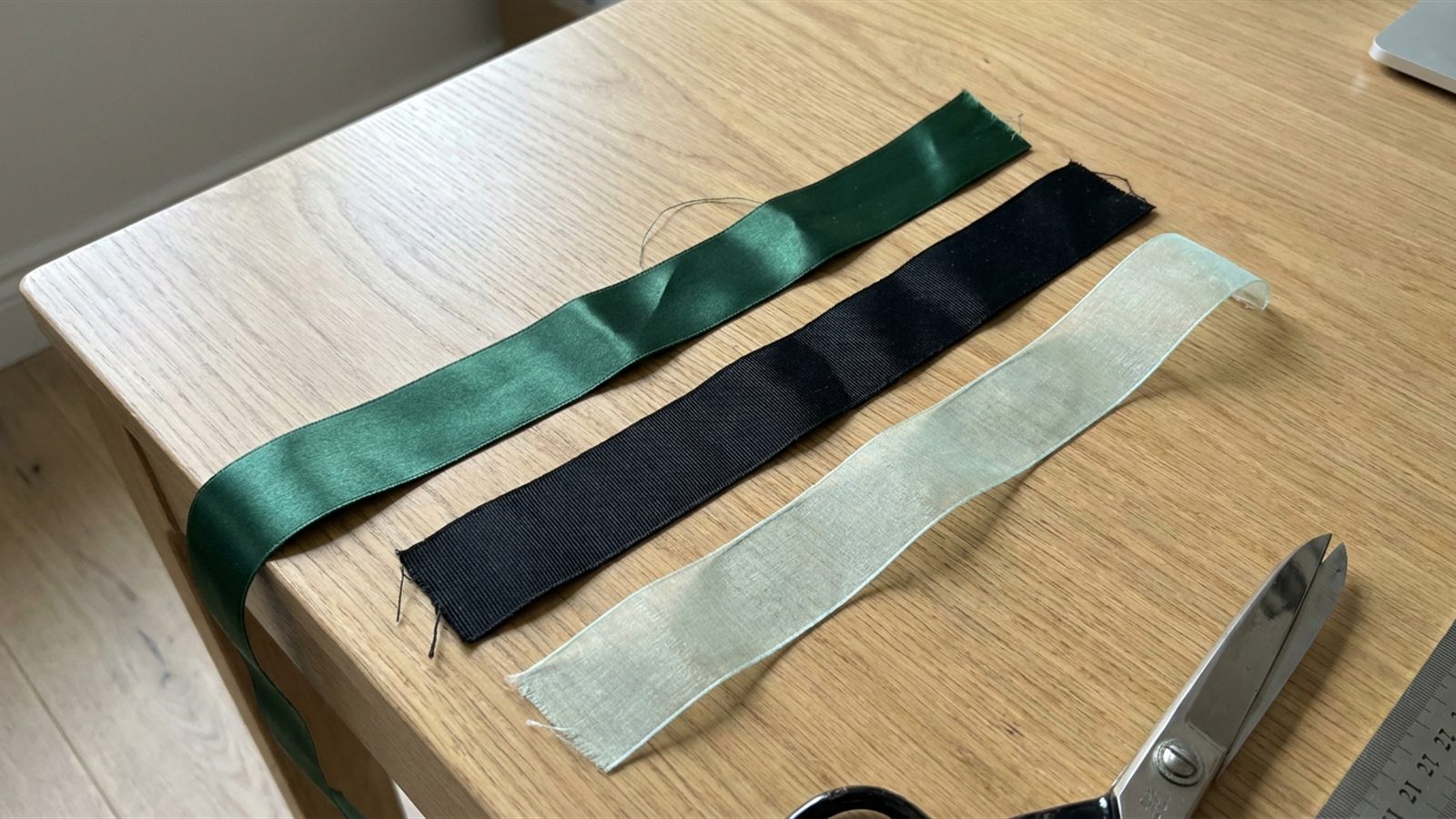
Satin and grosgrain take all three print methods; organza rarely takes print well, because its sheer, open weave gives ink and foil little to hold onto. Gold or silver foil shows at its best on satin, since satin's own shine sets off the metallic mark, while grosgrain's firm, flat surface keeps a foil edge sharp if the logo is simple. Screen print works confidently on both satin and grosgrain, with grosgrain again giving the sharper edge on fine detail. Digital printing also works on both, and because it does not depend on a die pressing in or a screen pressing through, it is more forgiving of a textured surface, though a flat, even ribbon still gives the cleanest result. The guide to ribbon finishes and the guide to single- and double-face satin cover what each finish is otherwise good for.
What it means for your artwork
Whichever method you choose, send a vector file with text converted to outlines and every colour named, as the logo-printed ribbon guide sets out. Beyond that, each method has its own needs. For hot foil and screen print, prepare a true one-colour (or two-colour) version of your logo, since any gradient or shadow has to be simplified into flat shapes before a die or screen can be cut. For digital printing, you can supply the full-colour artwork largely as designed, including gradients, but check with your printer what resolution and colour profile they want the file in, since a low-resolution image will print with soft edges just as it would anywhere else.
Side by side
| Hot foil | Screen print | Digital | |
|---|---|---|---|
| Look | Metallic, slightly raised | Flat, opaque, solid colour | Full colour, flat to the surface |
| Fine detail | Good on simple shapes | Good, bleeds on very fine lines | Best of the three |
| Gradients and photos | Not possible | Not possible | Yes |
| Colours per run | One foil colour per pass | One ink colour per screen | As many as the artwork uses |
| Best suited to | Metallic one-colour logo | Bold one or two colour logo, longer runs | Multi-colour or photographic artwork, shorter runs |
Choosing by job
- A one-colour logo: screen print and hot foil both suit this well; screen print in a solid colour, hot foil for a metallic finish. Choose on look rather than on the method alone.
- A metallic brand mark: hot foil is the natural choice, and it reads most clearly on satin.
- A multi-colour pattern or gradient: digital printing is the only method of the three that reproduces it accurately in one pass.
- A short run versus a long run: hot foil and screen print both need a die or screen made first, which is a fixed step regardless of how much you print afterwards, so they suit a longer run where that setup is spread over more ribbon. Digital printing needs no die or screen, so it suits a shorter run or a design that changes partway through. Exact costs and minimums vary by printer.
If you are between two methods, ask your printer for a printed sample of your actual artwork on your chosen ribbon in each. A method that reads well in a supplier's sample book does not always suit your specific logo.
The short checklist
- Count the colours and check for any gradient or photographic element in your artwork
- Match the method to the result: foil for metallic, screen print for bold flat colour, digital for multi-colour or fine photographic detail
- Choose satin or grosgrain; keep organza out of consideration for printing
- Prepare a one-colour version of the logo if you are printing by foil or screen
- Ask how the chosen method holds up to folding, rubbing and heat before you commit to a long run
- Get a printed sample of your own artwork before approving the full order
Questions buyers ask
What is the difference between foil and screen printing on ribbon?
Hot foil presses a thin metallic or coloured foil layer onto the ribbon with a heated die, giving a shiny, slightly raised mark. Screen printing pushes ink through a fine mesh screen, leaving a flat, opaque, solid-colour mark with no shine. Foil is the classic premium look for a metallic logo on satin, while screen print suits a bold, flat one or two colour design and is generally the more hard-wearing of the two against rubbing.
Can digital printing do a full-colour logo with gradients on ribbon?
Yes, digital printing is the method for a full-colour logo, a soft gradient or a photographic image, because it builds the design from dots rather than laying down one solid colour per pass. Hot foil and screen print both apply a single colour per pass, so a logo built from gradients or shadows has to be simplified into flat shapes first for either of them.
Which print method is most durable for ribbon that travels in a hot car?
Screen print ink is generally the most hard-wearing of the three against rubbing and folding, since it forms a solid, flexible layer. Hot foil can crack or flake if folded sharply and repeatedly along the mark. Heat matters more than the method, though: ribbon left in a car boot or an uncooled warehouse can soften any of the three, so store finished rolls somewhere cool and out of direct sun.
How many colours can screen printing put on ribbon?
Screen printing uses one screen per ink colour, so a one or two colour logo is its natural home, and registering three or four screens accurately starts to add cost and complexity. Beyond that, digital printing is generally the better fit, since it prints as many colours as the artwork uses in a single pass rather than one screen at a time.
Is hot foil or screen print better for a metallic logo?
Hot foil, because it presses an actual metallic foil layer onto the ribbon, giving a genuine shine that screen print's flat ink cannot match. It reads best on satin, where the ribbon's own sheen sets off the metallic mark. Screen print can only approximate a metallic look with a metallic ink, which looks flatter than true foil.
Should I choose foil, screen print or digital for a short print run?
Digital printing generally suits a shorter run best, because it needs no die or screen made first, unlike hot foil and screen print, which both require that fixed setup step before printing starts. Hot foil and screen print spread that setup cost over more ribbon, so they suit a longer run better. Exact minimums and costs vary by printer, so ask before committing to a method on run length alone.
Does organza take foil, screen print or digital printing well?
Rarely, and generally not well in any of the three methods, because its sheer, open weave gives ink and foil little surface to hold onto. Satin and grosgrain both take hot foil, screen print and digital printing confidently, with grosgrain's firm, flat surface giving the sharpest edge on fine detail. Keep organza for its usual role in favours and layering rather than for a printed logo.