The quick answer
Tap the job you are wrapping for:
What is the ribbon for?
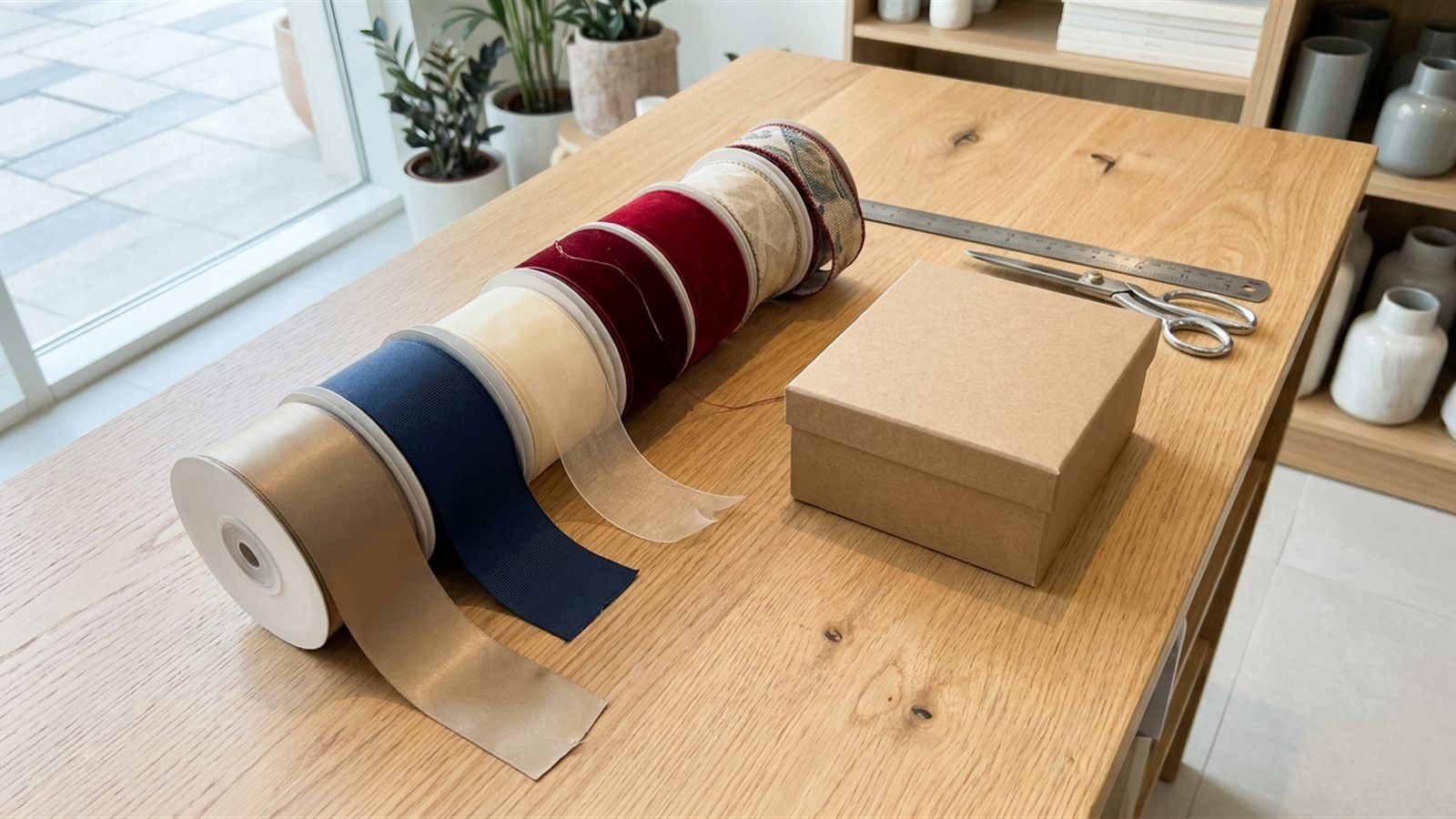
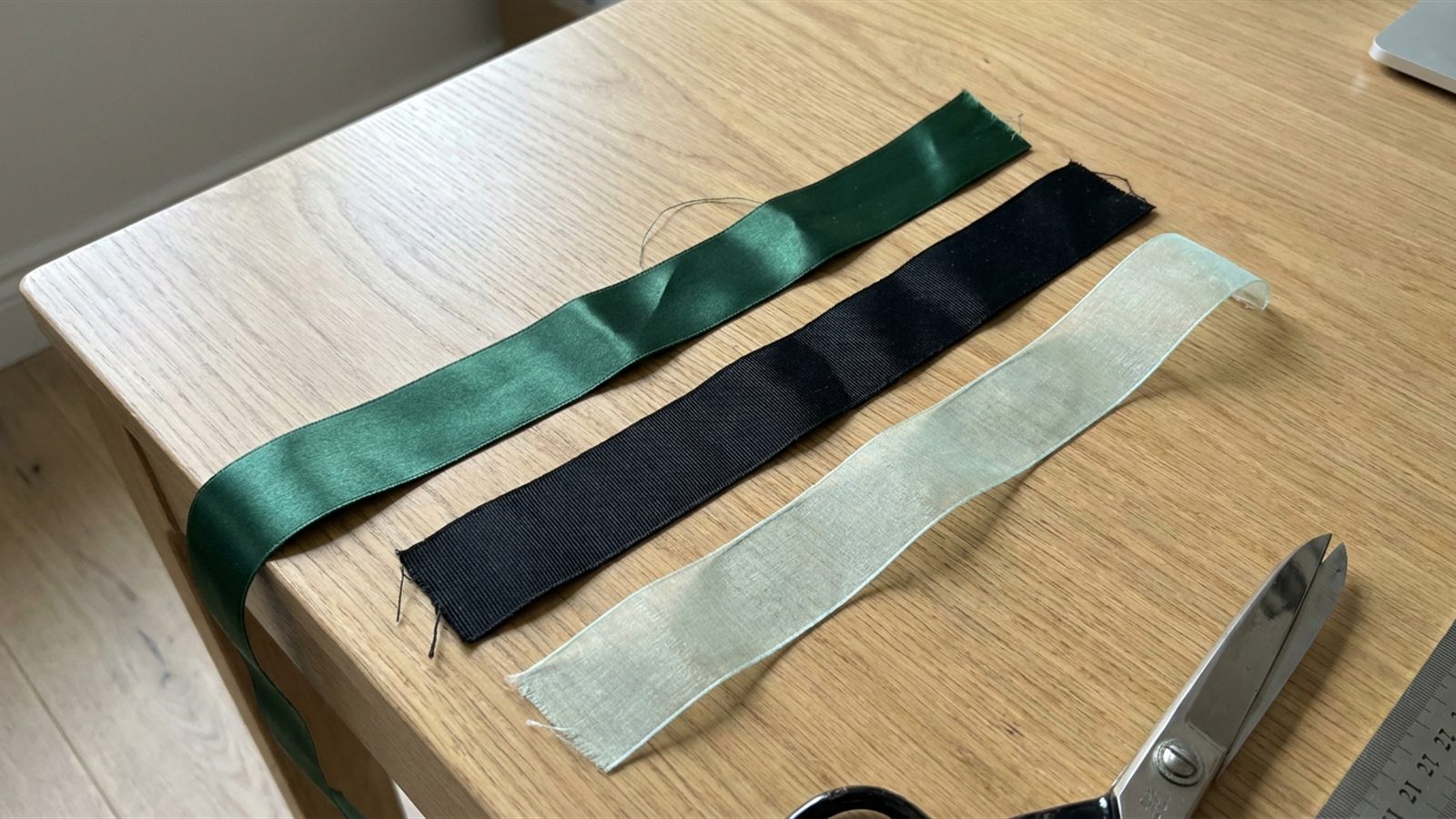
Satin: shine and soft bows
Satin is woven so that long threads float on the surface, which is what gives it that smooth, glossy face. It drapes, it ties full rounded bows, and it photographs beautifully, which matters when your customer's first move is to post the unboxing.
Satin comes in two kinds, and the difference matters more than people expect:
- Single-face is shiny on one side and dull on the other. Fine for a flat band around a box, where only one side shows.
- Double-face is shiny on both sides. Every bow twists the ribbon, so a bow in single-face shows its dull side in every loop. For bows, choose double-face.
The weakness: satin creases if rolls are stored flat under weight, shows marks from damp hands, and frays at a straight cut. Cut ends at an angle or in a V, called a dovetail, and store rolls on their cores, never flat under weight.
Grosgrain: structure and grip
Grosgrain has fine ribs running across its width. It is matte, firm and hard-wearing. Because the ribs grip, knots stay put and bows keep their shape, which is why it is used for anything handled a lot: hampers, tied labels, bag handles and hair accessories.
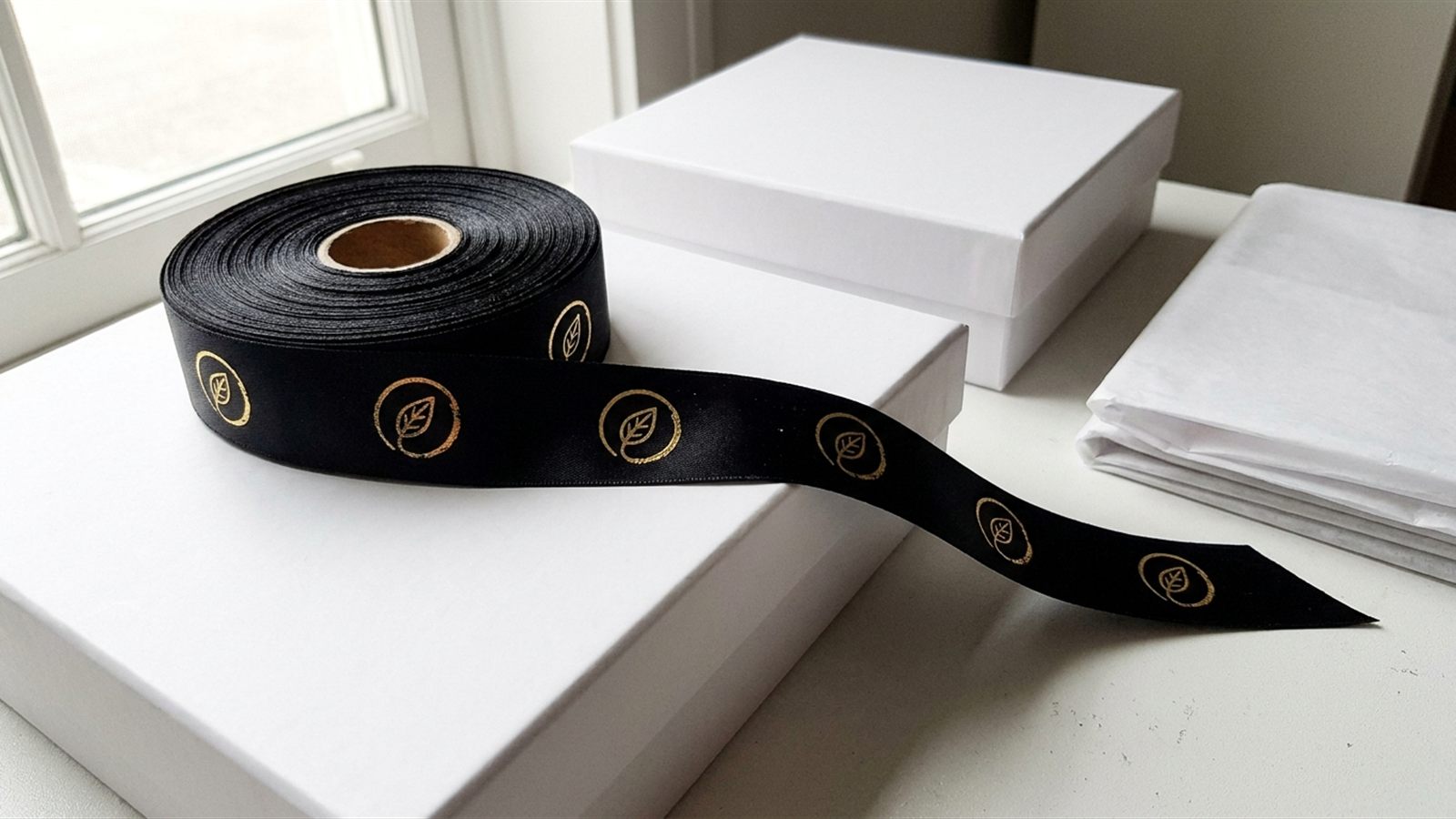
It also takes print well. The firm, even surface holds a fine line, so small text and detailed logos come out crisp. What it does not do is shine. On a luxury box it reads as tailored rather than glamorous, which can be exactly right for a menswear brand or a corporate gift.
Organza: light and sheer
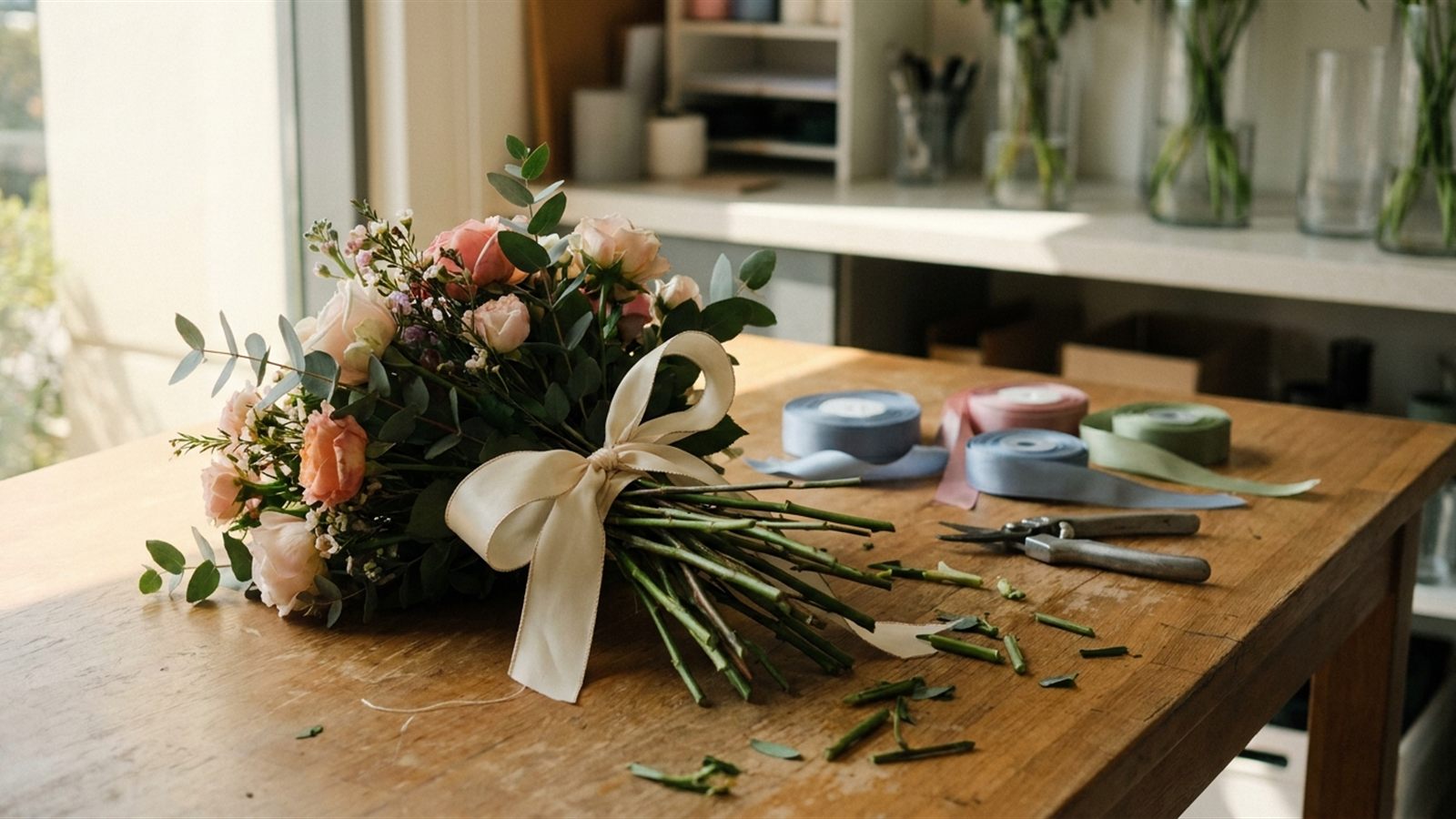
Organza is a thin, sheer weave. You can see through it, so it adds colour and softness without hiding what is underneath. It is the usual choice for favour bags, sweet boxes, and flowers, and for layering over a narrower satin for depth.
It is not a structural ribbon. Wide organza bows can flop unless the ribbon has a wired edge, a fine wire woven into both edges that lets you shape loops and have them stay. Organza also snags on rough card, so it suits smooth packaging best.
Side by side
| Satin | Grosgrain | Organza | |
|---|---|---|---|
| Look | Glossy, smooth | Matte, ribbed | Sheer, airy |
| Bows | Soft and full | Crisp, holds shape | Light; needs wire to stand up |
| Handling and shipping | Marks and creases | Best of the three | Snags on rough surfaces |
| Printing | Foil looks premium | Sharpest detail | Limited |
| Best for | Chocolates, perfume, jewellery | Hampers, labels, corporate | Favours, flowers, layering |
Also worth knowing
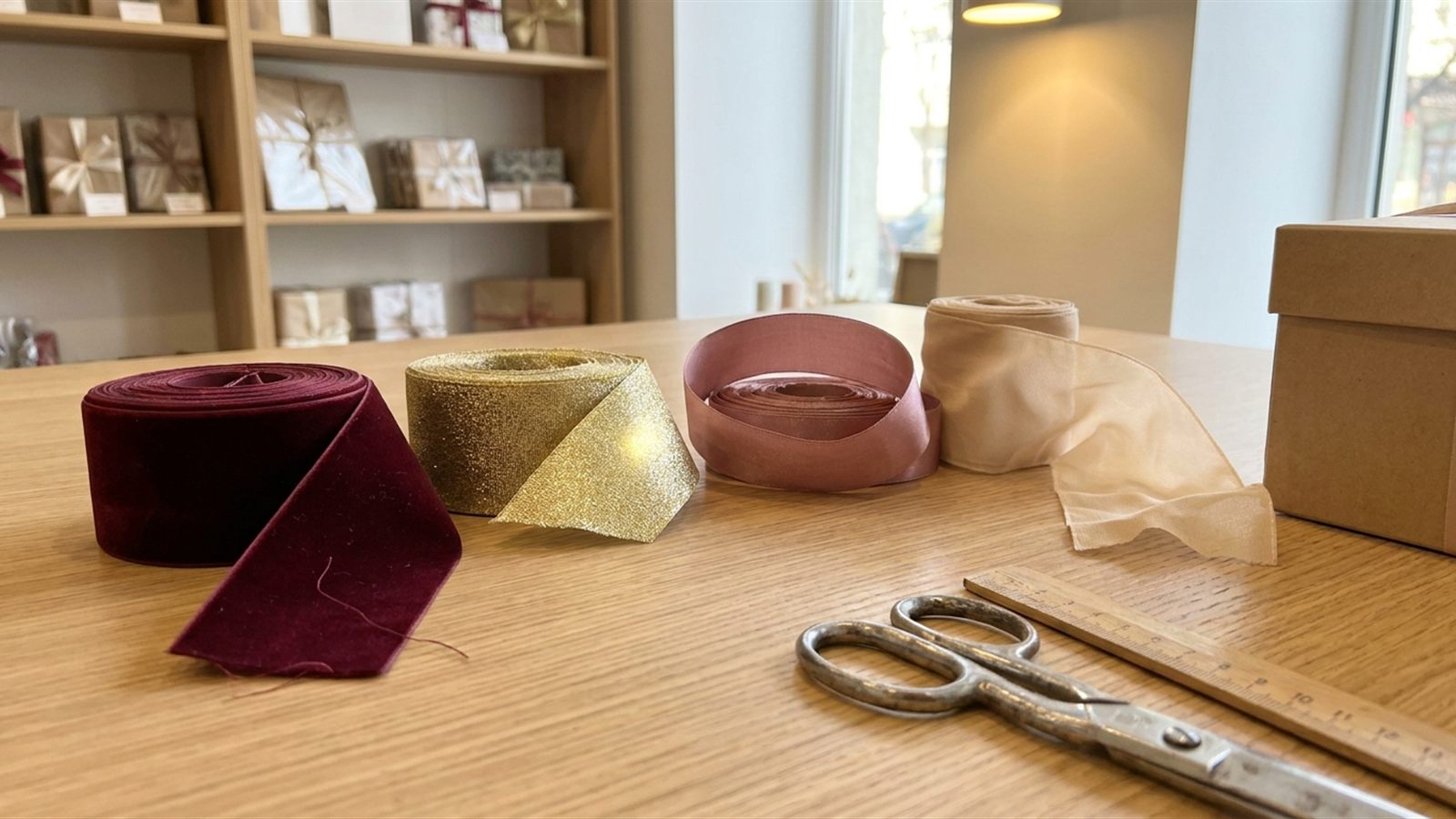
- Velvet is the richest-looking of all and suits winter and luxury gifts. Expect to pay more, and to use it in narrower widths.
- Wired-edge versions of satin and organza are worth their price for large bows, wreaths and displays that must hold a shape all day.
- Colour shifts between finishes. The same green in satin, grosgrain and organza will look three different shades, because each reflects light differently. Match colour on the finish you will actually use.
- Food boxes are a case of their own: the ribbon belongs on the box, not on the food. The guide for bakeries and chocolatiers lists the questions to ask before ribbon goes near a cake or a chocolate.
Not sure how much to order? The ribbon calculator works it out from your box size.
Questions buyers ask
What is the difference between satin and grosgrain ribbon?
Satin is smooth and glossy; grosgrain is matte with fine ribs running across its width. Satin drapes and ties soft, full bows that photograph beautifully, but it creases, shows marks from damp hands and frays at a straight cut. Grosgrain is firm and hard-wearing: its ribs grip the knot, bows keep their shape, and it survives handling and shipping better than any other finish here.
What is double-face satin ribbon, and do I need it for bows?
Double-face satin is shiny on both sides, and yes, you need it for bows. Single-face satin is glossy on one side and dull on the other, which is fine for a flat band where only one side shows. Every bow twists the ribbon, so a bow tied in single-face shows its dull side in every loop. Choose double-face whenever the ribbon will be tied.
Which ribbon is best for a gift hamper that will be delivered?
Grosgrain. A hamper gets carried, stacked and shipped, and grosgrain's ribs grip the knot, it does not show fingerprints, and it keeps its shape after a courier journey. Satin arrives looking tired, with creases and marks from handling. On a luxury hamper grosgrain reads as tailored rather than glamorous, which often suits a corporate gift well.
Is organza ribbon good for gift boxes?
Organza suits favours, sweet boxes, flowers and layering over a narrower satin, rather than being the main ribbon on a heavy box. It is thin and sheer, so it adds colour without hiding what is underneath, but it is not structural: wide organza bows flop unless the ribbon has a wired edge. It also snags on rough card, so keep it for smooth packaging.
Which ribbon is best for a foil-printed logo?
Satin, for gold or silver foil, which is the classic premium look. For a detailed logo or small text, grosgrain is better, because its flat, firm surface keeps the edges sharp. Organza takes print only in a limited way. Ask for a printed sample on both satin and grosgrain before a first order; the logo-printed ribbon guide lists what to prepare.
Why does the same colour look different in satin and grosgrain?
Because each finish reflects light differently. The same green in satin, grosgrain and organza will look like three different shades: satin's gloss makes it brighter, grosgrain's matte ribs make it deeper, and organza's sheerness lets the box colour show through. Always match colour on the finish you will actually use, and on a sample of the real ribbon rather than a catalogue image.
How do I stop satin ribbon from fraying?
Cut the ends at an angle or in a V shape, called a dovetail, instead of straight across, which slows fraying; heat sealing polyester satin stops it, as the cutting guide explains. Satin's long surface threads pull loose from a straight cut, which is why the ends fray. Keep rolls on their cores and never under weight, because satin creases when it is squeezed, and handle it with dry hands, as it shows marks from damp fingers.