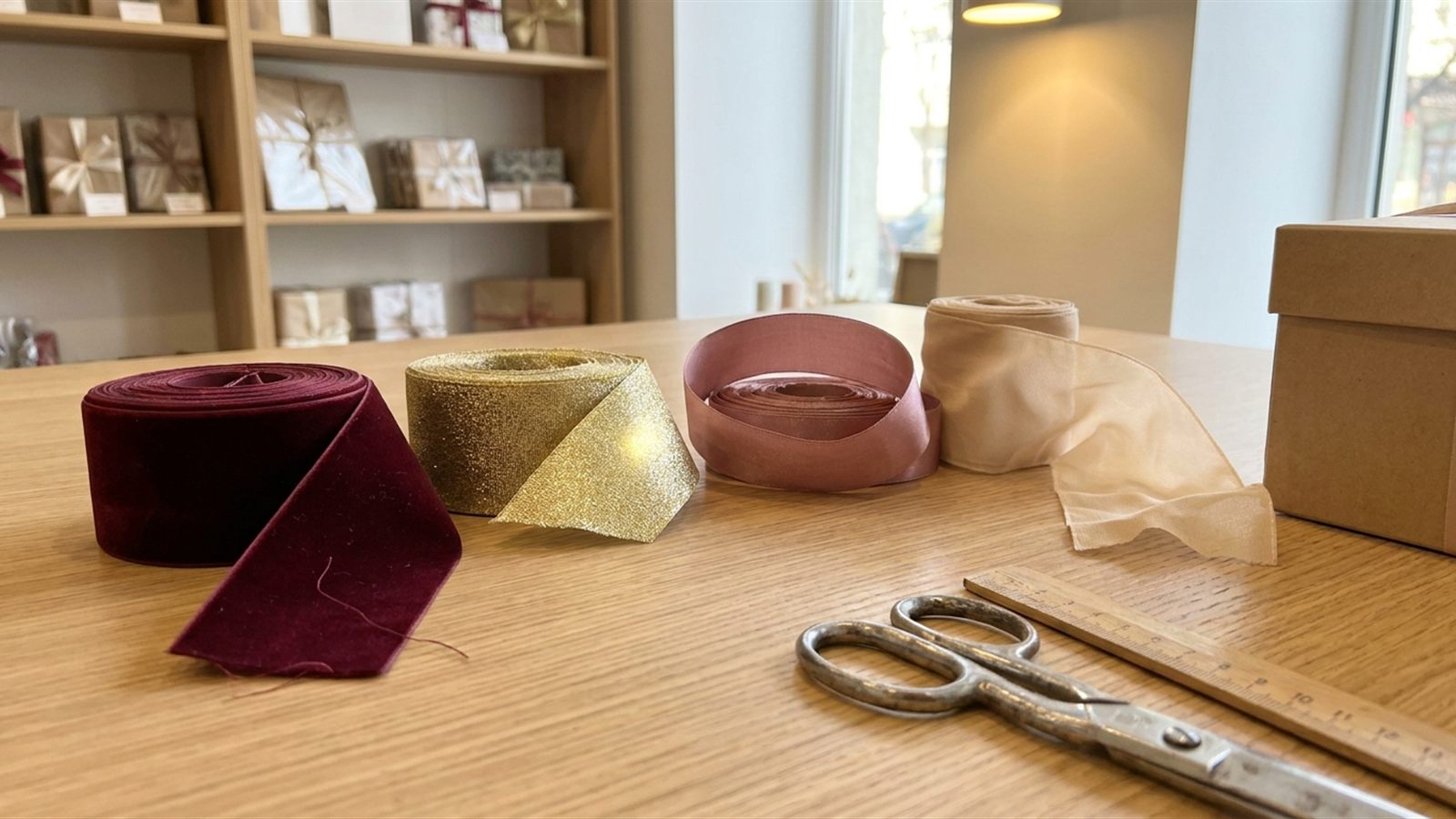
The quick answer
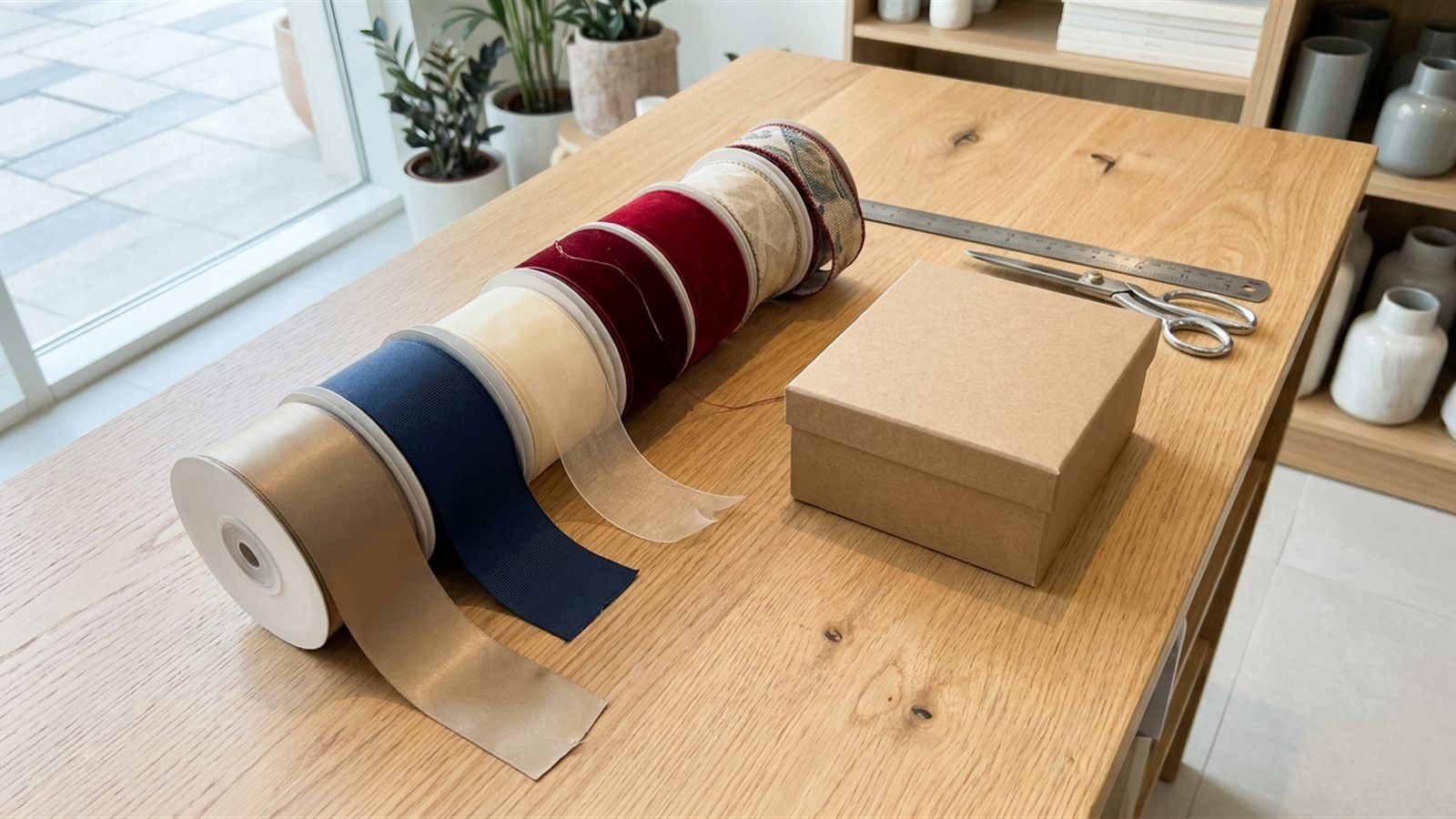
Velvet, metallic, wired-edge and sheer ribbon each solve a problem the basic trio does not. Velvet adds warmth and weight for winter and luxury gifts. Metallic adds shine under lights and in photography. Wired-edge holds a bow or a loop in shape without your hands. Sheer beyond organza, such as chiffon, adds softness and drape rather than structure. Most of the time you want one of these, not all four, and the choice follows the box, the season and whether the ribbon will travel.
Velvet: warmth and weight
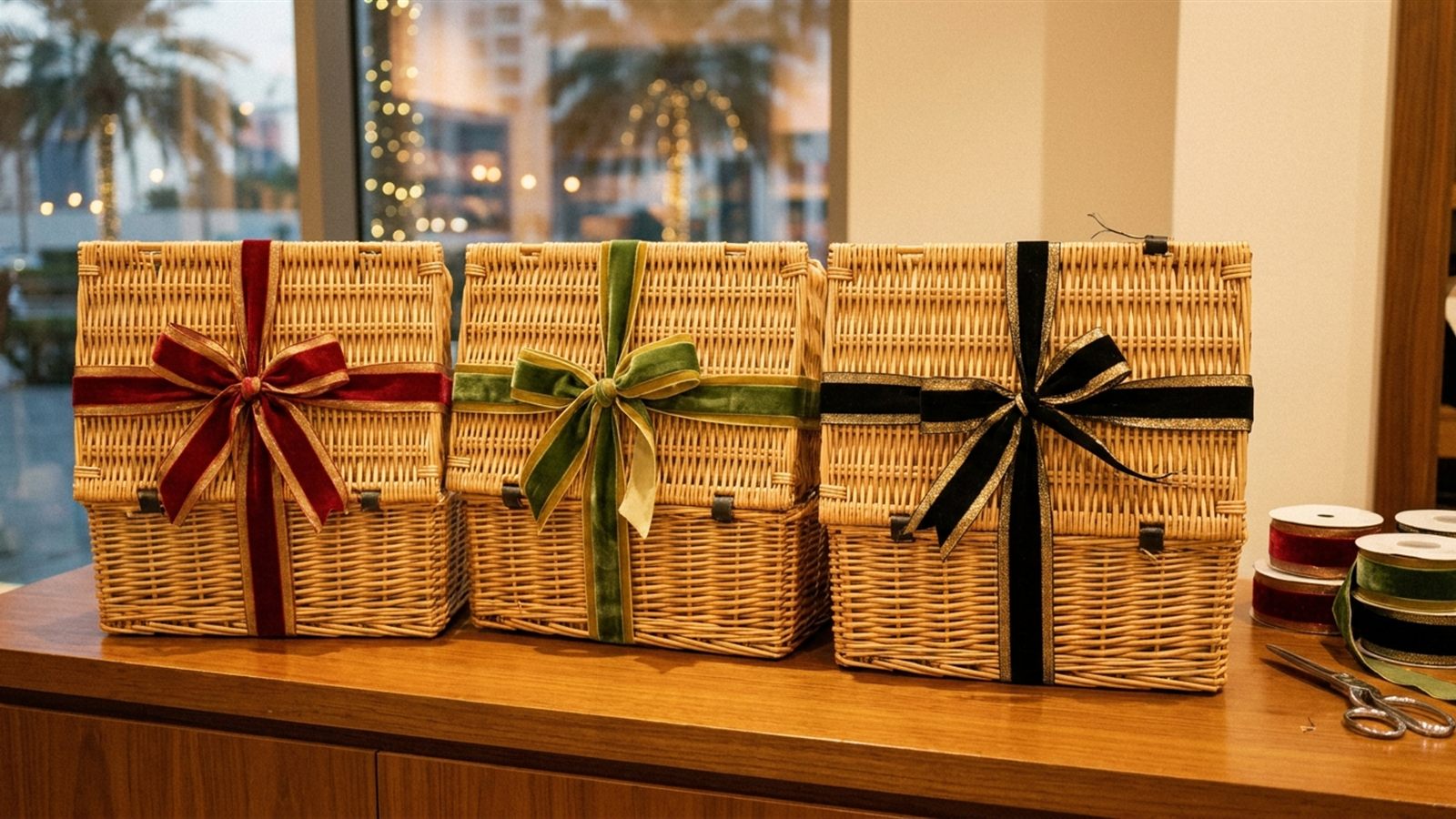
Velvet ribbon has a short, dense pile that catches light unevenly, so it looks deep and rich rather than glossy. It is the heaviest of the finishes here, and that weight is the whole point: a velvet bow sits with authority on a box instead of floating on top of it. It reads as winter and as luxury, and it suits dark, jewel-toned colours more than pale ones, which can look flat in a pile weave.
Where it wins: cold-season gifting, hampers with a formal or heritage feel, and any box where the ribbon itself is meant to look expensive rather than disappear into the wrapping. Where it fails: UAE summer handling. Velvet shows crush marks where it is pressed or folded, picks up dust and lint more than a woven ribbon, and its weight can pull a small bow out of shape on a light box. It does not print well; its pile breaks up fine detail, so keep branding to grosgrain or satin and use velvet as the plain, structural layer instead.
Metallic and lurex: shine under lights
Metallic ribbon weaves a fine metallic thread, often called lurex, through the base yarn, or coats the surface in a metallic film. Either way it throws a harder, more directional sparkle than satin's gloss, which is why it photographs well under shop lighting and on camera flash, and why it reads instantly as festive. It comes in gold, silver and increasingly in colour-shifted tones, and a little goes a long way against a plain box.
Where it wins: statement bows, display work, and any gift meant to be unwrapped on camera. Where it fails: handling. The metallic layer can be stiffer than a woven ribbon, so it does not drape into a soft bow the way satin does, and it can crease sharply rather than crush softly, leaving a permanent line. Some metallic ribbon marks or dulls with humidity and handling over a long UAE summer, so sample before committing to a large run, and keep rolls away from direct heat. Printing on a metallic base is possible but the contrast with foil print can be weak; a plain coloured ribbon usually takes a printed logo better.
Wired-edge: a bow that holds its shape
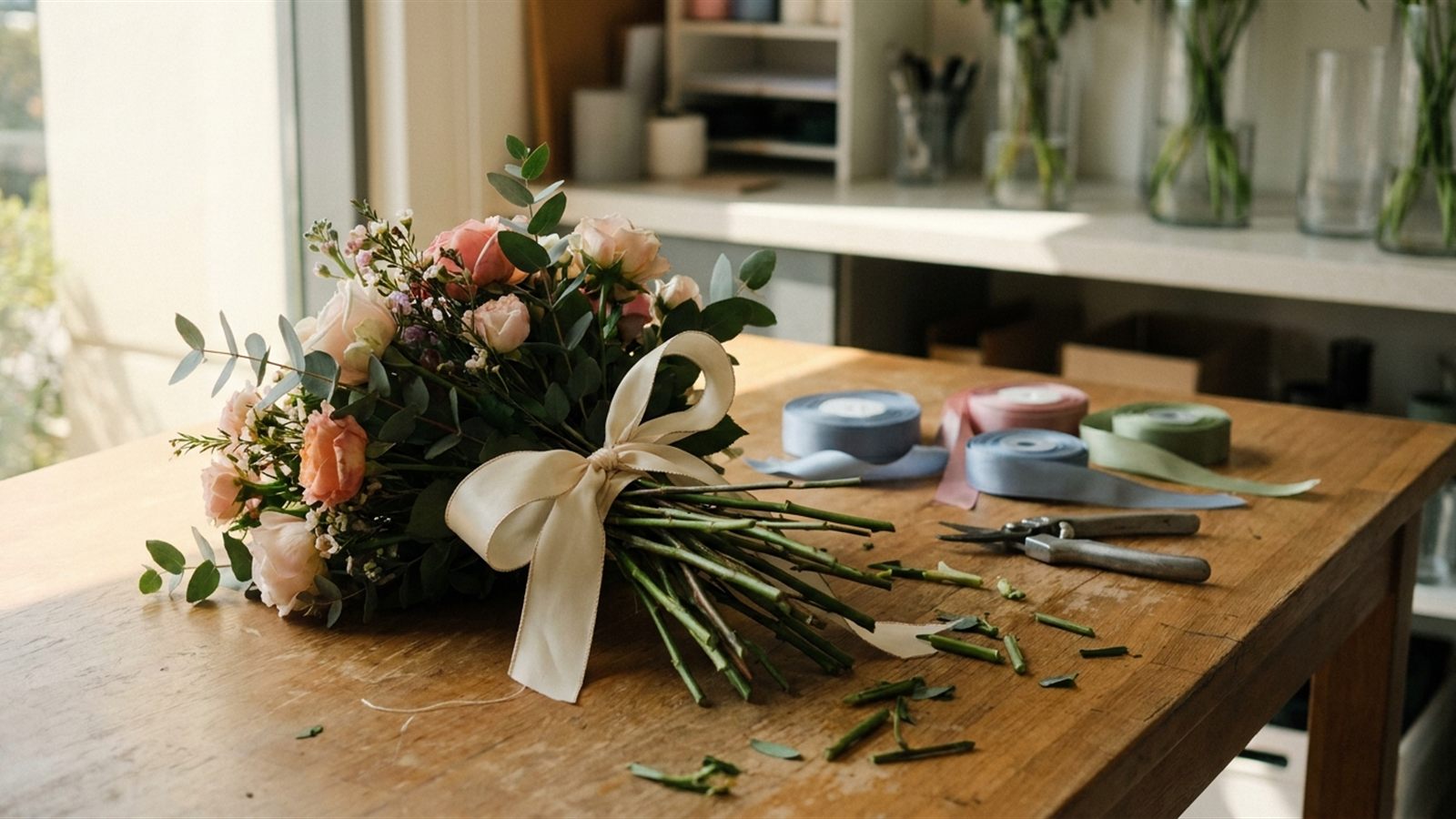
Wired-edge ribbon has a fine wire woven into both edges, usually inside satin, organza or sheer. The wire lets you bend the ribbon into a loop, a peak or a curled petal and have it stay there, rather than relying on the fold to hold. It is less about the face of the ribbon and more about what you can make it do.
Where it wins: large bows, wreaths, table and window displays, and any shape that has to survive being carried, set down and looked at for hours rather than retied. It is also the fix for a weakness named in the guide to ribbon finishes: wide organza bows flop without it. Where it fails: small boxes, where the wire adds bulk and cost for a shape no one will notice, and anything that gets posted or boxed flat, since a bent wire edge does not uncrease the way plain ribbon does. The wire can also work loose at a cut end over time, so finish cut ends cleanly and keep spares on hand for display work that gets re-tied often.
Sheer beyond organza: chiffon and gauze
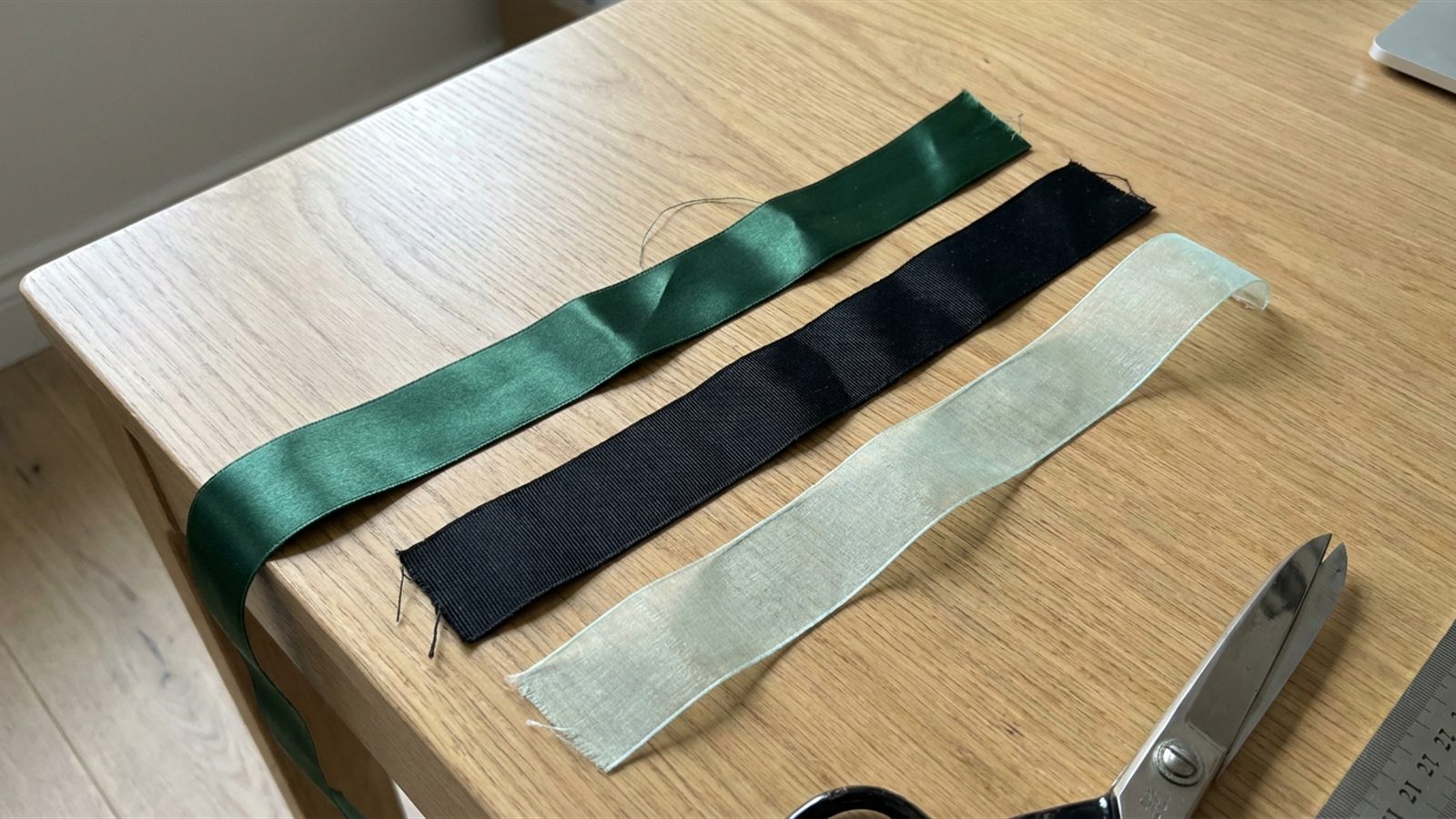
Organza is the sheer ribbon most buyers already know, woven from a stiffer yarn that holds a crisp edge. Chiffon and other soft gauze ribbons are sheer too, but woven more loosely and softly, so they drape rather than hold a shape, and they move more in air or under a fan. The look is romantic and gentle rather than crisp.
Where it wins: layering over a narrower satin for colour and softness without weight, favours and flowers, and any look that wants movement rather than structure. Where it fails: anything that needs to hold a bow shape on its own, since soft sheer ribbon has even less structure than organza; pair it with a wired-edge ribbon underneath if the bow must stand. It snags on rough card and splintery surfaces just as organza does, so keep it to smooth packaging, and its light weave means it is the weakest of the four finishes here for printing.
Side by side
| Velvet | Metallic | Wired-edge | Sheer (chiffon) | |
|---|---|---|---|---|
| Look | Deep, matte, heavy | Bright, directional sparkle | Depends on base ribbon | Soft, airy, draping |
| Holds a bow? | Yes, by weight | Stiff; creases rather than drapes | Yes, shaped and held by the wire | No, needs wire support |
| Prints well? | No, pile breaks up detail | Weak contrast with foil | As well as its base ribbon | Limited |
| Best widths | 16 to 38 mm | 10 to 38 mm | 25 to 50 mm | 16 to 38 mm |
| Typical use | Winter and luxury hampers | Festive and statement gifts | Large bows, wreaths, displays | Favours, flowers, layering |
Choosing by occasion
- Corporate gifting: metallic for a festive campaign, or plain satin or grosgrain with a wired-edge bow on top for a display piece. See the guide to ribbon finishes for the everyday choice.
- Winter and premium hampers: velvet for the box ribbon, with a narrower metallic or satin ribbon layered in for contrast.
- Weddings and favours: sheer chiffon layered over narrow satin for softness, or wired-edge organza where the bow must hold on a stand or a chair.
- Printed branding: keep the printed ribbon in satin or grosgrain, as covered in the logo-printed ribbon guide, and use velvet, metallic or sheer as the plain, unprinted layer around it.
- Anything delivered with the bow standing: favour wired-edge and grosgrain-based ribbons that hold their shape over velvet and sheer, which show handling the most. A box posted flat is the exception: bent wire does not uncrease, so grosgrain is the safer choice there.
The short checklist
- Width chosen against the box, using the rule of thumb in the ribbon width guide
- Velvet and metallic sampled for how they handle in heat and humidity before a bulk order
- Wired-edge used wherever the bow or loop must hold its shape unattended
- Printed branding kept to satin or grosgrain, not velvet, metallic or sheer
- Sheer layered over a structural ribbon, not relied on alone, for anything that must stand
- Quantities worked out with the ribbon calculator, allowing extra for a bigger wired-edge bow
Questions buyers ask
What is wired-edge ribbon used for?
Wired-edge ribbon has a fine wire woven into both edges, usually inside satin or organza, which lets you bend it into a loop or peak and have it hold the shape. It is used for large bows, wreaths, and window or table displays that must stay looking neat for hours without retying. It adds bulk and cost that a small box does not need, so keep it for bows from about 25 mm wide upward.
Is velvet ribbon good for gift boxes in the UAE?
Velvet suits winter and luxury hampers well, because its weight and deep colour give a bow authority a lighter ribbon cannot. It handles UAE summer less well: it shows crush marks where it is pressed or folded, and picks up dust more than a woven ribbon. It also does not print well, since its pile breaks up fine detail, so keep any logo on a separate satin or grosgrain ribbon instead.
Does metallic ribbon work for a printed logo?
Not as well as a plain ribbon. Metallic or lurex ribbon weaves a metallic thread or film through the surface, which gives strong sparkle under lights but weak contrast against foil print, so a printed logo can struggle to stand out. For a crisp printed logo, the logo-printed ribbon guide points to satin for foil and grosgrain for fine detail; save metallic for the plain, unprinted ribbon around it.
What is the difference between organza and chiffon ribbon?
Both are sheer, but organza is woven from a stiffer yarn that holds a crisp edge and some shape on its own, while chiffon and similar gauze ribbons are woven more loosely and drape softly instead. Chiffon suits a romantic, gentle look and layering over narrower satin; it has even less structure than organza, so a bow in chiffon alone will flop without a wired-edge ribbon underneath it.
Can velvet or metallic ribbon be used on a hamper that gets delivered?
Both show handling more than grosgrain, which is the better choice for anything carried, stacked or shipped, as the guide to ribbon finishes explains. Velvet crushes where it is pressed, and metallic can crease sharply rather than crush softly, leaving a permanent line. If the look matters more than the journey, add velvet or metallic as a narrow second ribbon rather than the main band.
What width wired-edge ribbon makes the best large bow?
38 to 50 mm wired-edge ribbon makes a generous, standing bow for a hamper, wreath or display, following the same width rule of thumb as plain ribbon in the ribbon width guide. Narrower wired-edge ribbon, around 25 mm, suits a smaller shaped bow on a gift box. Below that the wire mostly adds stiffness without a visible benefit.
Why does my velvet or metallic ribbon look different between suppliers?
Both finishes vary more than a plain satin or grosgrain, because the pile depth of velvet and the thread or film used for metallic differ by how they are made, and this varies by supplier. Always match colour and finish on a real sample of the ribbon you intend to order, under the lighting it will actually be seen in, rather than from a catalogue image or swatch card.