What a dye lot is
Ribbon is dyed in batches. A dye lot is one of those batches: every roll dyed together, in the same bath, under the same settings. Rolls cut from one lot match each other very closely, because they went through the same process at the same time.
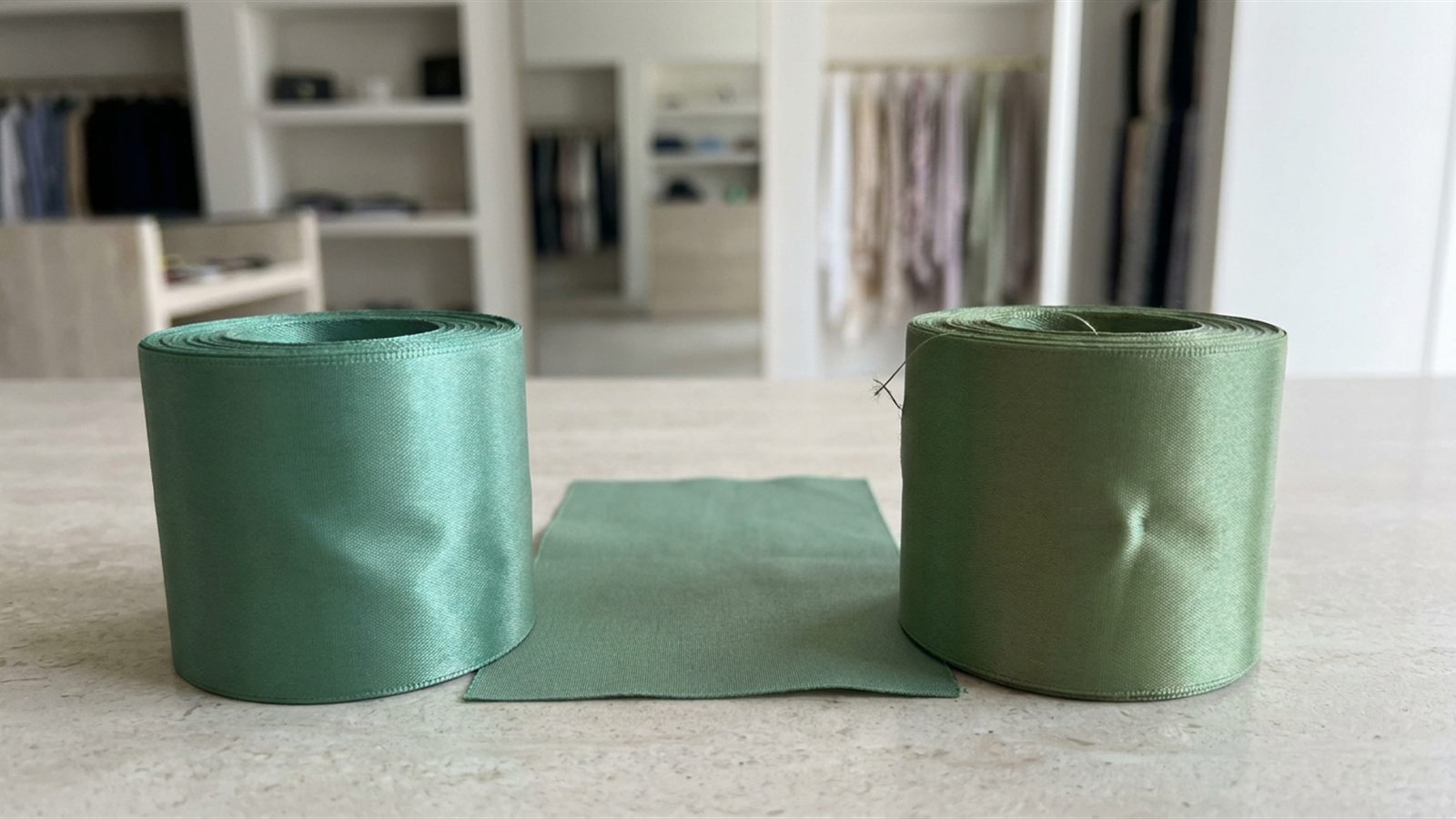
Two lots are separate batches, even when both are ordered as the same named colour. Dye, fibre and conditions never repeat perfectly, so a later lot can sit very slightly lighter, darker, warmer or cooler than an earlier one. It is obvious only when an old roll and a new roll lie side by side, and it is a normal property of dyeing, not a fault.
Why it matters for a brand colour
A brand colour has to look the same in March and in September. A shop shelf, a gift table or a photo of several boxes puts old and new stock side by side, and a slightly different green reads as a mistake even when nobody can name the difference.
The ribbon colour matching guide explains why a screen photo cannot settle this and why a physical reference is the only honest comparison. Dye lots are why that reference must be used on every reorder, not only the first.
Reading the lot number on a roll label
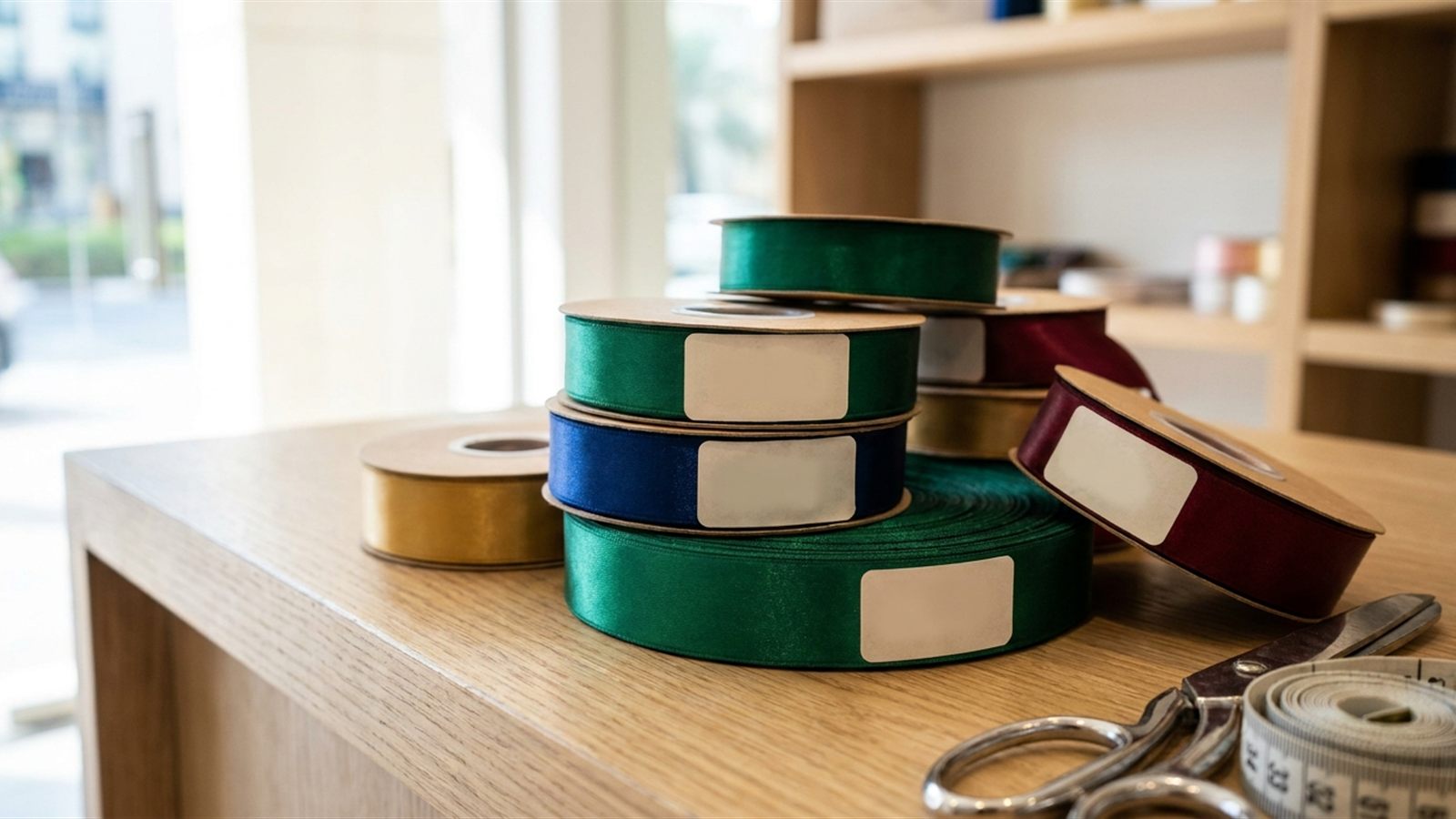
Most rolls carry a label or sticker, and one of the printed codes identifies the lot. Label layouts vary by supplier, so do not guess which code is which. When your first order arrives, ask your supplier to point out the lot code on the label, and what the other codes mean. The roll length guide covers the other details on a label.
Note the lot code for every roll in the delivery. If the codes differ, the order already holds more than one batch.
Buying one lot for a season versus reordering
There are two ways to cover a long run of boxes.
- Order enough in one go. Asking for the whole season's quantity from a single lot gives the most consistent colour. The trade-off is a bigger commitment earlier, storage space, and the risk of estimating wrong. Whether one lot can be guaranteed varies by supplier, so ask.
- Reorder as you go. Smaller orders keep stock lean and let you adjust as the season unfolds. The trade-off is that each reorder may be a different lot, so each needs checking.
If the colour is critical to the brand, lean towards the first. The ribbon calculator works out the quantity, including 5% spare.
Keep a reference from the first order
When the first order is approved, cut a short length and keep it as your reference.
- Keep it flat. Creases change how satin catches the light.
- Keep it out of sunlight. Light fades dye, and a faded reference makes a good roll look wrong.
- Photograph the roll label. It keeps the lot code and colour name tied to the reference.
The guide to sampling before a bulk order explains how to get and approve that first sample.
Check a reorder before it goes on a box
When a reorder arrives, check it first:
- Compare the lot code on the new rolls with your record. A matching code is a good sign; a different one means a closer look.
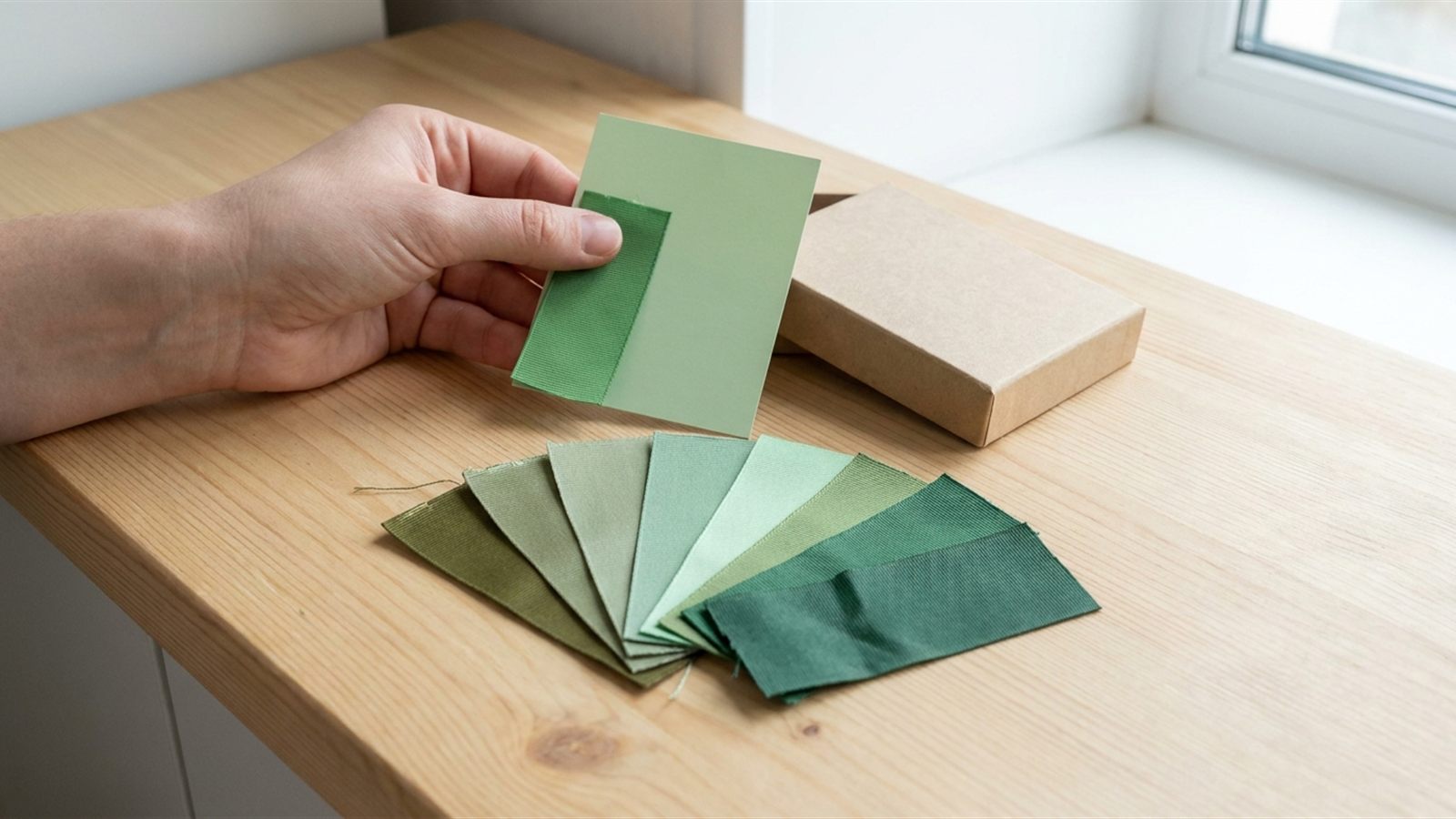
- Lay a length of the new ribbon beside your reference cutting, in the same finish and width.
- Look at them in daylight, away from direct glare, as the colour matching guide recommends.
- Look again under the lights you actually use in the shop or packing area. Two colours can agree under one light and part ways under another, so both checks count.
- Tie one real bow on a real box and compare it with a box from the first run.
When a lot differs
If the new lot is visibly different, do not mix it with the old stock on one shelf and wrap from both. The difference will show up as odd boxes in the same batch, which is worse than a clean change between two batches.
- Use the new lot on a new run of boxes. Start a fresh run with the new ribbon, so every box in that run matches.
- Keep old and new apart. Label the shelves or bins with the lot code, so rolls cannot drift into each other.
- Finish the old lot on its own run rather than topping it up with the new one.
If the difference is more than you can accept, tell your supplier before the ribbon goes on boxes, and show them your reference cutting and the label photo.
Printed ribbon reorders
Printed ribbon has two colours to match, not one. The ribbon colour is the dyed base, and it varies by dye lot as described above. The print colour is the ink of your logo or pattern, and it is a separate match against its own reference. A reorder can get one right and the other slightly off, so check both: the base colour first, then the print.
The logo-printed ribbon guide covers artwork and colour naming.
What to record on the first order
| Record | Why |
|---|---|
| Colour name and reference (Pantone, noting coated, uncoated or textile) | Gives you and your supplier the same fixed starting point for every reorder |
| Lot code from each roll label | Shows whether a reorder is the same batch or a new one |
| Photo of the roll label | Keeps the codes safe if the label is lost or the roll is used up |
| Finish and width | Colour reads differently between finishes, so the comparison must be like for like |
| Reference cutting, stored flat and out of sunlight | The one comparison that does not depend on a screen or a memory |
| For printed ribbon: print colour reference and approved artwork | The print is a separate match from the ribbon dye |
Questions buyers ask
What is a dye lot on ribbon?
A dye lot is one dyeing batch. All the rolls dyed together in that batch match each other closely. A later batch of the same colour is a different lot and can differ slightly.
Will a reorder always match my first order?
Not always. The same lot should match closely, but a new lot can differ slightly. Check every reorder against a reference cutting from the first approved order.
Where do I find the lot number on a roll?
It is usually one of the codes on the roll label, but label layouts vary by supplier. Ask your supplier to point out the lot code when your first order arrives, then note it down and photograph the label.
Is it better to buy a whole season's ribbon at once?
It gives the most consistent colour but means a bigger early commitment and storage space. Reordering keeps stock lean but means checking each new lot. Whether one lot can be guaranteed varies by supplier.
What should I do if the new lot looks different?
Do not mix it with old stock on one shelf. Use the new lot on a fresh run of boxes and keep old and new rolls apart and labelled. If the difference is too big, tell your supplier before it goes on boxes.
How do I store a reference cutting?
Keep a short length flat, in an envelope or folder, out of sunlight and away from heat. Photograph the roll label and keep the photo with it.