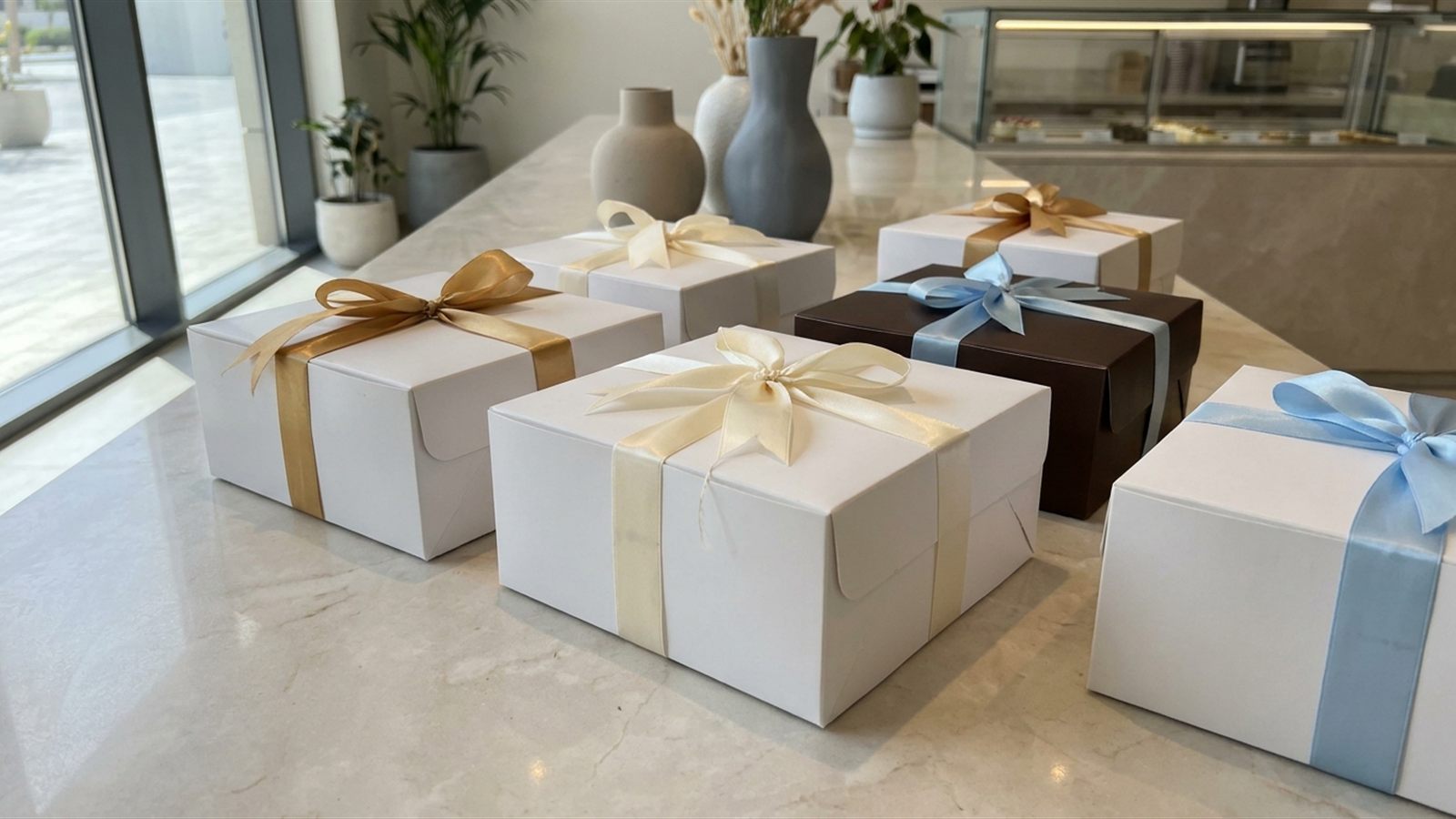
Keep the ribbon on the box, not on the food
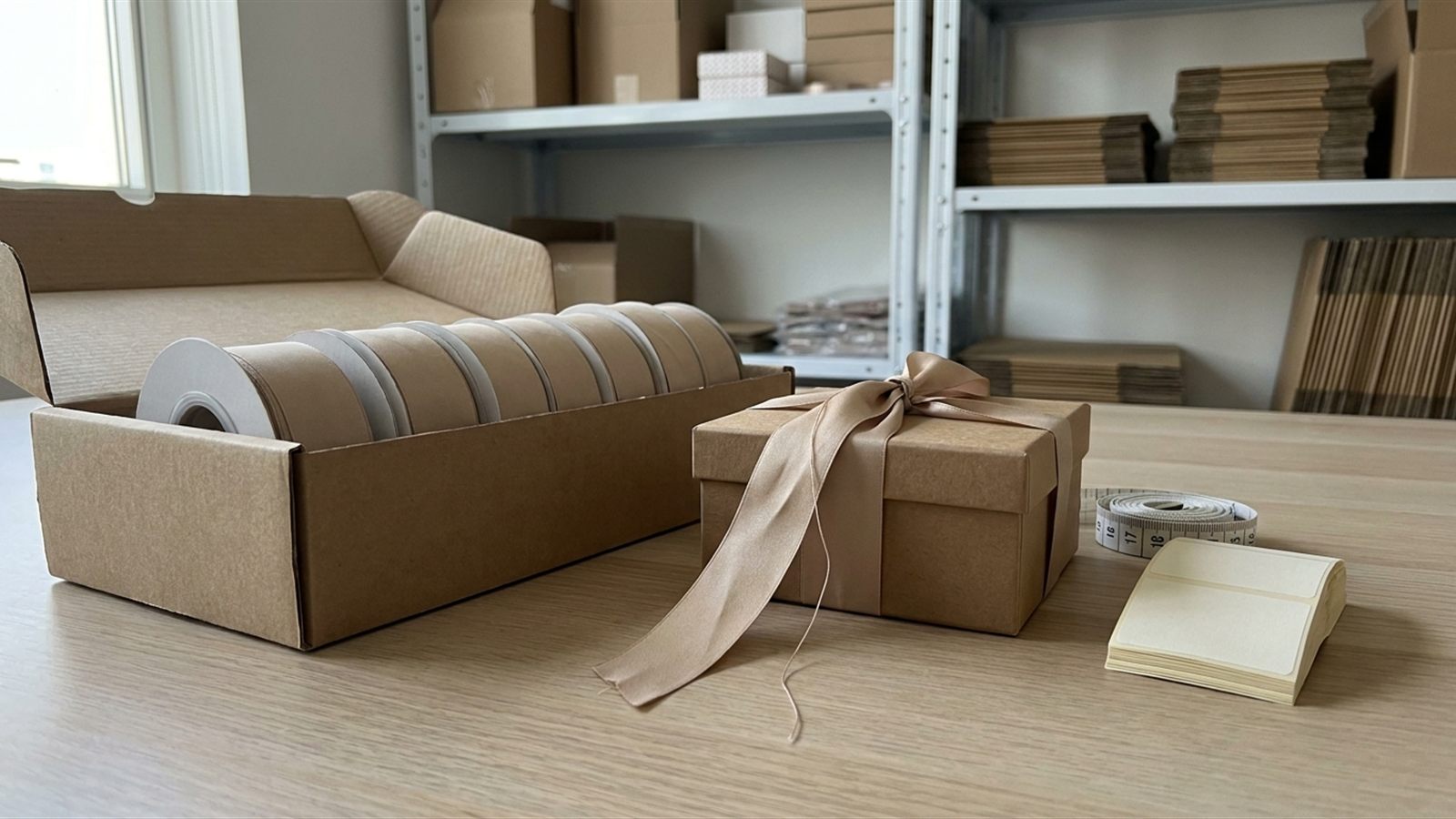
A band and bow around the outside of a closed cake box, a chocolate box or a sealed bag makes the package look finished without ever meeting the food. That is the arrangement this guide recommends, and it settles most questions before they start.
When ribbon might touch food
- Ribbon around a cake drum or the side of a cake, where it sits against icing, cream or sponge.
- A tie on an open tray of dates or sweets, where the ribbon rests on the pieces.
The honest position is that ordinary decorative ribbon is not sold as a food-contact material. If ribbon will sit near food, put a barrier between the two, such as a cake collar, a sleeve or wrapping, and tie the ribbon over the barrier. If a ribbon is sold for food contact, ask to be told so in writing rather than assuming it from a colour card.
Questions to ask before ribbon goes near food
- Is it sold for food contact? If the answer is no, or a vague "it should be fine", treat it as decoration and keep a barrier in place.
- Does the colour run when damp? Dampen a cut length and press it on white paper. Colour on the paper means colour on a damp box or a customer's hand.
- Does it shed fibres or glitter? Rub a cut end and any metallic edge between your fingers.
- Is the ink on a printed ribbon set? Rub the print with a dry cloth, then a damp one. Smudging or flaking means it stays away from food.
- Does it carry a smell? Smell a roll, then a length that has sat in a sealed bag. Chocolate and butter pick up odours easily.
Nothing here describes any ribbon as food-safe. Good answers help you decide where ribbon can go, but they do not turn a decorative ribbon into a food-contact one. When in doubt, keep it on the outside.
Heat, humidity and the fridge
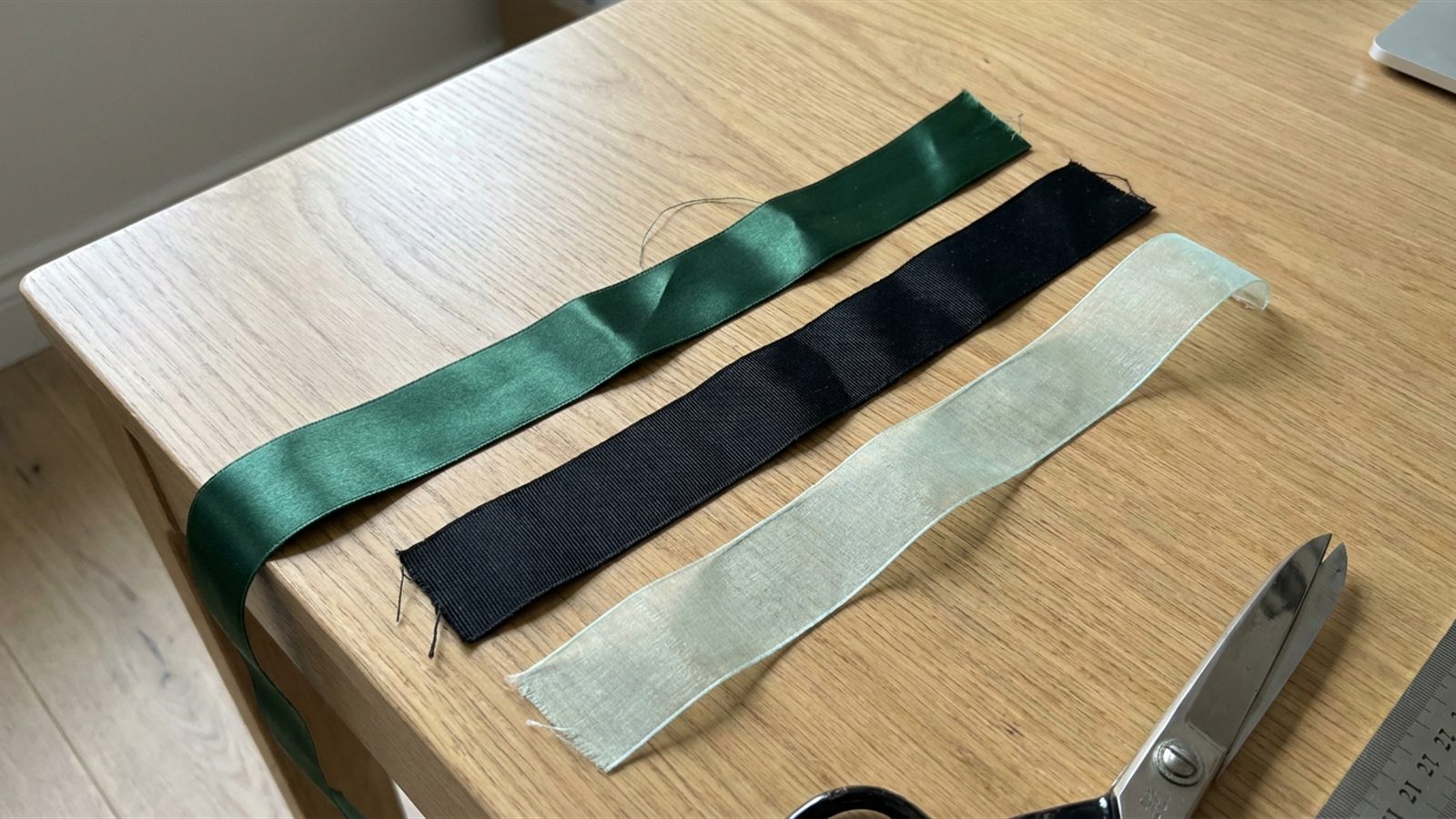
A chocolate box kept cool and then carried out into a UAE summer will sweat, and moisture is when colour runs, satin marks and a sharp bow goes limp. Satin shows marks from damp hands and creases easily, as the guide to ribbon finishes explains; grosgrain handles handling better.
Test rather than trust. Tie a sample bow on a real box, keep it in the fridge as long as a customer's order would be, then bring it out into warm air. Look for creases, marks, colour on the box and a bow that has lost its shape. Store rolls on their cores, away from steam, flour dust and cooking smells.
Choosing ribbon for each box
- Chocolate boxes. Satin, in double-face if tied into a bow. Most chocolate boxes have a lid of up to about 15 cm on the shorter side, where the rule of thumb is 6 to 16 mm. See the single-face and double-face satin guide.
- Cake boxes. Over 30 cm the ribbon width guide suggests 38 to 50 mm. Grosgrain suits a box that is carried and delivered.
- Cookie tins. A flat band or a bow on the outside of the lid; grosgrain grips and holds its shape.
- Date boxes. A narrow band round a closed box, not a tie over the dates. Organza suits sweet boxes but snags on rough card.
The gift bow guide shows a method you can repeat quickly across a counter of boxes.
Where the ribbon goes, and what to ask
| Where the ribbon goes | Touches food? | What to ask |
|---|---|---|
| Around a closed cake box | No | Does the colour run when damp? |
| Around a chocolate box | No | Does it mark or crease after time in a fridge? |
| Around a sealed bag | No, if sealed | Does it shed fibres or carry a smell? |
| Around a cake drum or cake side | Yes, or very close | Is it sold for food contact? If not, use a collar or sleeve. |
| A tie on an open tray | Yes | Same, and keep a liner between ribbon and food. |
Branded ribbon and season quantities
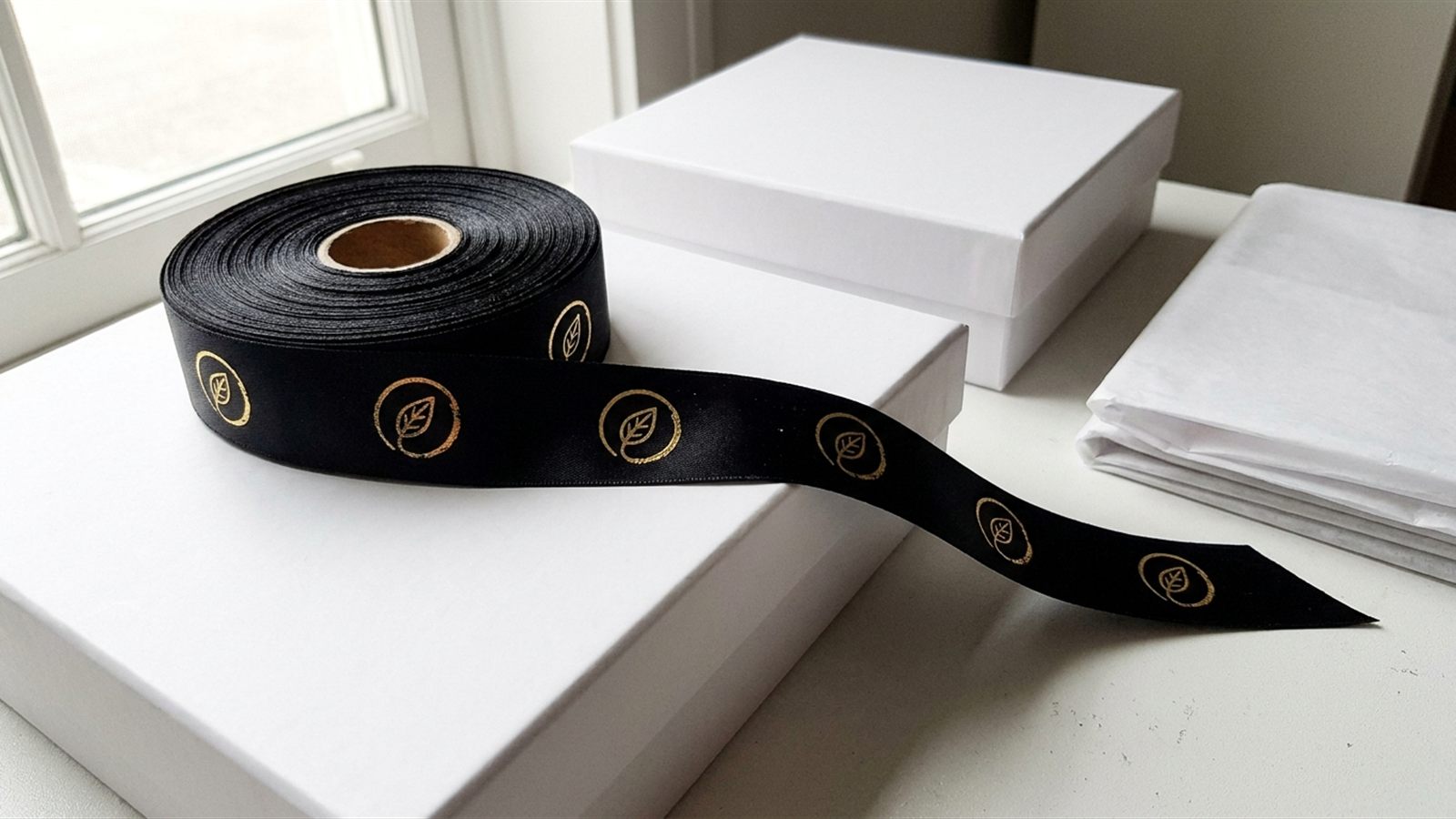
Printed ribbon turns every box into a small advertisement. The logo-printed ribbon guide covers artwork and print methods; for a food business, also test whether the print holds up when damp.
To work out a season, tie one bow, measure it, and enter it in the ribbon calculator with your box size and expected boxes. Add at least 5% spare. Before a big order, follow sampling ribbon before a bulk order, and read about dye lots and reorders, since a later roll can differ slightly in shade.
Questions buyers ask
Is ribbon safe to put on a cake box?
Ribbon tied around the outside of a closed cake box does not touch the cake, which is the arrangement to aim for. Check that the colour does not run when damp, so it does not mark the box.
Can ribbon touch the cake or chocolate itself?
Ordinary decorative ribbon is not sold as a food-contact material, so keep a barrier such as a cake collar, sleeve or wrapping between it and the food. If you need direct contact, ask whether the ribbon is sold for that, and get the answer in writing.
How do I test whether a ribbon's colour runs?
Dampen a short cut length and press it on white paper. If any colour comes off, the dye can transfer to a damp box or hand. Test every colour you plan to buy, as colours in one range can behave differently.
Will satin survive a chocolate box in the fridge?
It depends on the ribbon and the time, so test it. Keep a sample box cold for a realistic period, bring it into warm air, and check for creases, marks and a bow that has lost its shape. Test grosgrain alongside it.
What ribbon is best for a box of dates?
A narrow satin or grosgrain band around a closed box keeps the ribbon off the dates. For a lid up to about 15 cm, the rule of thumb is 6 to 16 mm.
Can I get printed ribbon with my bakery's logo?
Yes. Prepare vector artwork and name your colours, as the logo-printed ribbon guide sets out, and ask for a printed sample you can test with a damp cloth.