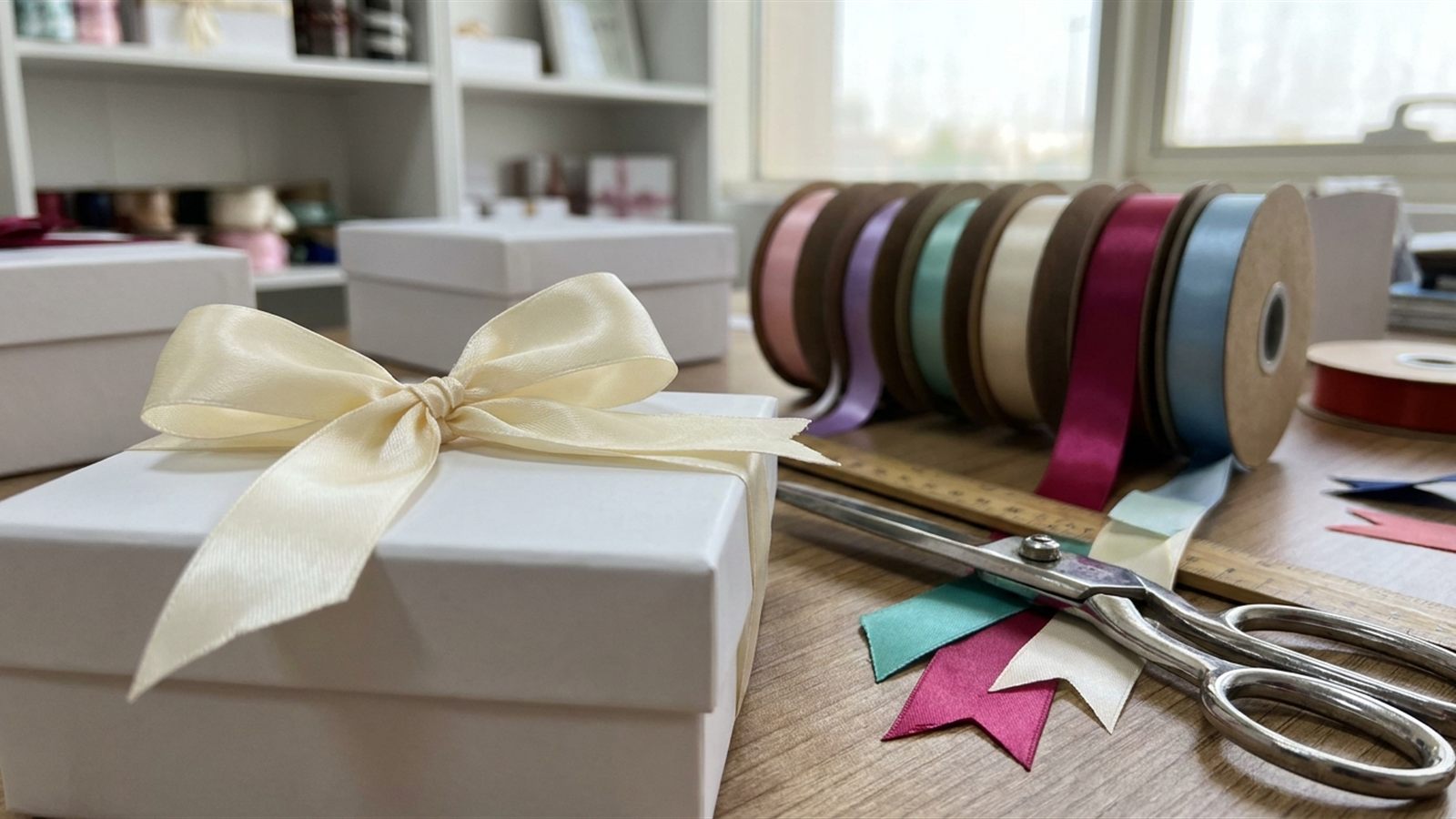
Who this page is for
This page is for anyone who wraps boxes by hand: a gift shop, a bakery counter, a florist, or a business packing its own hampers. You have the ribbon. Now you want the bow to look the same on the fiftieth box as on the first, the tails to stay clean, and the stock to be in good order when you reach for it.
The five guides below follow the life of a length of ribbon. You tie it, size it, cut it, dress it up, and put the roll away. Each one stands alone, so you can read only the one you need. If you are new to this, read them in the order given here.
Where to start
- If your bow keeps coming out crooked or lopsided, read the gift bow guide.
- If you need to know how big a bow should be, or how much ribbon it takes, read bow sizes and ribbon per width.
- If the cut ends of your ribbon are fraying, read cutting ribbon without fraying.
- If you want a fuller, richer bow, or two ribbons on one box, read curling, layering and double ribbons.
- If your rolls are creased, faded or mixed up on the shelf, read storing ribbon.
- If you only need to know how much ribbon one box takes, use the ribbon calculator.
Tying a neat bow
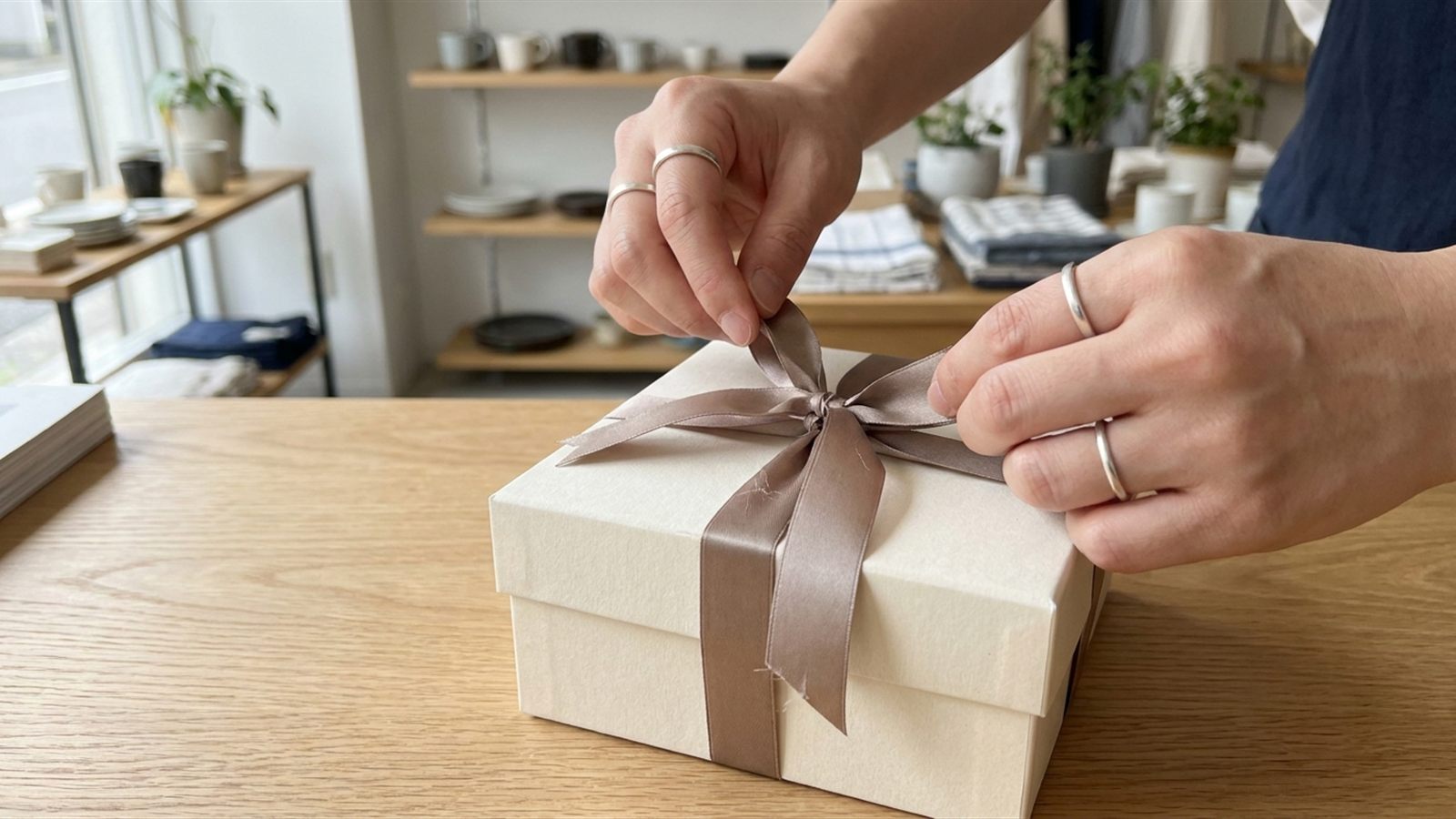
The question here is why your bow looks crooked and how to make it repeatable. The short answer is that a neat bow comes from the cross wrap underneath it and a two-loop bow tied the same way every time. The guide takes you through both in order, explains the shoelace-knot problem that tips a bow sideways, and lists the common faults with their fixes. Read the gift bow guide first, because the other four build on it.
Sizing the bow to the box
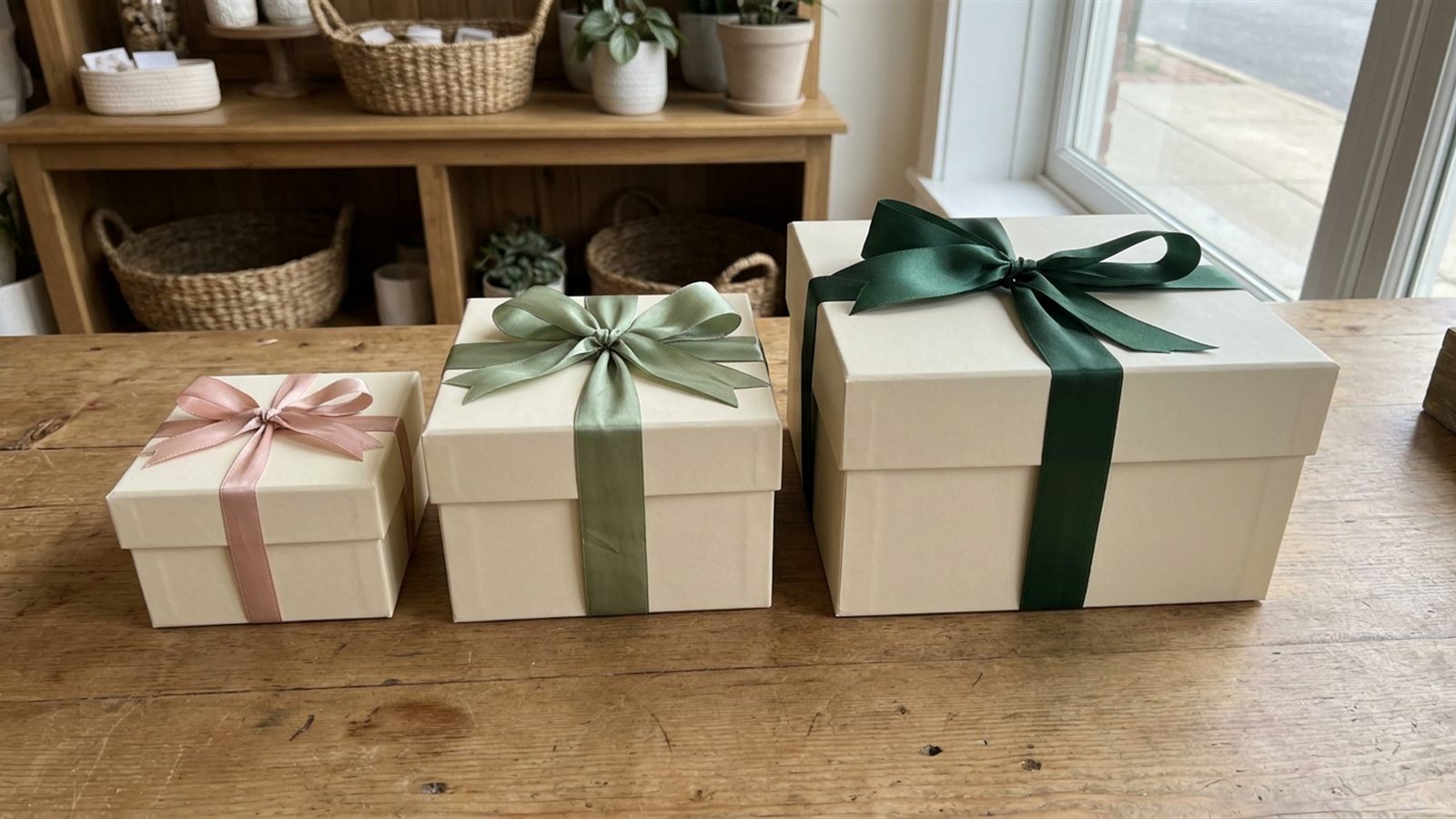
The question is how big the bow should be and how much ribbon it uses. The short answer is that size comes from the box's lid, the ribbon's width and the style you tie, not from one fixed number. The guide gives a method for working out loop length, so a simple bow lands inside the usual 40 to 60 cm range and suits the box it sits on. See bow sizes and ribbon per width.
Cutting the ends
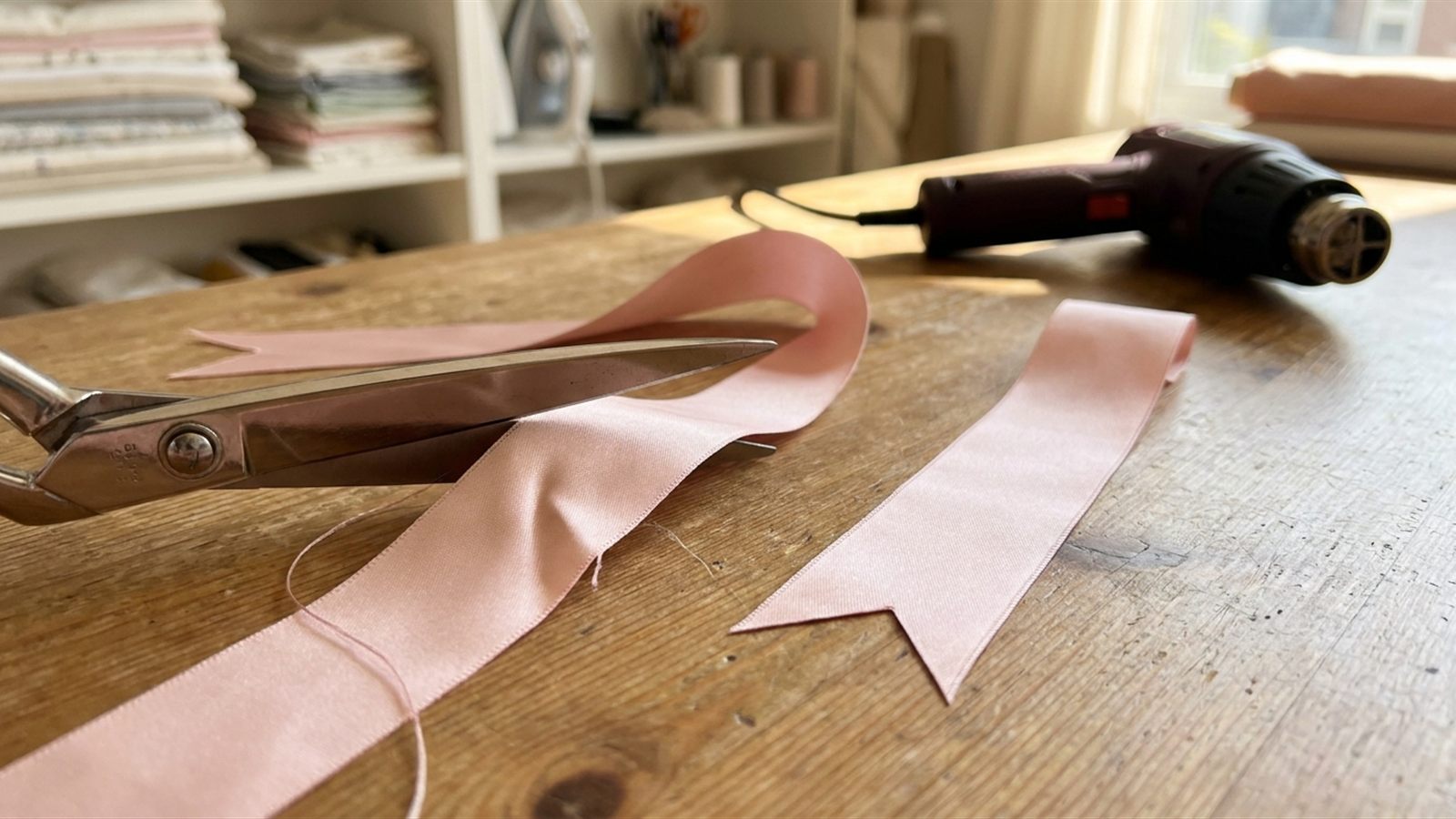
The question is why cut ribbon frays and what to do about it. The short answer is that a straight cut is what makes ribbon fray, not the ribbon itself. Cut at an angle or in a V and it frays far more slowly; seal the end with heat on polyester and it stops. The guide covers the four cuts, when heat sealing works and when it does not, and a safer way to finish many tails at once. See cutting ribbon without fraying.
Curling, layering and double ribbons
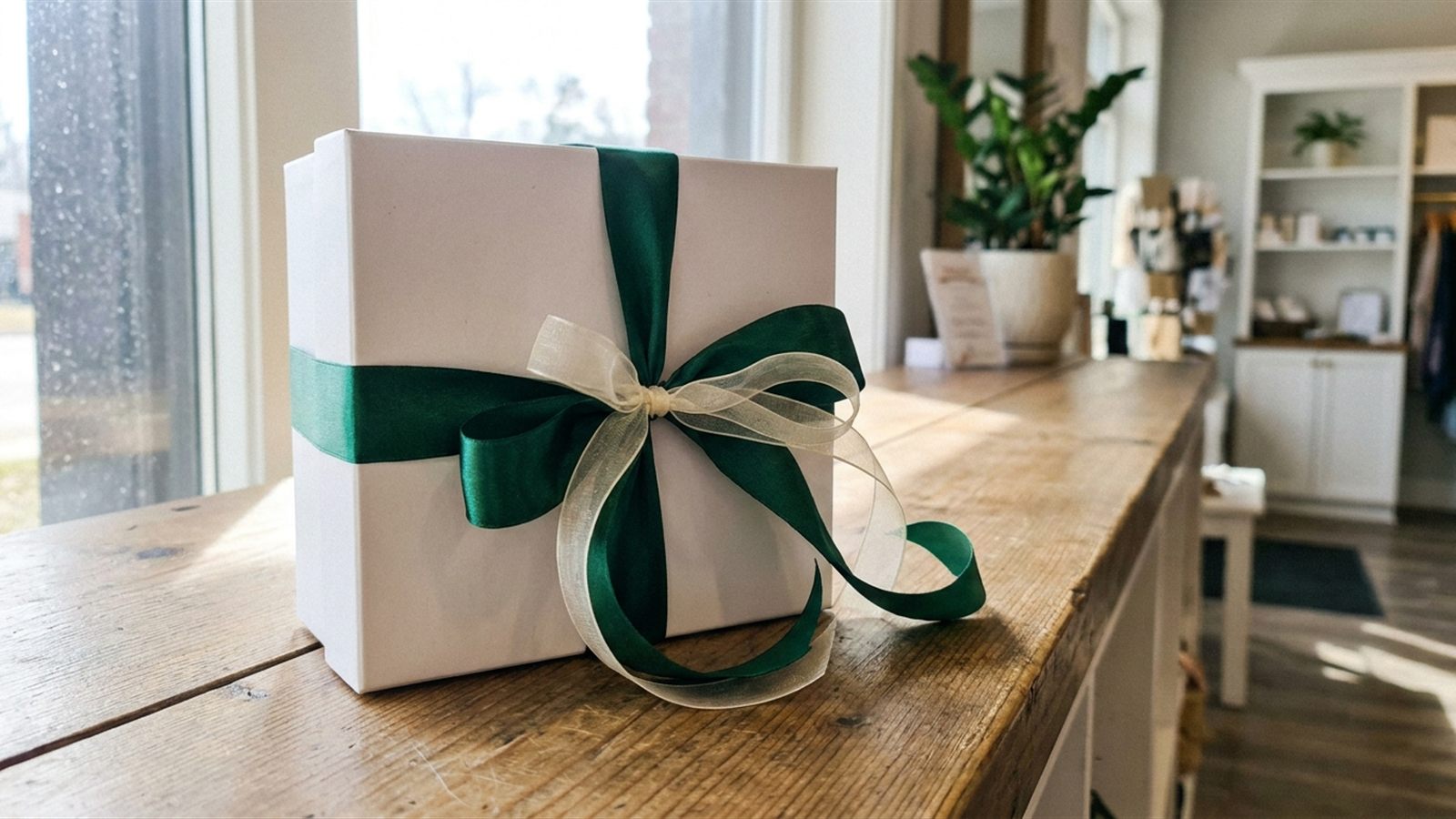
The question is how to make a bow look fuller or more finished. The short answer is to curl thin curling ribbon over a scissor blade, and to layer a narrower ribbon on top of a wider one for depth. The top ribbon is always the narrower of the two. The guide gives the steps, the width and colour pairings, and how an extra ribbon changes what you order. See curling, layering and double ribbons.
Storing the rolls
The question is how to keep ribbon flat and true to colour between jobs. The short answer is to keep rolls closed in boxes or drawers, away from windows and heat, upright or flat on their cores and never squeezed. Label each roll with its dye lot and date received, use the oldest stock first, and keep an approved reference sample flat and in the dark. See storing ribbon.
The five guides at a glance
| Guide | The question it answers | Read it when |
|---|---|---|
| How to tie a gift bow | How do I tie a neat bow that looks the same every time? | Your bows tip sideways or look uneven |
| Bow sizes and ribbon per width | How big should the bow be, and how much ribbon does it take? | You are planning a box or a run of boxes |
| Cutting ribbon without fraying | Which cut stops the ends coming apart? | Tails are shedding threads |
| Curling, layering and double ribbons | How do I build a fuller bow with an extra ribbon? | A single plain bow looks too thin for the box |
| Storing ribbon | How do I keep rolls flat and true to colour? | Stock is creased, faded or mixed up |
Work on the real box with the real ribbon. Tie one bow, cut one tail and lay one layered pair on the actual lid before you settle on a style for a whole run. A sample on the box shows problems that no description does.
Questions buyers ask
Why does my bow always end up crooked?
Most often the ribbon is not sitting straight on the box, or the knot is tied like a shoelace, which tips the bow to one side. The gift bow guide shows the cross wrap and the two-loop method, with the common faults and their fixes.
How much ribbon does one bow take?
A simple bow with two loops and two tails on a medium box usually takes somewhere between 40 and 60 cm. It grows with the ribbon's width and the bow's size, so work it out for your own box using bow sizes and ribbon per width, and use the ribbon calculator for the whole box.
How do I stop the cut ends of ribbon fraying?
Avoid the straight cut. An angled cut, a V cut or a double angle all fray more slowly than a straight one, and polyester ribbon can be heat sealed, which stops it. The cutting guide explains each cut and when heat sealing does not work.
Can I curl satin ribbon?
No. Only thin curling ribbon holds a spiral over a scissor blade; satin creases or stretches instead. To give satin a shape, use a wired edge, and read curling, layering and double ribbons for the layering that suits satin.
What is the best way to keep ribbon rolls in good condition?
Keep them closed in boxes or drawers, away from light and heat, upright or flat on their cores and never squeezed, with a label showing dye lot and date received. The full routine is in storing ribbon.