The quick answer
Ribbon is forgiving on a shelf, but it is not indestructible. Light fades dye, heat and damp can soften or mark some finishes, and pressure leaves creases and crush marks that no amount of tying will hide.
Keep rolls out of the light
Sunlight and strong shop lighting both fade dyes over time. The change is slow, but it shows when a faded roll is tied beside a fresh one.
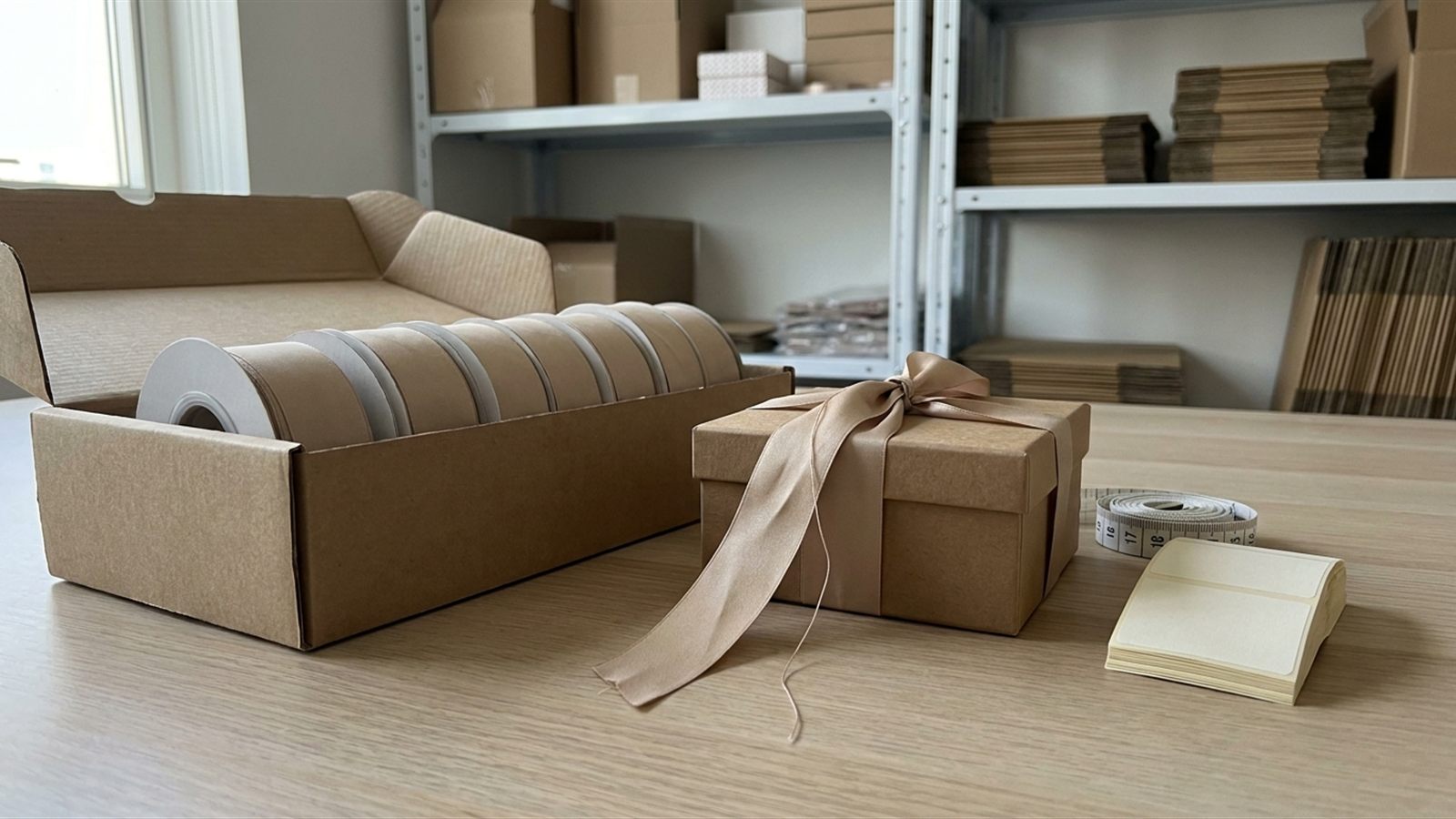
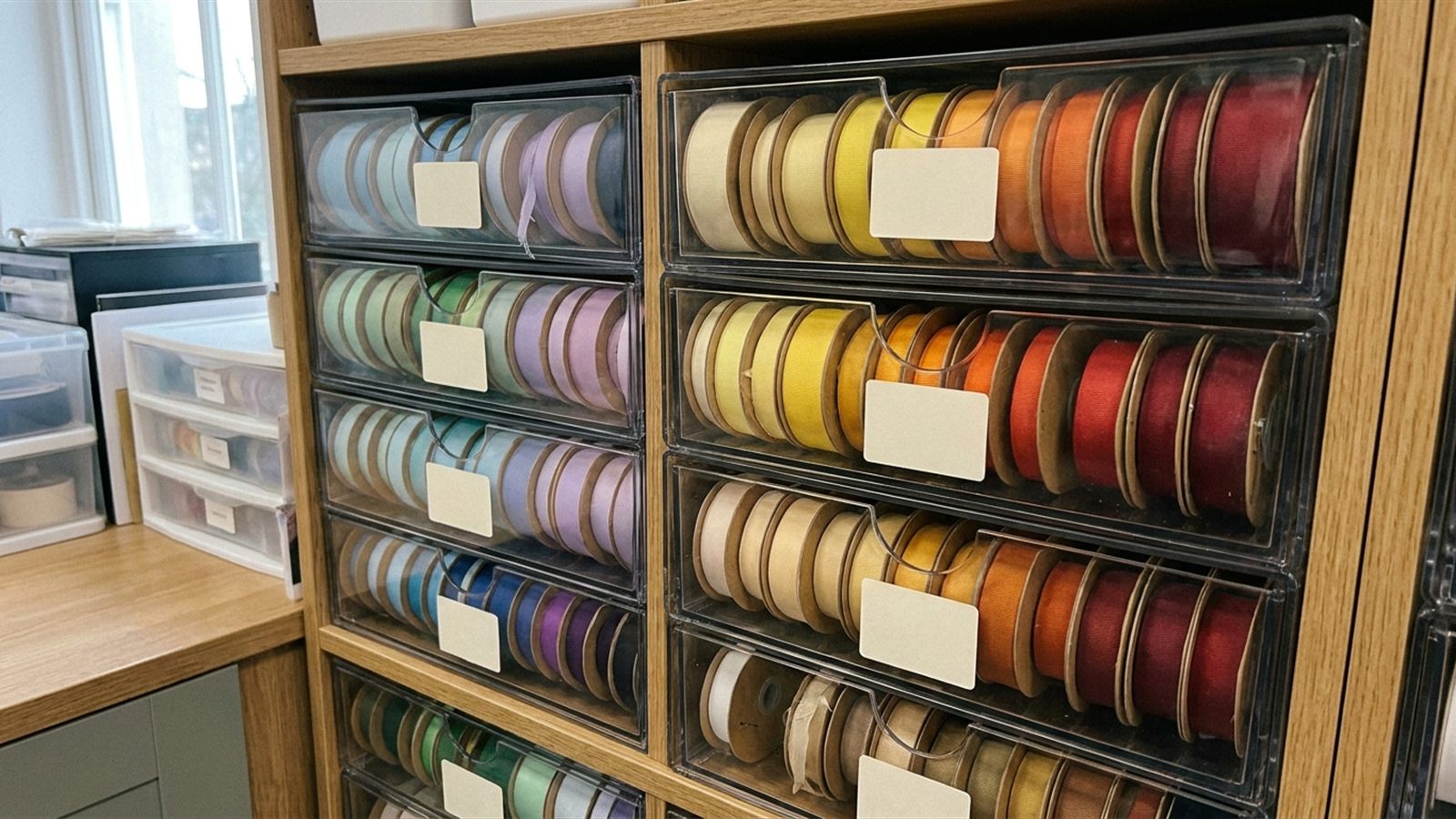
- Store rolls closed. Use boxes, lidded bins or drawers rather than open shelving.
- Keep stock away from windows and from glass doors that let in direct sun.
- Return display rolls to the dark when the shop closes instead of leaving them out.
Heat and humidity in a UAE summer
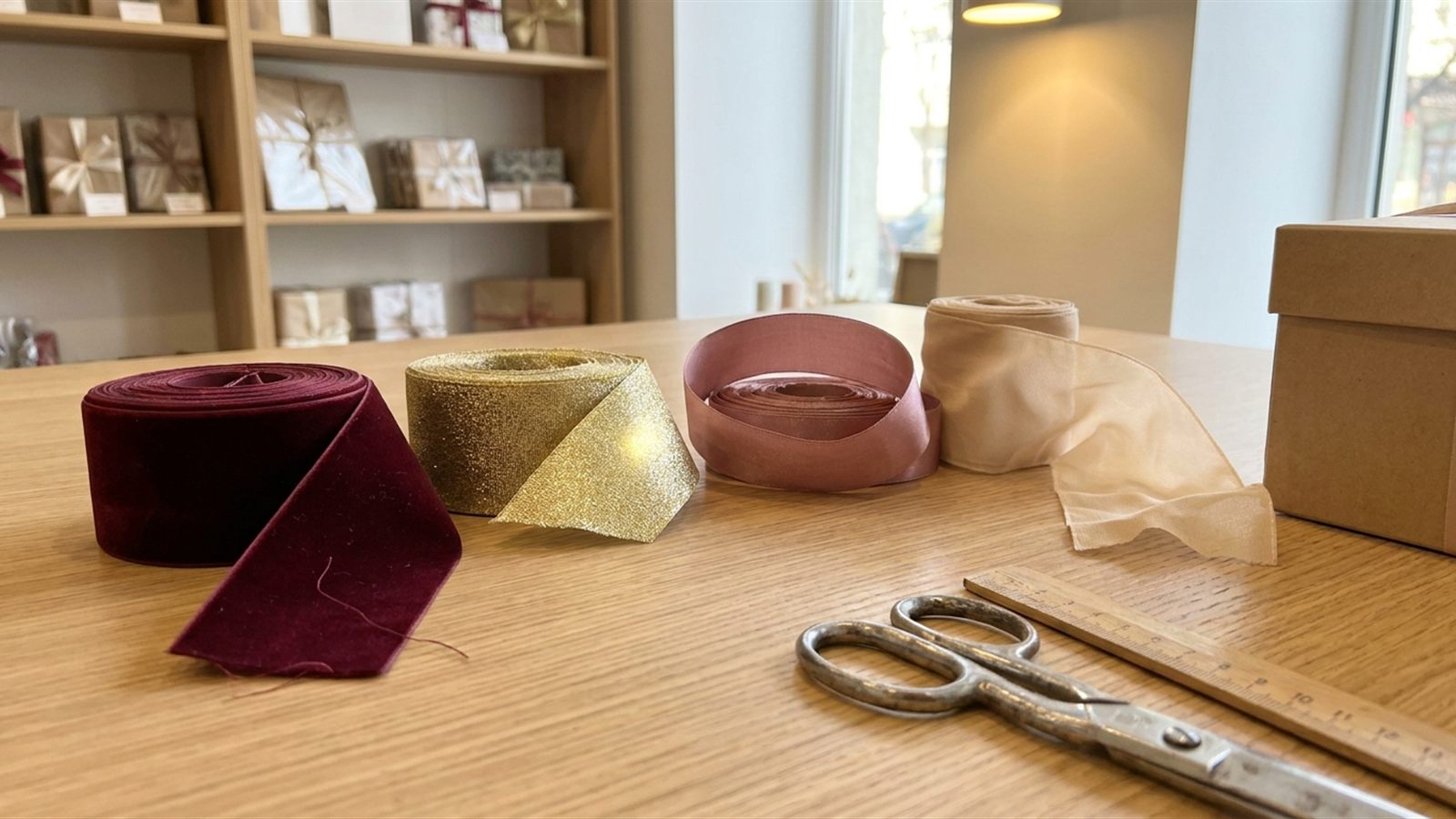
A stockroom beside a loading door, or a store that is not air-conditioned, can get hot and damp in the summer. Some ribbons soften, stick to their neighbours or pick up marks in those conditions, and metallic ribbon in particular can dull, as the velvet, metallic, wired and sheer guide notes.
- Keep ribbon in the air-conditioned part of the building, not in a hot back store.
- Avoid shelves next to loading doors or anywhere that catches direct sun.
Keep rolls flat and true
A ribbon that stays on its core keeps its edges straight and its width even. Most storage problems come from rolls that are squashed, leaned on or rewound by hand.
- Keep rolls on their cores. The core is what holds the shape.
- Store upright or flat. Either works, as long as the roll sits square.
- Never squeeze. Do not stack heavy boxes on rolls or pack a drawer so tightly that rolls press against each other.
- Do not wind a part-used length back tightly. A hard hand-wound roll pulls the ribbon into a curve and can leave edge creases that show on the next box. Wind loosely and evenly, or leave the ribbon on its original core.
Wired edge and velvet need extra care
Two finishes are less forgiving than the rest. Velvet has a pile that shows crush marks wherever it is pressed or folded, so never stack anything on a velvet roll and keep it standing in its own space. Wired-edge ribbon holds its shape through a fine wire in each edge, and a bent wire kinks and does not fully straighten again. Keep wired rolls on their cores, do not squash them into a corner, and do not fold a length over for storage.
Part-used rolls
A roll that has been started is the one most likely to unwind, tangle or get its loose end creased. Secure the free end with a small clip or a paper band. Do not use tape on the ribbon face, because it can lift the finish or leave a sticky mark where the next box will be tied.
Labels, dye lot and date received
Keep the roll label on every roll, and never throw it away when the ribbon is half used. It carries the colour, width and length, as the roll length guide explains. Then add two things of your own in marker:
- The dye lot. Read the lot code off the label, or ask who sold you the ribbon which code it is, and write it clearly on the roll or its box. See the dye lots and reorders guide for why this matters.
- The date received. This lets you use the oldest stock first.
First in, first out
Use the oldest stock first. New deliveries go to the back or the bottom, and the earliest rolls come forward. If two lots of one colour are in the room, keep them apart and finish one before opening the other, so a single box never mixes them.
Keep the approved reference sample separate
The short length you approved at the start is your standard for every reorder. Treat it more carefully than the stock itself.
- Keep it flat, not rolled or creased.
- Keep it in the dark, in a closed folder or envelope, not pinned to a wall or board.
- Keep it apart from the stock, so it is never used up by mistake.
The dye lots guide explains how to compare a new delivery against it, and the colour matching guide shows why a screen photo cannot do this job.
Risk and storage by ribbon type
| Ribbon type | Main risk | How to store |
|---|---|---|
| Satin | Fading in light, creases from pressure | Upright on the core in a closed drawer, away from windows |
| Organza and sheer | Snags and creases, easy to mark | Boxed on the core, away from rough shelving and dust |
| Velvet | Crush marks in the pile, dust and lint | Standing in its own space, closed box, no weight on it |
| Metallic | Dulling in heat and damp, sharp creases | Air-conditioned room, loose wind, never folded |
| Wired edge | Bent wire that kinks | On its core, not squeezed or folded, in a roomy box |
The best storage rule is the simplest: if a roll would be unhappy being sat on, left in the sun or folded, do not store it that way. Cool, dim, square and uncrowded protects every type in the table.
A quick monthly check
- Open each drawer or box and look for rolls leaning, squashed or pressed against a wall.
- Check every roll still has its label, dye lot and date received, and fit a clip or band to any loose end.
- Move the oldest rolls to the front.
- Check for damp or sticky marks, especially near doors.
- Compare one or two rolls with the reference sample for any colour change, then close the reference away again.
Questions buyers ask
Does ribbon fade if it is left out on display?
Yes. Sunlight and strong shop lighting both fade dyes gradually, and the change is easy to miss until a display roll is tied next to a fresh one. Keep rolls closed in boxes or drawers away from windows, and put display rolls back in the dark when the shop closes.
Should I store ribbon rolls upright or flat?
Either is fine, provided the roll stays on its core, sits square and has no weight on it. Upright in a drawer is the easiest way to see colours at a glance.
How do I stop a part-used roll from unwinding?
Fasten the loose end with a small clip or a paper band wrapped once round the roll. Avoid tape on the ribbon face.
What should I write on a roll label?
Keep the original label, which shows the colour, width and length, and add the dye lot and the date received in marker. The dye lots guide explains how to read the lot code.
Where should I keep my reference sample?
Keep it flat, in the dark and apart from your stock, for example in a closed folder or envelope in a drawer. Light fades dye, so a reference left on a wall will stop matching fresh stock.