The words on the label are not a standard
"Eco", "green" and "sustainable" have no fixed meaning on a ribbon roll or in a listing. Each can describe a real difference in the material, or simply a mood. Turn every eco word into a plain question: what is it made of, what is different, and what is that based on?
Recycled polyester
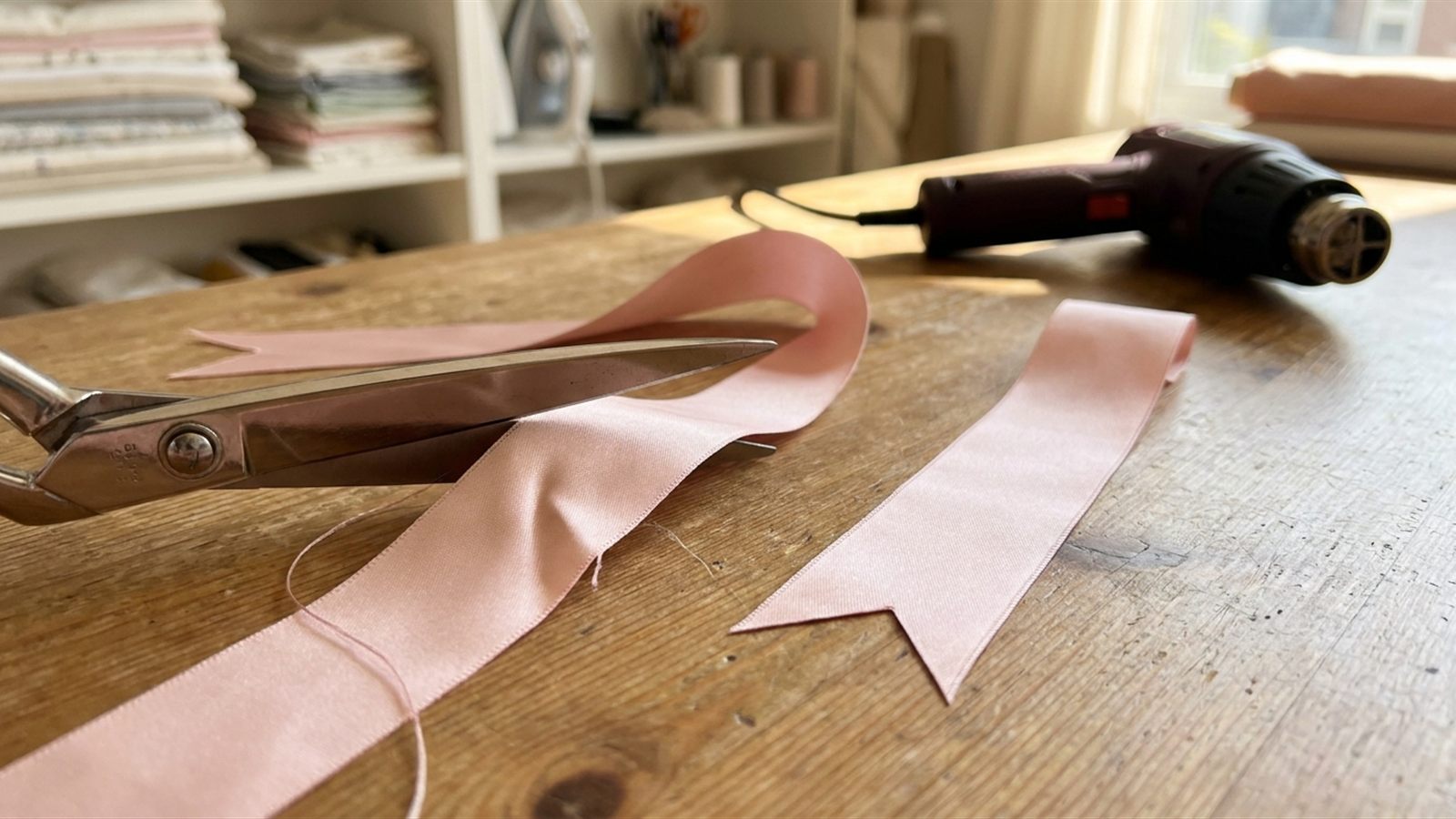
Recycled polyester is polyester made from recycled plastic, often used bottles, rather than from new raw material. The ribbon itself is still polyester. It looks, feels and ties like ordinary polyester satin, grosgrain or organza, and it can still be heat sealed at the cut end, as the guide to cutting ribbon without fraying explains. At the end of its life it is still a plastic ribbon.
What the words cannot tell you on their own is how much of the yarn is recycled. "Made with recycled materials" can be true of a fully recycled yarn or a small part of a blend, so ask.
Natural fibres: cotton, linen, jute and silk
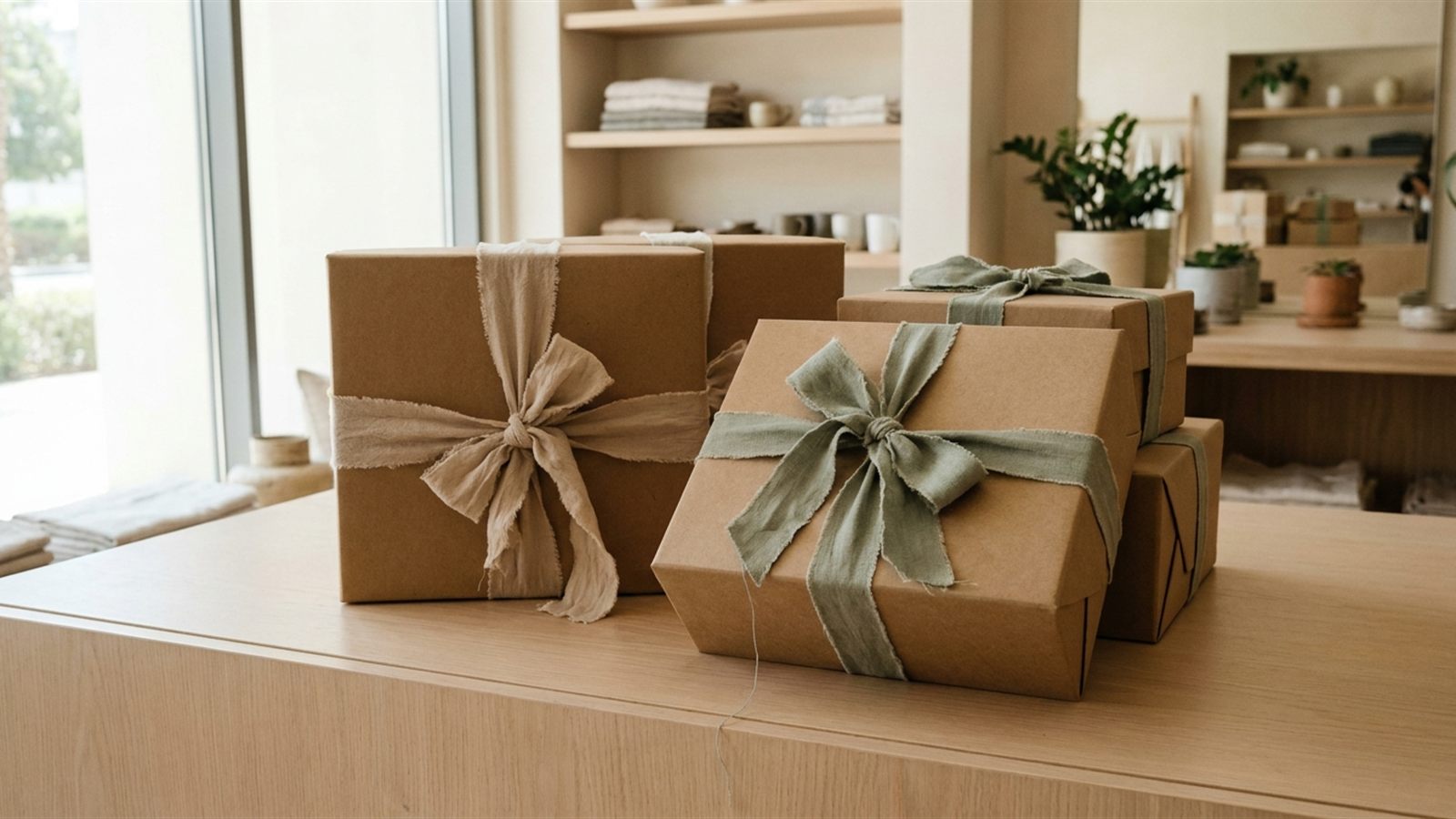
Natural-fibre ribbons are a different product, not a swap for satin. Expect a matte or softly textured surface rather than a gloss, a more rustic or handmade look, and a drape that is relaxed rather than crisp.
- Cotton is soft, matte and ties an easy, slightly loose bow.
- Linen has a visible slub and a natural crumple, which many buyers like, though it creases and stays creased.
- Jute is coarse and earthy, good for kraft and hamper styling, less pleasant against skin or on small delicate boxes.
- Silk is natural too, but a luxury finish with its own care needs.
Natural does not automatically mean better for the planet. The label says nothing about how the fibre was grown, dyed or finished.
Biodegradable and compostable
These two words describe what can happen to a material under certain conditions, not what will happen to the ribbon in a bin. Whether something breaks down depends on heat, moisture, oxygen and time, and a ribbon that breaks down in a controlled setting may sit unchanged in an ordinary landfill. Dyes and coatings can change the result even when the base fibre is natural.
So treat both words as claims that need evidence. Ask what conditions the claim assumes, whether it covers the whole ribbon including dye and any coating, and whether there is a document you can read.
Plastic-free: the ribbon or the packaging?
"Plastic-free" is most often a statement about packaging: the roll arrives on a cardboard core without a plastic wrap or bag. That is useful, but it says nothing about the ribbon, which may still be polyester. If a listing says plastic-free, check which part of the product the word is describing. If you need a ribbon with no plastic fibre in it, ask for the fibre content directly.
Label word, what it can mean, what to ask
| Label word | What it can mean | What to ask |
|---|---|---|
| Recycled polyester | Yarn made from recycled plastic; the ribbon is still polyester | What share of the yarn is recycled, and what is that based on? |
| Natural fibre | Cotton, linen, jute or silk base; matte, softer look | What is the exact fibre content, and is any part polyester? |
| Biodegradable | May break down under certain conditions over time | Which conditions, how long, and does it cover dye and coatings? |
| Compostable | May break down in a composting setting, not necessarily at home | What kind of composting, and is there a document to read? |
| Plastic-free | Often the packaging, not the ribbon | Is the ribbon itself plastic-free, or only the wrapping? |
| Eco or sustainable | Anything from a real material change to a style choice | What specifically is different, and what backs it up? |
A label claim is only as good as the paperwork behind it. Ask for the claim in writing, with what it is based on. If the answer is vague, treat the word as decoration rather than a fact.
The trade-offs, in plain words
- More fraying. Natural fibres cannot be sealed with heat, so cut ends loosen over time. Plan how you will cut and finish them using the guide to cutting ribbon without fraying, or choose a design where the ends are tucked or folded.
- Softer, more variable colour. Natural and undyed or lightly dyed ribbons tend towards muted shades, and the colour can differ more from one batch to the next. If you will reorder, read the guide to dye lots and reorders first.
- Metallic and glitter are the hardest to call eco. A metallic thread, film or glitter coating is bonded into the ribbon and cannot be separated from it.
Reuse is the strongest eco story
The most honest eco claim a ribbon can make is that nobody throws it away. A ribbon good enough to keep, to retie a gift, tie a plant pot or wrap another present, avoids the question of end-of-life entirely.
Use less ribbon per box
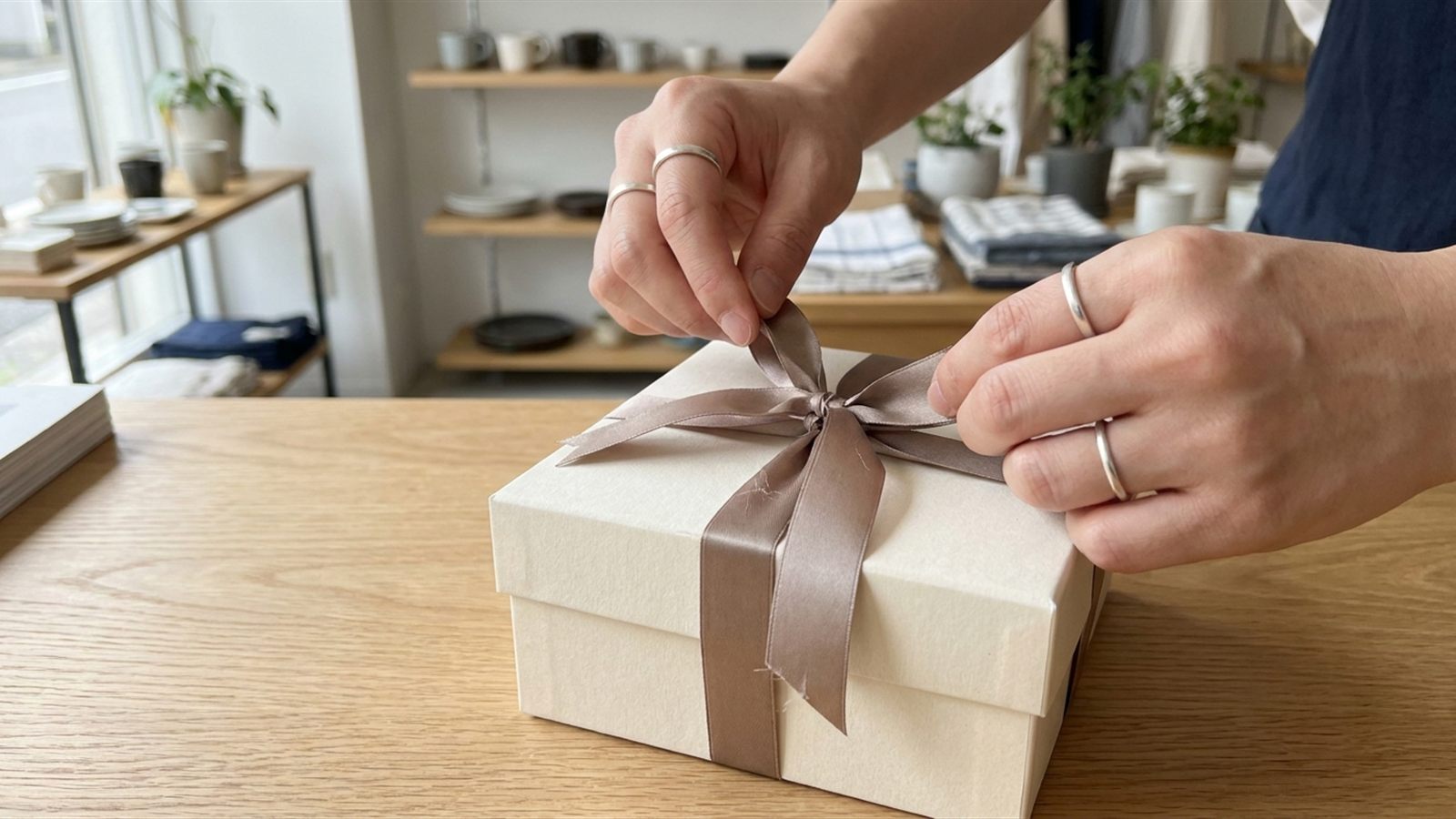
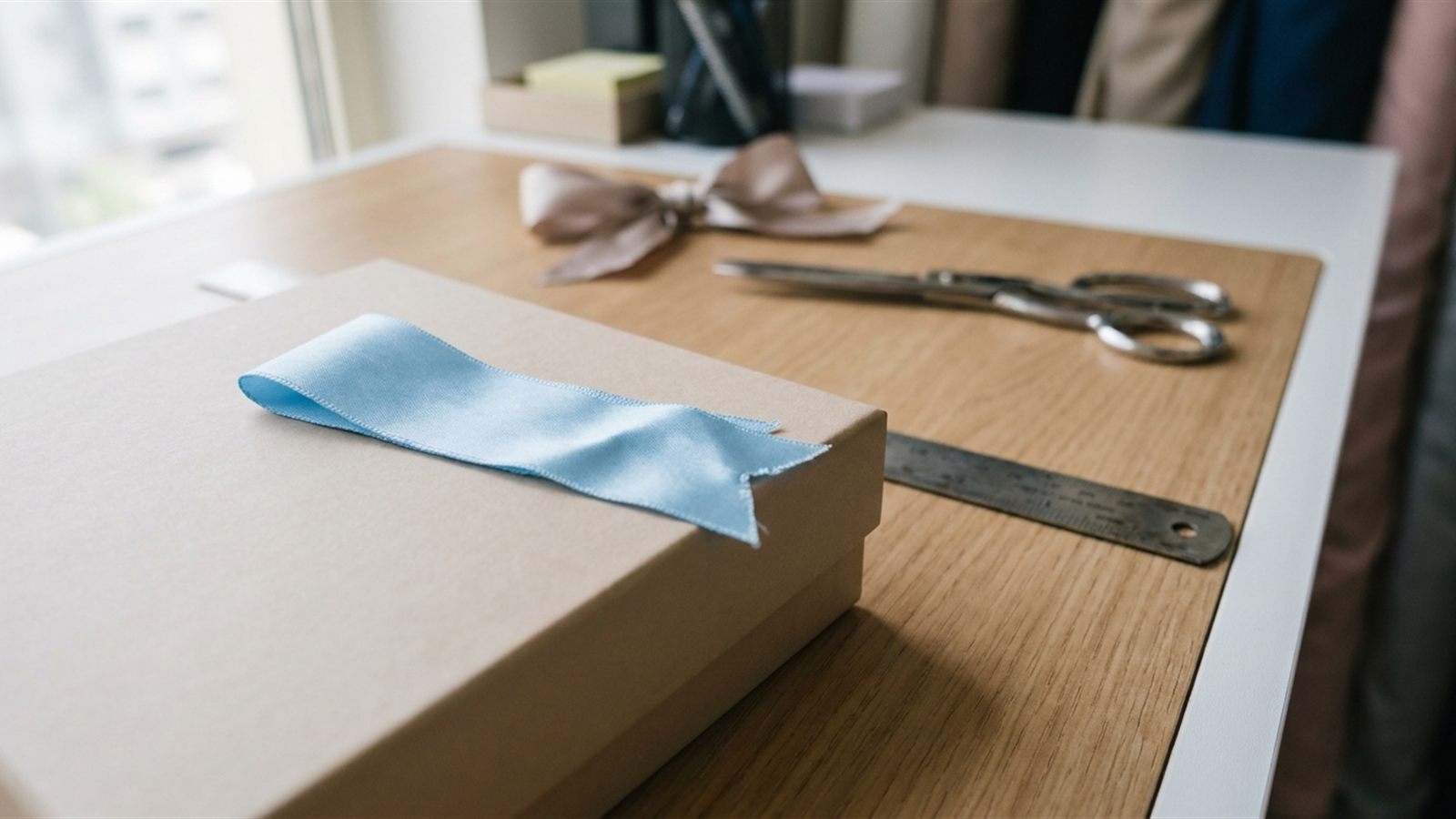
Length is the other lever. A full cross wrap uses a lot more ribbon than a flat band laid across the lid, and for many boxes the band looks cleaner anyway. Compare both in the ribbon calculator, and see the guide to tying a gift bow for a smaller bow that still looks finished.
Test a sample before you commit
Whatever the label says, ask for a cut length and test it on your real box. Check how it ties, how the cut ends behave and how the colour looks in your own light. The guide to sampling ribbon before a bulk order lists what to check and record.
Questions buyers ask
Is recycled polyester ribbon really eco-friendly?
The yarn starts as recycled plastic, but the finished ribbon is still polyester. Ask what share is recycled and what the claim is based on.
Is cotton or linen ribbon better than satin for the environment?
Not automatically. They are natural fibres with a matte, rustic look, but the label does not say how they were grown or dyed, and they fray more. Choose them for the style, not as a guaranteed greener option.
Does biodegradable ribbon break down in the bin?
Not necessarily. Biodegradable and compostable describe what can happen under certain conditions of heat, moisture and time, and an ordinary bin may not provide them. Dyes and coatings can change the result too. Ask which conditions the claim assumes and ask to see the document behind it.
What should I ask for to back up an eco claim?
Ask in writing what the claim refers to, what share of the material it covers and what it is based on. A vague answer is a sign to treat the word as decoration and judge the ribbon on fibre content and performance.
How can I be greener with ribbon without changing the material?
Use less of it and make it worth keeping. A flat band across the lid needs much less ribbon than a full cross wrap, and a ribbon that customers reuse never becomes waste. The ribbon calculator shows how much length each wrap style needs.