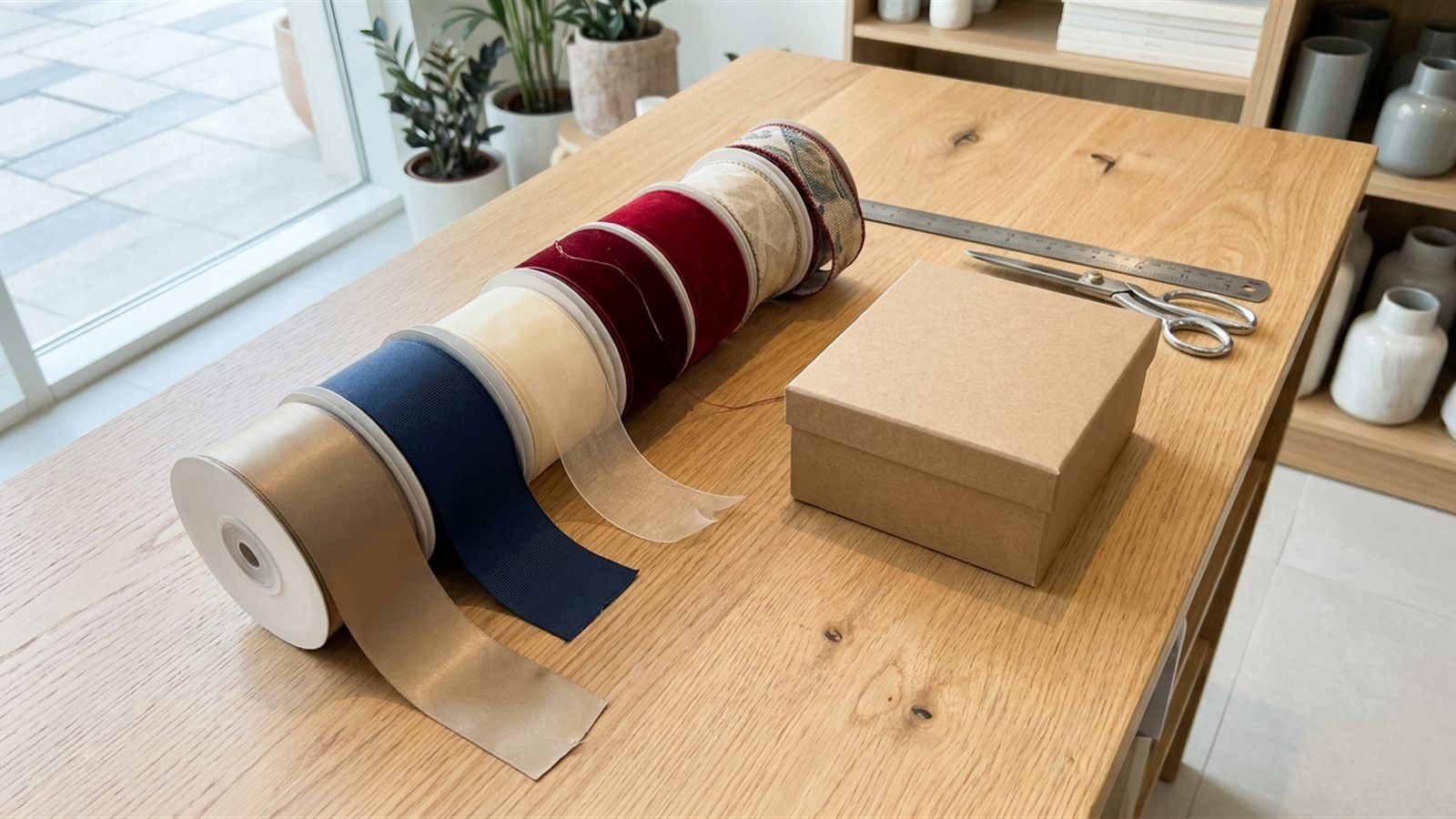
Who this page is for
This page is for anyone choosing ribbon for gift boxes, hampers, favours or presentation packaging: a shop owner dressing a window, a florist or chocolatier tying finished boxes, or a company wrapping gifts for clients. You do not need to know the vocabulary first. The page explains each decision in a few lines and links to the guide that covers it in full.
The guides fit together in a natural order. First you choose what the ribbon is made of and how it looks. Then you choose its width. Then you work out how much you need. Last, you settle the colour and check any eco claims. Each guide stands on its own, so you can jump straight to the one that matches the question in front of you.
Where to start
Find the sentence that sounds like your problem and follow the link.
- If you cannot tell satin, grosgrain and organza apart, read the guide to satin, grosgrain and organza.
- If your bows show a dull streak in the loops, read the guide to single-face and double-face satin.
- If satin, grosgrain and organza feel too ordinary, or you need a bow that holds its shape, read the guide to velvet, metallic, wired and sheer ribbon.
- If a catalogue lists widths in millimetres and inches and you cannot picture them, read the guide to ribbon widths.
- If you need to know how many metres and rolls to order, use the ribbon calculator.
- If the ribbon must match a box, a brand colour or a print, read the guide to ribbon colour matching.
- If a listing says eco, recycled or biodegradable and you want to know what that means, read the guide to eco and recycled ribbon.
Satin, grosgrain or organza
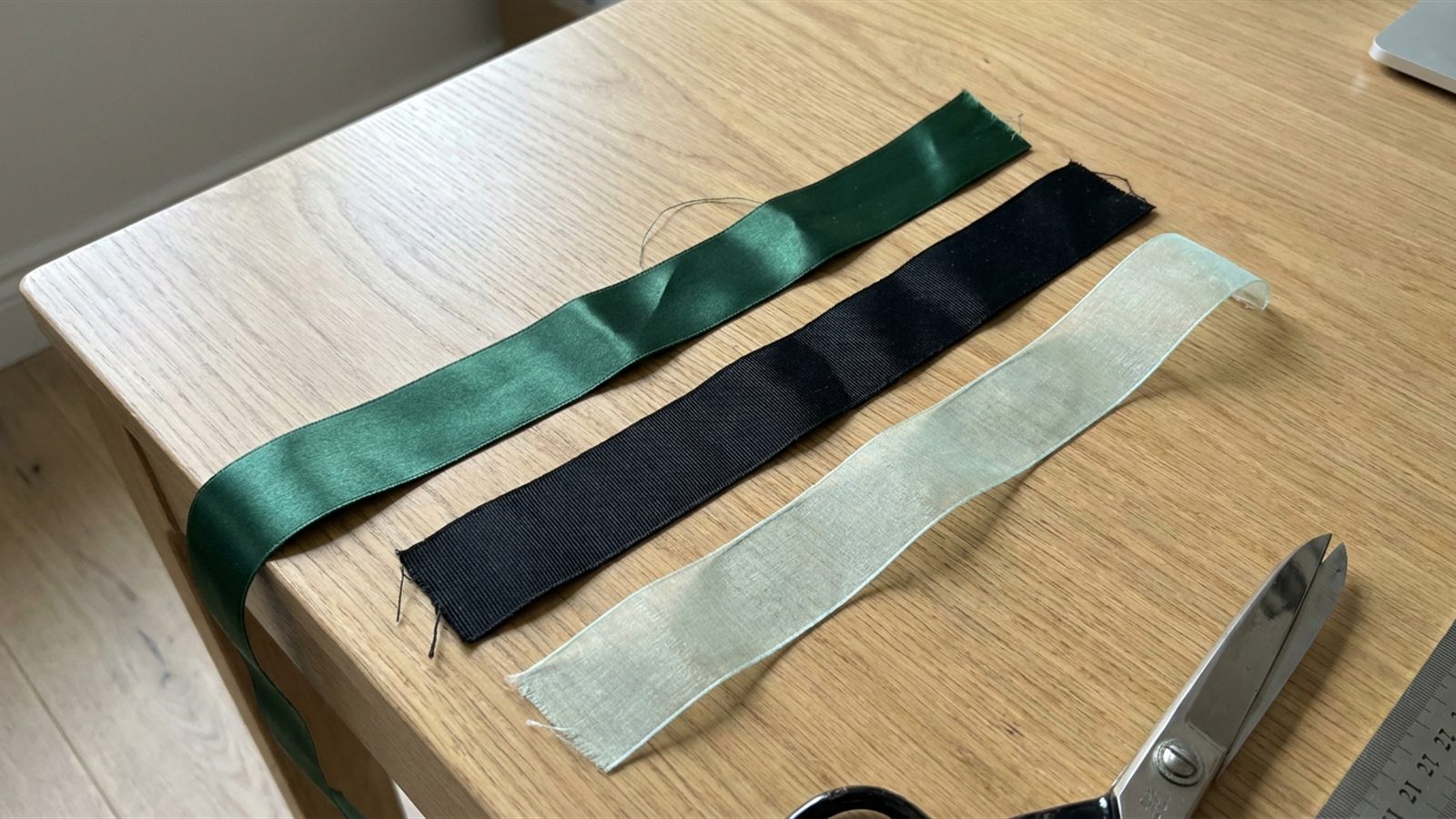
Most ribbon orders come down to three finishes, and they look similar in a catalogue but behave very differently on a box. Satin is glossy, ties full soft bows and photographs well. Grosgrain is ribbed and firm, grips a knot and holds up on a hamper that is carried and shipped. Organza is light and airy, which suits small favours bought in large numbers.
The full comparison includes a quick chooser: tap the job you are wrapping for and it names the finish that suits it.
Single-face or double-face satin
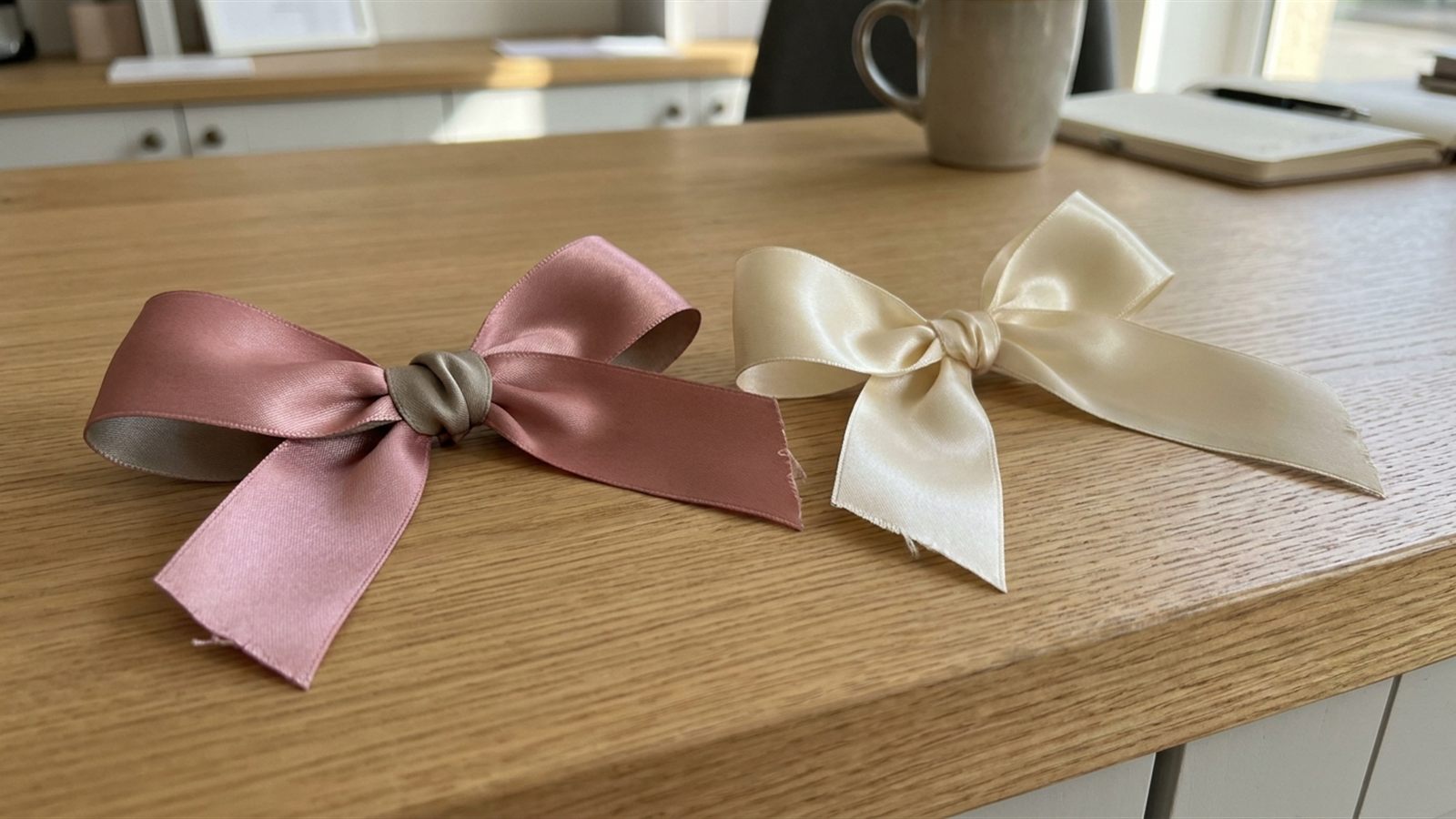
If you choose satin, there is one more decision. Double-face satin is shiny on both sides; single-face is shiny on one side and dull on the other. The dull back only matters where it can be seen, so a flat band is fine in single-face, while any bow or tied tail needs double-face.
The single-face and double-face guide shows where the dull back appears and how each type takes printing.
Velvet, metallic, wired and sheer
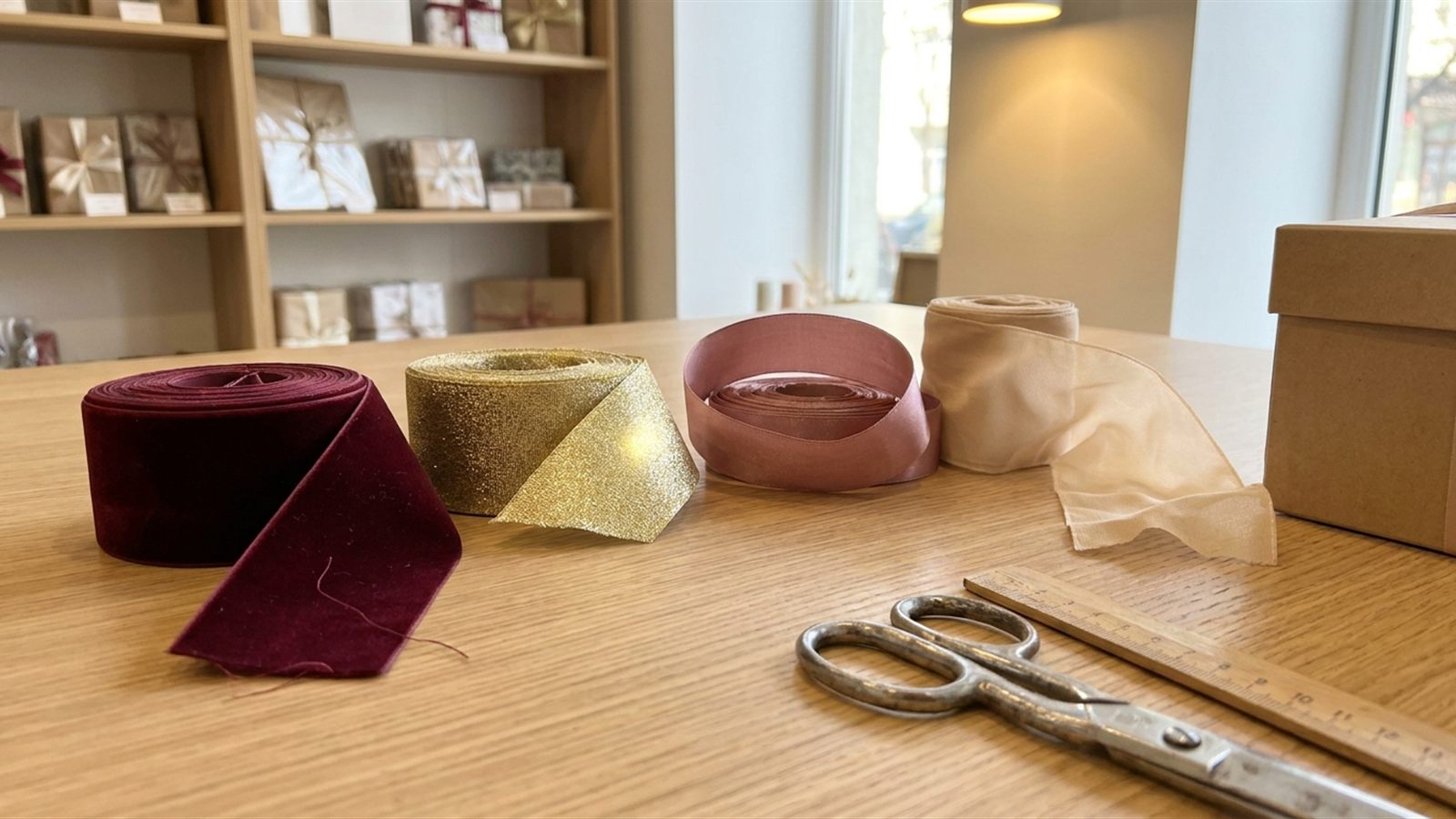
Four further finishes cover almost everything beyond the basic three. Velvet adds warmth and weight for winter and luxury gifts. Metallic adds shine under lights and in photography. Wired-edge holds a bow or a loop in shape without your hands. Sheer ribbon beyond organza, such as chiffon, adds softness and drape rather than structure. Most jobs need one of these, not all four.
The guide to these four finishes sets out where each wins, where it falls down, and how to choose by occasion.
Choosing a width
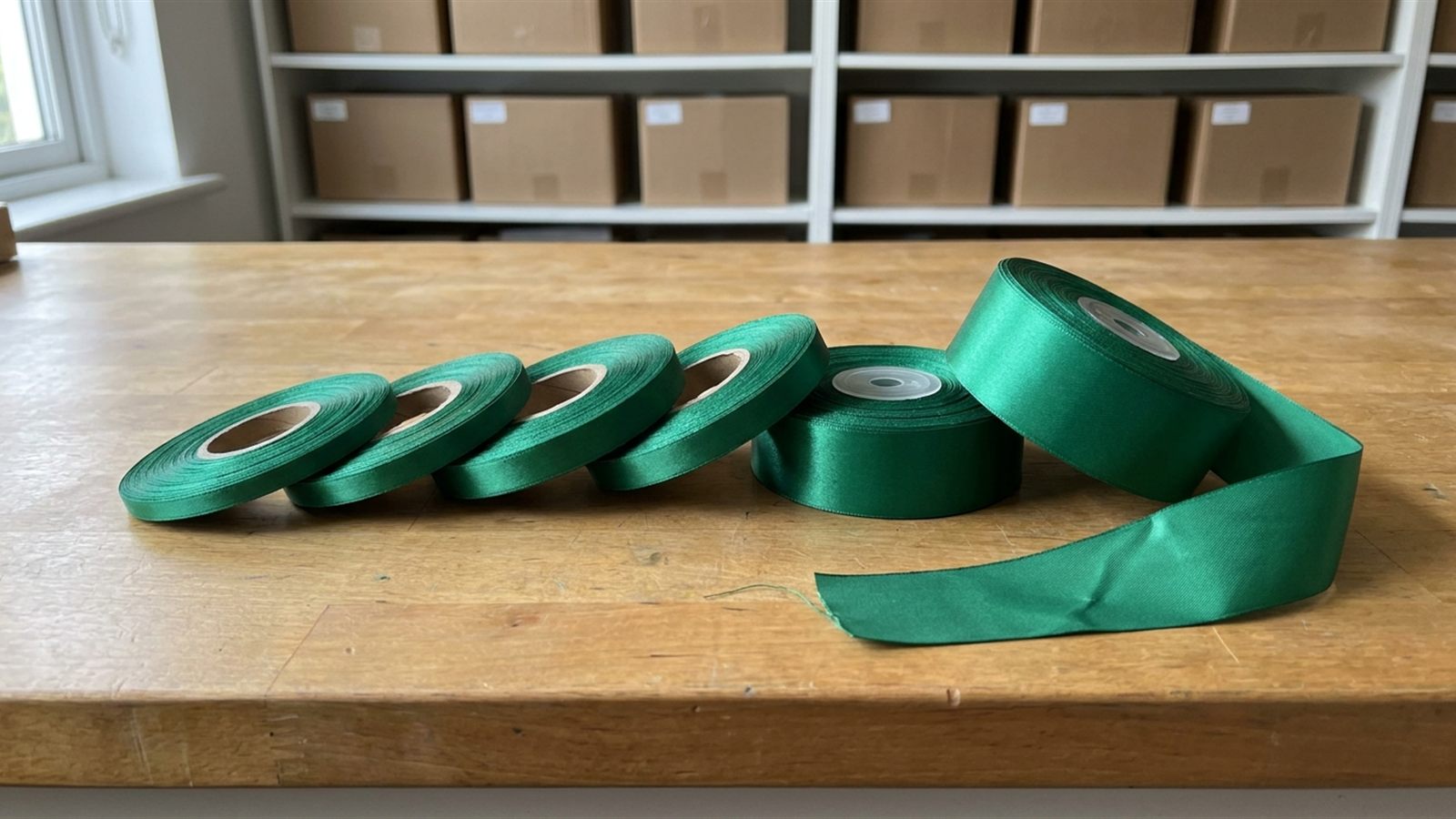
Ribbon is sold by width, and the same width goes by a millimetre name in one catalogue and an inch name in the next. The standard range runs from 3 mm to 50 mm. As a rule of thumb, take the shorter side of the lid: 6 to 16 mm suits boxes up to about 15 cm, 16 to 25 mm suits boxes of about 15 to 30 cm, and 38 to 50 mm suits anything over 30 cm and hampers.
The width guide has the whole range in one chart, with a slider so you can see each width on a box.
Working out how much you need
The amount of ribbon is simple geometry. A cross wrap goes once round the box lengthways and once widthways, with an allowance added for the bow. The total is multiplied by the number of boxes, a spare margin is added, and the result is divided by the roll length and always rounded up to whole rolls.
The ribbon calculator does this for you and shows its working, so you can check it against one box on your table.
Matching colour
A photo on a screen is not a colour you can approve. Screens, cameras and lighting all shift what you see, and satin's sheen makes it worse. The answer is a physical swatch, checked in daylight next to the box or the print it must match, with a named reference kept on file for every re-order. A Pantone number is a useful fixed reference, but it does not promise an exact match on fabric.
The colour matching guide explains why photos mislead and how to approve a swatch properly.
Eco and recycled ribbon
Words such as eco, green and sustainable have no fixed meaning on a ribbon roll. Recycled polyester is still polyester, natural fibres behave very differently from satin, and biodegradable or compostable depend on conditions. A claim is only as good as the paperwork behind it, so ask what share is recycled and what the claim is based on, then test a sample.
The eco ribbon guide turns each label into a plain question you can ask before you commit.
All seven guides at a glance
| Guide | The question it answers | Read it when |
|---|---|---|
| Satin, grosgrain or organza | Which of the three main finishes suits the job? | You are choosing a ribbon type for the first time |
| Single-face vs double-face satin | Will the back of the ribbon show? | You have chosen satin and plan to tie bows |
| Velvet, metallic, wired and sheer | When is a specialist finish worth using? | The basic three do not give the look or hold you want |
| Ribbon widths explained | Which width fits my box? | Catalogue sizes in mm and inches are confusing |
| Ribbon calculator | How many metres and rolls do I need? | You know your box size and how many boxes |
| Ribbon colour matching | How do I get the shade right? | The ribbon must match a box, a brand or a print |
| Eco and recycled ribbon | What do eco labels really mean? | A listing makes an environmental claim |
Order of decisions saves rework: pick the finish first, then the width, then the quantity, and approve colour on a real swatch before anything else is committed. Tie a sample bow on the real box at the end, because that one test catches most of the problems a catalogue photo hides.
Questions buyers ask
Which ribbon is best for a gift box?
It depends on the job. Satin suits chocolates, perfume and jewellery because it is glossy and ties full bows, grosgrain suits hampers that are carried and shipped, and organza suits light favours. The satin, grosgrain and organza guide has a quick chooser by job.
What width of ribbon should I use?
Go by the shorter side of the lid: 6 to 16 mm up to about 15 cm, 16 to 25 mm for about 15 to 30 cm, and 38 to 50 mm over 30 cm and for hampers. The ribbon width guide shows each width on a box.
How do I work out how much ribbon to get?
Measure the box, choose a wrap style, add a bow allowance, multiply by the number of boxes, add some spare and round up to whole rolls. The ribbon calculator does all of this and shows each step.
Why does my bow look dull in places?
You are probably using single-face satin, which is shiny on one side only. Every loop of a bow twists the ribbon and turns the dull back outward. Double-face satin stays glossy through every loop, as the single-face and double-face guide explains.
Can I trust a photo to check ribbon colour?
No. Screens, cameras and lighting all shift colour, so approve a physical swatch in daylight next to the box or print it must match. The colour matching guide covers how, and the eco ribbon guide is the place to go if a claim about materials is part of your decision.