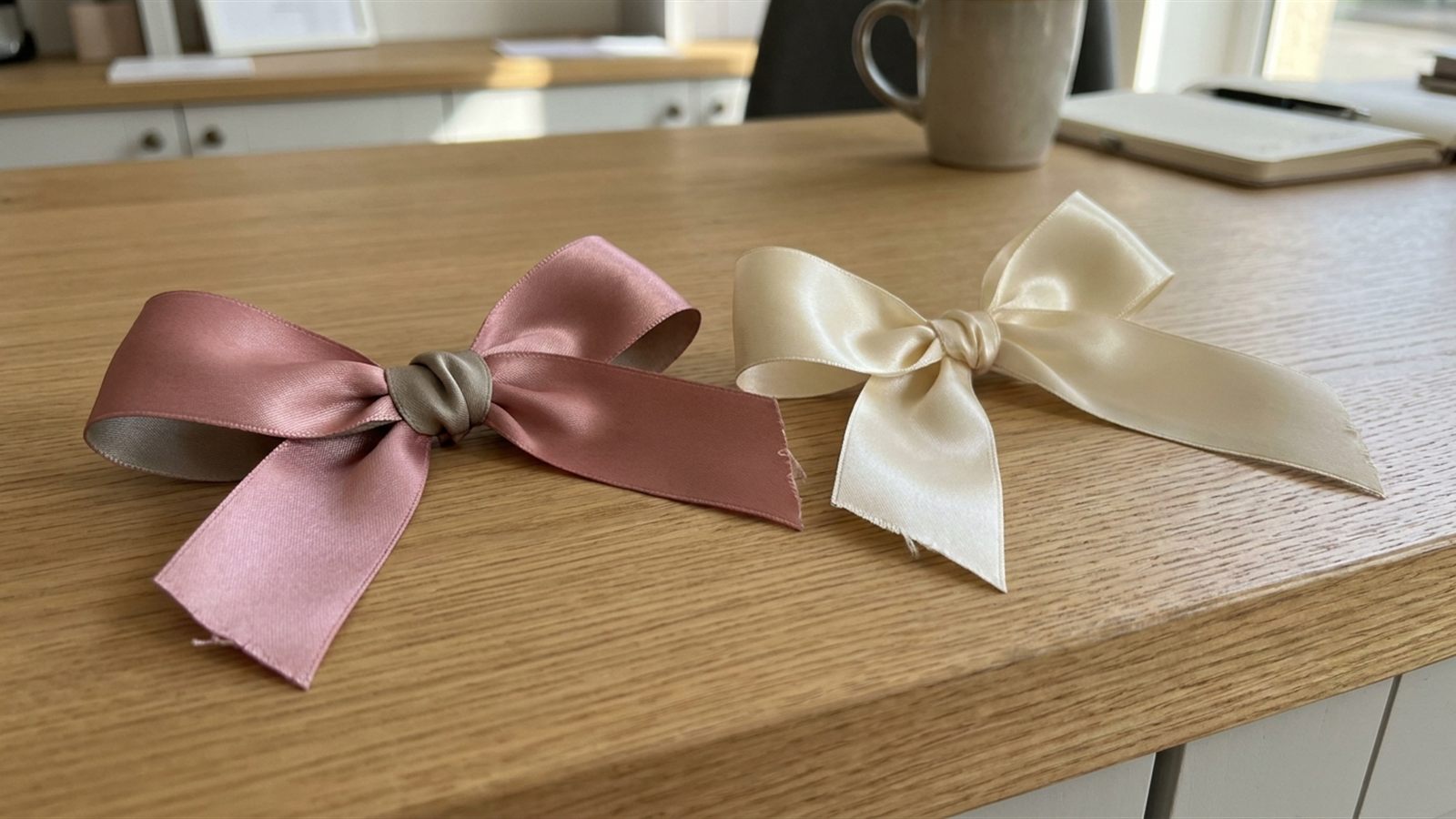
How to tell them apart in the hand
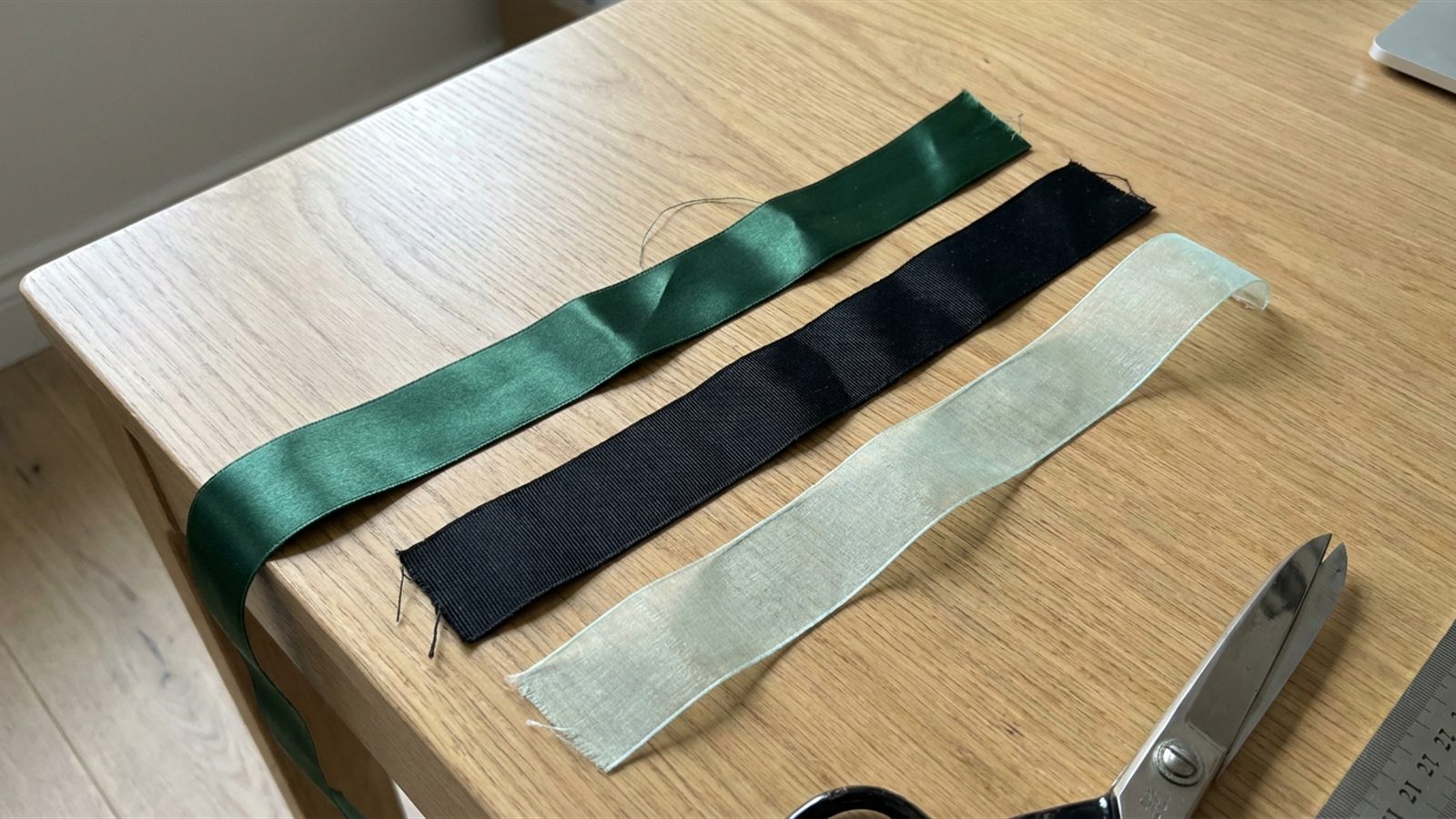
Hold a length up and turn it over. Single-face satin is glossy on one side and visibly duller, flatter and slightly rougher on the other. Double-face satin is glossy on both sides, with no dull face to find. If you only have a short offcut, the quickest check is to crumple it loosely in your hand: a single-face ribbon will show a dull patch wherever the back folds over; a double-face ribbon stays shiny whichever way it turns.
The two are woven differently. Single-face puts all its glossy threads on one face, which keeps it thinner and lighter for the same width. Double-face weaves glossy threads on both faces, which makes it a touch heavier and gives it a fuller drape, as the guide to ribbon finishes covers in more general terms.
Where the dull back shows
The dull side of single-face satin is invisible on a flat length, because only the top face is ever seen. It becomes visible the moment the ribbon twists or folds, because every twist turns the back outward for a stretch before it turns in again. That happens in three places on a wrapped box:
- Bow loops. Every loop in a bow is a twist of the ribbon, so a bow tied in single-face shows a dull streak in each loop.
- Tails. A tail that hangs loose, especially one cut on the diagonal, turns enough that the dull side catches the light at the fold near the knot.
- Knots, and ribbon wrapped right round a box. Wherever the ribbon crosses over itself, tucked under a knot or wound all the way around a box rather than laid flat across the lid, part of it turns face-down.
A flat band laid straight across a lid, with no twist anywhere along its length, never exposes the back. That is the one case where single-face and double-face look identical once applied.
When single-face is fine
Single-face earns its place wherever the ribbon stays flat or only one side will ever be seen:
- Flat bands run straight across a box with no bow, pinned or taped rather than tied.
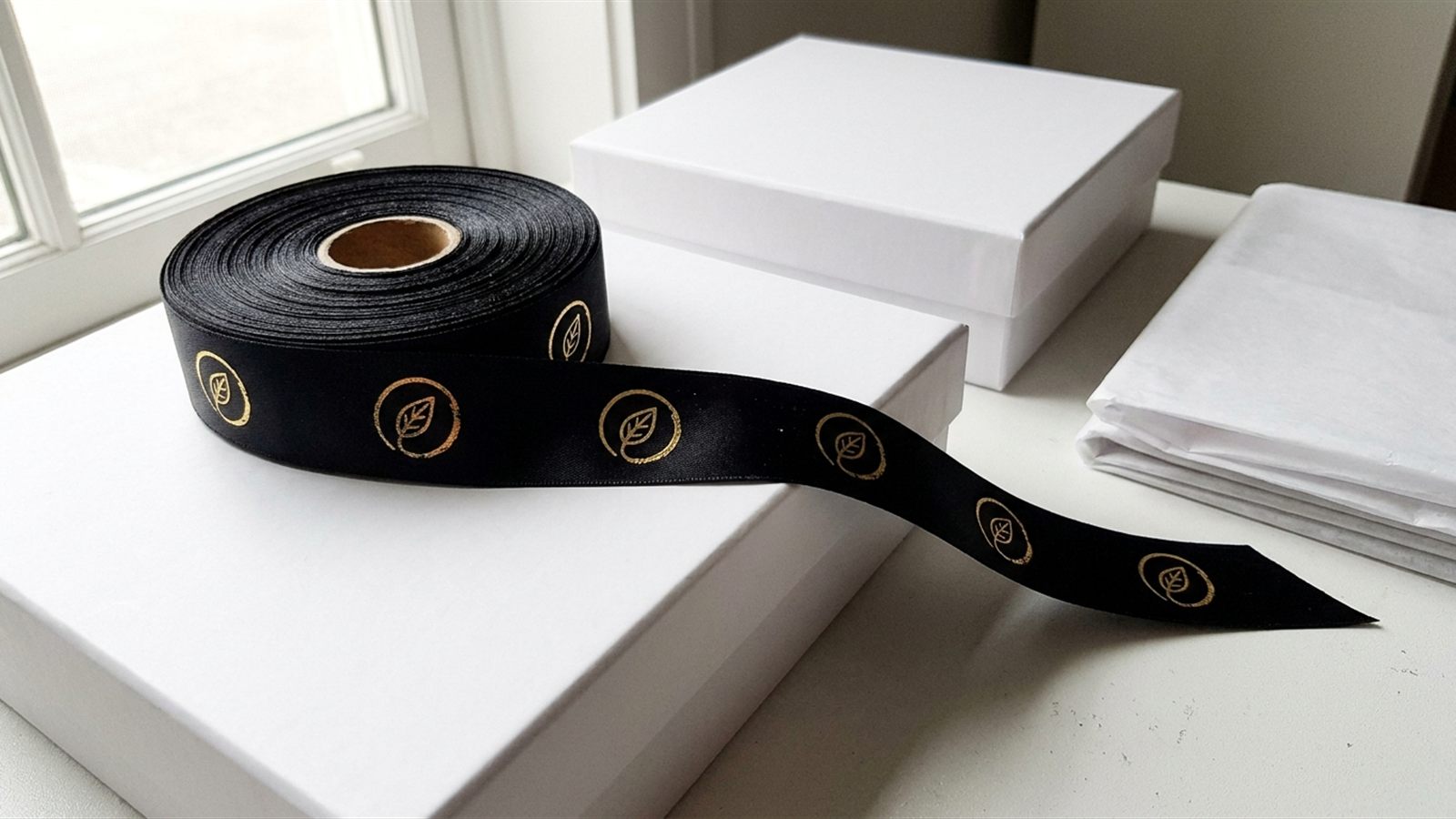
- Printed one side. A logo or greeting is printed on the glossy face only, and the dull back is never shown, so paying for shine on both sides adds nothing.
- Budget runs, where a large quantity goes on flat bands or simple labels and the saving on a lighter, single-face weave adds up.
When double-face earns it
- Bows of any size. A dull streak in the loops reads as a flaw, not a feature, even on a cheap box.
- Loose tails, for the same reason, especially on a diagonal or dovetail cut where the fold catches the light.
- Photography. A box that will be photographed for the customer's unboxing, or for the brand's own use, should not show a dull patch in a product shot.
- Premium boxes, where the ribbon itself is part of what the customer is paying for, and a dull back undercuts that in a way a plainer box can get away with.
If you are not sure which a job needs, tie a real bow on the real box in both. The difference is obvious in the hand and easy to miss in a catalogue photo.
Weight and drape
Because single-face carries glossy thread on one face only, it is thinner and a little lighter for the same width, and it holds a crisper fold. Double-face, with glossy weave on both faces, is heavier and drapes more softly, which is part of why it ties a fuller, rounder bow. On a very large bow or a wide ribbon, that extra weight can also make loops sit lower and relax faster, so a wired edge is worth considering for a bow that must hold its shape all day, as noted in the finishes guide.
How each takes printing
Single-face satin prints on its one glossy face, which is also the only face that will ever show, so nothing is lost. Double-face satin can be printed on one face or both: printing both sides costs more to set up but means a logo still shows correctly wherever the ribbon twists in a bow, which matters for a repeating mark or a greeting. Printing only one face of a double-face ribbon is also common, and is a reasonable middle ground when a bow is tied but the budget does not stretch to a two-sided print run. The logo-printed ribbon guide covers artwork, file formats and print methods in full; the choice of finish does not change what it recommends there.
Width guidance
Width follows the same rule of thumb as any other satin, based on the shorter side of the lid, from the ribbon width guide:
- Up to about 15 cm: 6 to 16 mm.
- About 15 to 30 cm: 16 to 25 mm.
- Over 30 cm, and hampers: 38 to 50 mm.
The one adjustment worth making for double-face: because it drapes more heavily, a bow in double-face at a given width tends to sit slightly fuller than the same width in single-face, so if you are matching an existing look, tie a sample before settling on the width.
Side by side
| Single-face satin | Double-face satin | |
|---|---|---|
| Shine | One side only | Both sides |
| Weight | Lighter | Heavier, fuller drape |
| Flat band | Looks the same as double-face | No advantage over single-face |
| Bows and loose tails | Shows a dull streak in loops | Glossy in every loop |
| Printing | One face, the glossy one | One or both faces |
| Typical use | Flat bands, one-side print, budget runs | Bows, photography, premium boxes |
The short checklist
- Decide whether the ribbon will be tied, wrapped round the box or crossed over itself anywhere, not just laid flat
- If it will be tied into a bow, or left with loose tails, choose double-face
- If it stays as a flat, straight band, single-face is fine and lighter on cost
- Check which face carries the print, and whether a bow needs it on both sides
- Width chosen from the shorter side of the lid, then tested with a real tied sample
Questions buyers ask
What is the difference between single-face and double-face satin ribbon?
Single-face satin is glossy on one side and dull on the other; double-face is glossy on both sides. The dull back of single-face is invisible on a flat band but shows up wherever the ribbon twists, such as in a bow's loops, a loose tail or a knot. Double-face costs a little more and drapes more heavily, because it carries glossy weave on both faces rather than one.
Can I use single-face satin for a bow?
You can, but every loop in the bow will show a dull streak where the ribbon turns over, because a bow is a series of twists and single-face only shines on one face. It reads as a flaw rather than a feature, even on a modest box. Double-face satin stays glossy through every loop and tail, which is why it is the better choice whenever the ribbon will be tied.
Where does the dull back of single-face satin actually show?
It shows wherever the ribbon twists or folds: in the loops of a bow, in a loose hanging tail that turns at the fold near the knot, and anywhere the ribbon is knotted or wrapped right round a box rather than laid flat across the lid. A flat band run straight across a lid with no twist never exposes the dull side, which is the one case where single-face and double-face look the same once applied.
Is double-face satin heavier than single-face?
Yes. Single-face carries its glossy threads on one face only, which keeps it thinner and lighter for the same width. Double-face weaves glossy thread on both faces, which adds weight and gives it a fuller, softer drape. That extra weight is part of why double-face ties a rounder bow, though on a very wide ribbon it can also make loops relax and sit lower over time.
Can double-face satin be printed on both sides?
Yes, and it can also be printed on one side only. Printing both faces costs more to set up but keeps a logo or greeting showing correctly wherever the ribbon twists in a bow. Printing just one face of a double-face ribbon is a reasonable middle ground when a bow is tied but a two-sided run is not wanted. Single-face satin only ever prints on its one glossy face, which is also the only face that will be seen.
What width satin ribbon should I use for a gift box?
Follow the same rule of thumb as any ribbon, based on the shorter side of the lid: 6 to 16 mm up to about 15 cm, 16 to 25 mm for about 15 to 30 cm, and 38 to 50 mm over 30 cm or for hampers. Because double-face drapes more heavily, a bow tied in it tends to sit slightly fuller than the same width in single-face, so tie a sample before settling on a width if you are matching an existing look. The ribbon width guide covers the full range.
Is single-face satin cheaper than double-face?
Single-face is generally the lighter, simpler weave of the two, which is why it suits budget runs on flat bands, but exact cost varies by supplier. Choose on function rather than price alone: a flat band never shows the back, so single-face loses nothing there, while any bow or loose tail in single-face will show a dull streak regardless of what it costs.